
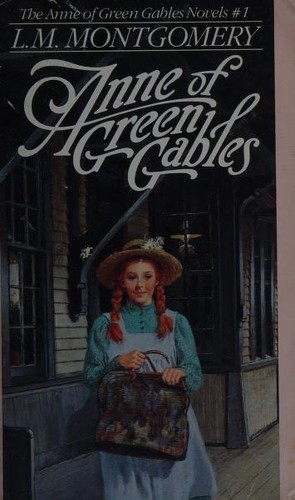
Anne of Green Gables
Anne of Green Gables follows Anne Shirley, an eleven-year-old orphan whose talkative, imaginative nature collides with the quiet routines of a Prince Edward Island farm. A mix-up sends her to the Cuthbert household, which had expected a boy. Over several years in the village of Avonlea, she makes friends, courts disaster through her temper and daydreams, and slowly earns a place in a community that first seemed unlikely to keep her. L. M. Montgomery's 1908 debut mixes comedy with sincere feeling about belonging, growth, and the pull between ambition and duty. It is one of the classic novels to read for anyone curious about early twentieth-century Canadian fiction. Among coming of age books, it stands out for its warm humor and a heroine who is allowed to be both flawed and gifted.
Where to buy or borrow
Are you selling this book? Bookstores, publishers, authors and libraries can be listed here for free. Request a listing
About this book
Deep Overview
Montgomery then follows Anne through roughly five years of village life. The plot is episodic, and many of its best-known scenes are comic disasters that come from Anne's imagination running ahead of her judgment. She mistakes one bottle for another at a tea party, bakes a cake with the wrong ingredient, dyes her hair a color she did not intend, and acts out a poem on the water in a leaky boat. Beneath the humor there is a pattern. Each mishap exposes a gap between the romantic world Anne carries in her head and the practical world of Marilla, church, school and neighbors. Each also teaches Anne something, and it teaches Marilla something about the child she is raising.
The book is equally a study of relationships. Anne's friendship with Diana Barry is the first bond she chooses for herself. Her long-running rivalry with Gilbert Blythe starts as a wounded-pride quarrel and slowly turns into mutual respect. Mrs. Rachel Lynde, the village's tireless commentator, represents community judgment, and the teacher Miss Stacy and the minister's wife Mrs. Allan show Anne other models of adult womanhood. Marilla's development is quieter than Anne's but just as important. She starts as a rule-bound guardian who is uncomfortable with affection and ends as someone who can say what she feels.
The last third of the novel moves toward adolescence and decisions about the future. Anne studies for the entrance examination to Queen's Academy and begins to think seriously about what an educated girl might do with her life. A death and a worsening health problem at Green Gables force her to weigh personal ambition against loyalty to the people who took her in. Readers who have not finished the book may prefer to discover the exact outcome themselves. The ending is notable because it presents a choice made out of love and not out of defeat, and it leaves open the question of what kind of future is being traded for another.
Throughout, Montgomery uses the Prince Edward Island landscape as more than backdrop. Orchards, lanes and ponds are part of how Anne learns to feel at home, and she gives them names. This is her way of turning an unfamiliar place into her own. The effect is a novel in which the setting, the humor and the emotional arc all work to answer a single question: what does it take for a person to belong somewhere, and what does the place demand in return?
Key Themes
Imagination as both gift and hazard is the second major idea. Anne's talent for storytelling and naming lets her cope with loss and notice beauty, yet it also leads her into embarrassment and risk. The book does not ask her to give it up, only to temper it.
Growing up, and the cost of it, is a third thread. Anne's gains in judgment and self-control are real, but Montgomery lets the reader feel what is lost as the free-spoken child gives way to the reserved young woman.
The book also examines duty and ambition, especially for girls. Education is presented as an exciting prospect, and family obligation is shown to compete with it.
Finally, there is a recurring interest in community. Avonlea can be intrusive and judgmental, but it can also be generous, and the book shows both sides. Related ideas include the value of kindness that is not earned, the limits of rigid moral instruction, and the way friendship and rivalry shape identity.
Historical Context
The period matters to the book's assumptions. It is a late-Victorian and Edwardian rural society in which churchgoing, schooling, household economy and neighborly oversight shape most children's lives. Orphans and unwanted children could be placed in households where they were expected to contribute work, which is why the Cuthberts' request for a boy is unsurprising to the characters. The novel also reflects a time when more educational and professional options were beginning to open for girls, which gives Anne's studies their charge.
Literary context helps as well. Montgomery acknowledged the pull of earlier children's classics, and the novel belongs to a tradition of spirited young heroines, though it gives its heroine more comic self-awareness than many predecessors. Britannica describes it as sentimental yet charming, which captures a common critical view of its tone. Over the decades the book has become part of Canadian cultural identity and an important tourism and heritage reference for Prince Edward Island. The Charlottetown Festival has staged a musical version annually since 1965.
Intended Audience
It may be less satisfying for readers who want fast, plot-driven action or high-stakes conflict. The episodic structure means tension is often small-scale. Readers who dislike sentimentality, formal religion in the background of a story, or nineteenth-century narrative habits may feel a distance from it. Younger children may enjoy it best as a read-aloud, since the vocabulary and sentence length can be demanding for independent reading.
Reading Difficulty
No prior knowledge of Canada or of Christianity is required, though both help. Conceptually the book is simple, but the shifts in tone, from broad comedy to real grief, are worth noticing. This Bantam Classic is a mass-market paperback, and such editions usually have small type and tight margins, which some readers find tiring. Page counts listed for this edition differ between catalogues, so readers who need a firm length should check the copy in front of them.
Helpful Background Knowledge
Familiarity with a few literary references is a bonus. Anne quotes poems and stories with confidence, among them Tennyson's The Lady of Shalott, which she tries to act out. Looking up such allusions is optional, since Montgomery generally explains enough within the scene. Readers who know the film and television adaptations should be prepared for differences, because later versions often add events or alter the tone. The original book is lighter, more episodic and more humorous than some of the recent adaptations.
Why Read This Book?
Another reason is Anne herself. She is a rare child character who is permitted to be talkative, vain, wrong and sincere all at once, and who learns through consequence and not through punishment alone. The adults around her are drawn with similar care, especially Marilla, whose gradual softening is one of the book's real achievements.
The book is also useful as a reference point for modern fiction. Many later stories about outspoken girls, found families and small-town communities echo its patterns. Reading the source gives readers a clearer view of how those patterns first took shape.
Reader Takeaways
Readers may also reconsider what counts as a good upbringing. The book sets rigid instruction against affectionate guidance and asks which approach actually changes a child. Another point to notice is the role of language: Anne's imaginative speech is a survival tool, and the way others respond to it shows how adults can either shrink or nurture a child.
Finally, the ending invites reflection on sacrifice. Readers can think about when giving something up is generous, when it is a loss, and how a story can present both at once.
Strengths
The sense of place is vivid and consistent, and the seasonal structure gives the episodic plot a natural shape. The prose is lively and readable, and the narrator's gentle irony stops the sentiment from becoming cloying. The book is also admirably economical about emotion: its most affecting moments are understated.
As a cultural document, it offers an accessible way into Canadian literary history and into the history of writing for and about girls.
Limitations and Cautions
The tone is sentimental in places, and the plot is loosely structured, so readers expecting a tightly driven narrative may find the middle sections leisurely. Some period language and attitudes toward religion, class and discipline will feel dated.
A note about this edition: it is a mass-market reprint, and catalogues give conflicting dates and page counts for it. Readers who need a specific, complete text for study should check the printing they hold or choose a scholarly edition with notes.
Important Concepts, People, and Places
Matthew Cuthbert is the shy, kind farmer who first welcomes Anne and becomes her steadiest ally. Marilla Cuthbert is his stricter sister, who takes charge of Anne's upbringing and whose own change is central to the story.
Diana Barry is Anne's closest friend, the neighbor with whom she forms what she calls a kindred-spirit bond. Gilbert Blythe is a classmate whose teasing sparks a long feud and who serves as Anne's academic rival and eventual friend. Mrs. Rachel Lynde is the outspoken neighbor who embodies community opinion. Miss Stacy, the teacher, and Mrs. Allan, the minister's wife, show Anne ideals of education and gentleness.
Green Gables is the Cuthbert farmhouse, which stands for the home Anne wins. Avonlea is the fictional village drawn from Montgomery's experience of Cavendish. Prince Edward Island is the real setting, and its landscape shapes the book's mood. Queen's Academy is the teacher-training school that represents Anne's future beyond the village.
L.C. Page and Company was the Boston publisher that released the first edition in 1908. The L. M. Montgomery Institute at the University of Prince Edward Island is a research center that studies Montgomery's work and has helped present her original manuscript online.
Questions the Book Explores
Reading Group Guide
Useful starting points include comparing Anne's first impressions of Green Gables with her later attitude to it, tracking how Marilla's responses change, and noting which comic episodes carry real consequences. Groups that have seen an adaptation could compare how the screen version handles tone, which events it expands, and which it drops.
Because the ending involves a significant loss and a choice, groups may want to agree on a spoiler policy if some members are new to the story. A short activity is to ask each member to pick the chapter they think best shows Montgomery's humor and the one that best shows her emotional restraint, then compare the choices.
Discussion Questions
2. Anne gives names to places and objects. What does naming do for her, and how do other characters react to it?
3. Marilla and Rachel Lynde both give advice about raising children. Where do their views differ, and which approach does the book seem to favor?
4. How does the rivalry with Gilbert Blythe develop, and what does it reveal about pride and forgiveness?
5. Which of Anne's mishaps do you find funniest, and which tell us the most about her?
6. Does Avonlea feel welcoming, restrictive, or both? Which scenes support your view?
7. How should we read Anne's final choice about her future? Is it a sacrifice, a fulfillment, or something else?
8. What has changed in how readers might view girlhood, education and adoption since 1908, and what feels unchanged?
Sources and Verification
Comments
No published comments yet.
Available editions
Paperback
Bantam Classic
- Publisher
- Bantam Books
- ISBN-13
- 9780553213133