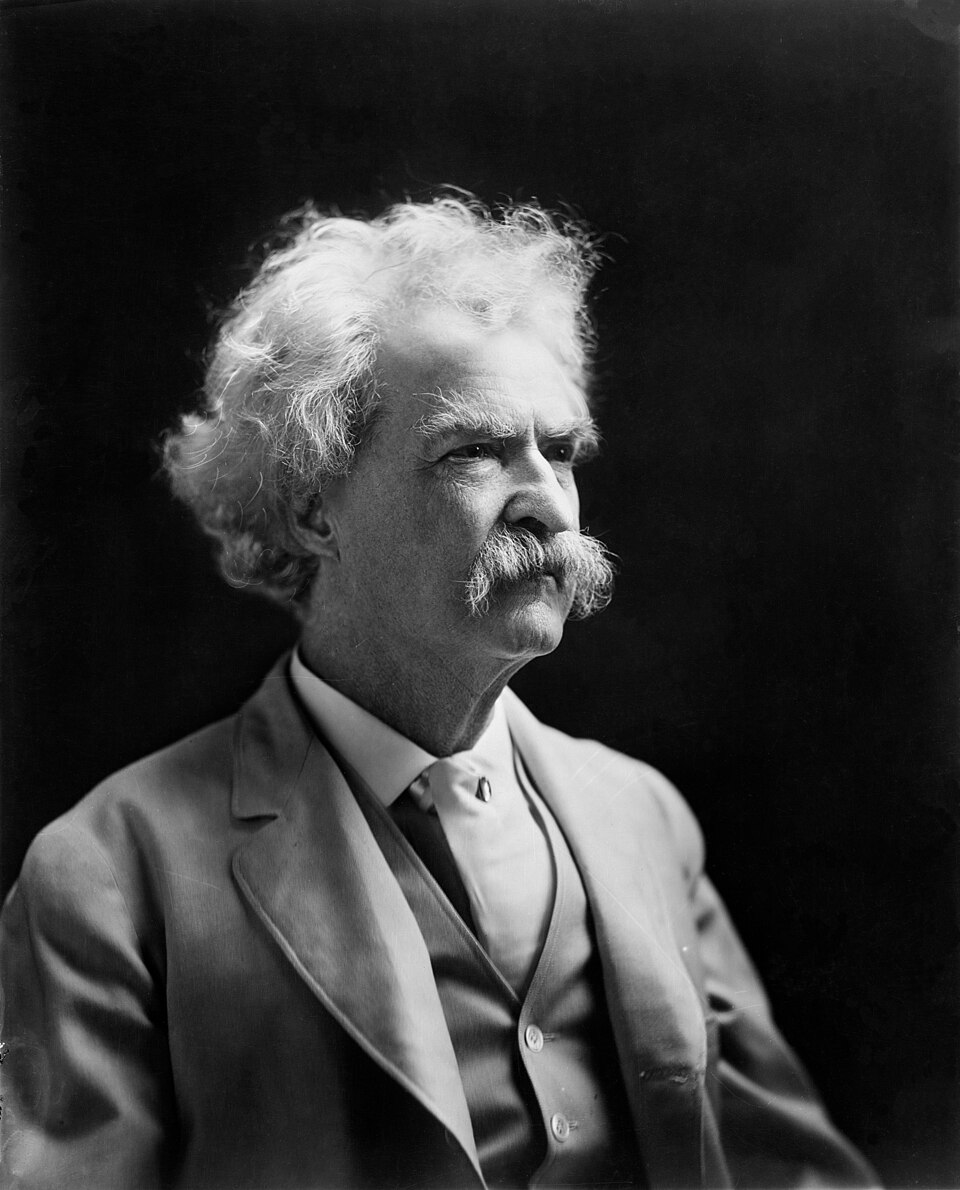
Samuel Langhorne Clemens, born in Florida, Missouri, in 1835, took his pen name from the pilot's cry for two fathoms of water. His father died when he was eleven, and he left school to apprentice as a printer. He went on to pilot steamboats on the Mississippi, then moved west to do newspaper work. Later he became a publisher and backed a typesetting machine venture, losing a fortune on it. A world lecture tour in the 1890s paid off his debts. He died in Redding, Connecticut, in 1910.
His range ran from tall tales to pointed satire. "The Celebrated Jumping Frog of Calaveras County" (1865) made his name overnight. The Innocents Abroad (1869) and Roughing It (1872) grew out of letters and jottings from his journeys. His novels trust the spoken word: regional dialect set down with care, a child or an outlaw doing the narrating, and a social pretension the plot exists to puncture.
Tom Sawyer (1876), Life on the Mississippi (1883), and A Connecticut Yankee in King Arthur's Court (1889) round out the major fiction. Huckleberry Finn, published in Britain in 1884 and the United States in 1885, drew immediate controversy; the Concord Public Library pulled it from its shelves shortly after release. Ernest Hemingway, in Green Hills of Africa (1935), placed "Huckleberry Finn" at the root of American letters. Debate over the novel's treatment of the enslaved Jim and its use of racial language continues, with critics split on whether Twain attacks the racism of his moment or mirrors it.
Start with Adventures of Huckleberry Finn, the book on WebToTell. Huck tells his own story in a voice that pulls you in from the first page, and the river journey with Jim is the engine of the book.