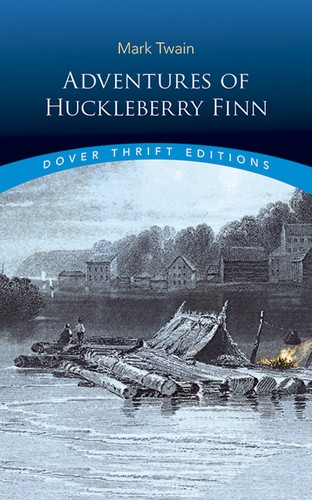
Deep Overview
The novel begins with Huck living a cramped, civilized life under the Widow Douglas and her sister Miss Watson, then being seized by his violent, drunken father, Pap. Huck stages his own death and flees by canoe to an island on the Mississippi, where he discovers that Jim, Miss Watson's slave, has also run away after hearing he might be sold downriver. The two agree to travel together, planning to reach Cairo, Illinois, where the Ohio River could carry Jim toward free territory. Fog, a steamboat collision and the pull of the current carry them past that goal, and the escape plan keeps being overtaken by the unpredictability of the river and the people along its banks.
The middle of the book is a procession of communities seen from the water: the Grangerfords and Shepherdsons, two genteel families locked in a lethal feud; a town mob that sets out to lynch a killer and loses its nerve, and crowds that pay to watch traveling shows; and the pair of confidence men who style themselves the Duke and the King. Their schemes, including a theatrical swindle and a fake inheritance claim, give Twain room to mock religion, sentimentality, gullibility and mob behavior. The raft is the contrast to all this: a small, mobile space where Huck and Jim talk, joke, argue and gradually treat each other as equals.
The book's moral pivot is Huck's conscience. He has absorbed the teaching that helping a runaway is theft and a sin, yet he finds he cannot betray the man who has become his closest companion. Twain stages this as a crisis in which Huck believes he is choosing damnation, and the irony is that the choice we are meant to admire contradicts the doctrine Huck thinks is correct. Philosophers and literary critics alike have treated this episode as a case study in how feeling and moral reasoning can pull against inherited assumptions.
Then Tom Sawyer reappears at the Phelps farm, and the last section, often called the Evasion, turns Jim's rescue into an elaborate prison-break game modeled on adventure novels. Critics have disagreed sharply about it. Bernard De Voto saw it as a steep decline, T. S. Eliot and Lionel Trilling tried to defend or explain it on aesthetic grounds, and later readers have argued that its farce is deliberate, a bitter picture of how postwar America treated freedom for Black people as a game. Whichever view a reader takes, the ending forces a question about what the book is finally demonstrating: that one boy can outgrow his culture, or that the culture could not be escaped so easily. Huck's closing wish to leave for the Territory keeps that question open.
Key Themes
Conscience versus social training is the book's central tension: Huck's feelings repeatedly outrun the rules he was taught. Closely linked is the portrayal of slavery and race, where Jim's humanity, intelligence and family love complicate the stereotypes that surrounded him, while the novel also draws on minstrel-style humor that readers still debate. Freedom appears in several senses, from Huck's escape from guardians and Jim's flight from sale to the looser freedom of life on the river. Twain also targets hypocrisy and mob psychology through feuding gentry, pious frauds, and crowds that are cruel in groups and cowardly alone. Finally, the book examines truth and performance: lies, disguises, staged deaths and invented identities run through nearly every episode, and Huck's pragmatic lying contrasts with the self-deceptions of respectable people.
Historical Context
The story is set in the slaveholding Mississippi Valley some decades before the Civil War, with Missouri, the river and the lower South as its landscape, while Twain wrote it in the years after Reconstruction. That gap matters. Readers in the 1880s were living amid the collapse of federal protection for Black Americans and the growth of Jim Crow practices, and many scholars see the novel as speaking to that moment as much as to the past. Twain drew on his Missouri boyhood and his river-pilot experience, and his prefatory note on dialects shows his interest in regional speech, a concern shared with American local-color writing. The book's publication history also affects how it is read: it appeared first in Britain, then in the United States through Twain's own publishing house, with Kemble's drawings forming part of the original reading experience. Its reception began with controversy; public library commissioners in Concord, Massachusetts rejected it soon after release, while twentieth-century challenges increasingly focused on its racial language and its depiction of Black characters. The American Library Association's timeline also records a class action lawsuit over the book in 1996. Critical standing rose through the work of figures such as T. S. Eliot, Lionel Trilling and Ernest Hemingway, whose high praise itself became part of the book's history.
Intended Audience
This novel suits high school and college students, readers building a foundation in American literature, and adults who want to see why the book sits at the center of so many debates about national identity. It rewards people who enjoy voice-driven narration, satire and episodic travel stories. Readers who want a streamlined plot, who are unwilling to encounter period racial slurs and stereotyped depictions, or who expect a modern treatment of slavery from a Black perspective may find it frustrating, and they may want guided context or companion works. Younger readers can enjoy the adventure, but the moral and historical layers are best discussed with someone experienced. Teachers should expect to prepare students for the language in advance.
Reading Difficulty
The prose is not complex in sentence structure, but it is written in heavily marked dialect, with nonstandard spelling and grammar that can slow a reader at first. The pace is uneven: lively river episodes and arguments alternate with slower digressions, and the final section can feel long after the book's emotional peak. Conceptually, the hardest task is irony, since Huck often reports events he does not fully understand and Twain expects the reader to see the gap. The text uses racial slurs that are historically accurate to the setting and offensive today, which can make reading emotionally difficult. This Dover Thrift edition is a compact, small-format paperback of about 224 pages; readers who want footnotes or historical commentary should check whether an edition provides them or pair it with an annotated one.
Helpful Background Knowledge
Little prior knowledge is required, but a few things help. Knowing the basics of American slavery, the Fugitive Slave Act era, and the geography of the Mississippi and Ohio rivers clarifies why Jim's route to Cairo matters. A general sense of the Reconstruction period and its aftermath helps with the ending and with what Twain may be saying about his own time. Familiarity with The Adventures of Tom Sawyer is useful for meeting Tom, Huck's friendships and St. Petersburg, though not essential. Readers may also want to learn about the novel's long controversy so that they approach its language and its representation of Black characters with context rather than surprise. Reading aloud a page or two of dialect-heavy passages can ease the transition into Huck's voice.
Why Read This Book?
This is a good choice among classic novels to read if you want a book that is both entertaining and morally unsettled. Few narrators in American fiction are as distinctive as Huck, and the novel's mix of comedy, danger and ethical drama explains much of why later writers treated it as a reference point. This particular edition is useful because it is affordable and reproduces the text of the first American edition, so you encounter the book close to the form of its original U.S. publication. Reading it also gives you the background for countless later arguments, from school curriculum disputes to debates about how fiction should portray racism. It works well when you want a book that makes you think without being difficult in sentence structure.
Reader Takeaways
A careful reader may come away understanding how a narrator's limited awareness can generate irony and moral depth. You may notice how Twain uses the raft and the river banks as contrasting social spaces, and how Jim moves from a figure of superstition and comedy early in the book toward a person with loyalty, grief and judgment. You may also reconsider the idea that good conduct comes from correct doctrine, since Huck's best acts conflict with his stated beliefs. Many readers leave with a clearer sense of why the ending is disputed and a better ability to separate a book's satirical purpose from the pain its language can cause. Finally, the novel offers practice in reading historical fiction critically: asking what it reveals about the era depicted and the era in which it was written.
Strengths
The novel's greatest strength is voice: Huck's idiom is funny, observant and consistently credible, and it carries ethical complexity without a sermon. Its structure of river episodes allows Twain to survey many kinds of American life in a compact book. The central relationship between Huck and Jim gives the story emotional weight, and the moral crisis in the middle chapters remains one of the most discussed scenes in American fiction. The book is also unusually productive for teaching and discussion, since it touches on narration, satire, regional dialect, race, religion and censorship. As an edition, the Dover Thrift paperback is inexpensive and portable and follows the first American edition's text.
Limitations and Cautions
The novel's treatment of race remains contested. Critics point to the frequent use of a racial slur, caricatured features in some depictions of Jim, and the minstrel-show comedy of the last chapters; defenders argue that Twain was exposing the injustice of the society he describes, and that Jim's dignity and Huck's change of heart complicate the satire. Readers should treat both views as live arguments rather than settled facts. The ending is the other major point of dispute, with some critics calling it a failure and others calling it purposeful. The book gives Jim's inner life only through Huck's partial perspective. Dialect passages can be tiring, and the setting is a nineteenth-century frame that may need explanation. This inexpensive reprint is presented as a reproduction of the first American edition's text, so readers who want historical annotation, textual variants or manuscript history are better served by a scholarly edition.
Important Concepts, People, and Places
Huckleberry Finn (Huck): the teenage narrator, whose uneducated voice and shifting conscience drive the book. Jim: an enslaved man who flees with Huck; his companionship, dignity and fear of being sold away from his family anchor the moral argument. Tom Sawyer: Huck's friend from Twain's earlier novel, whose romantic, book-driven games dominate the final chapters. Pap Finn: Huck's abusive father, who represents the dangers Huck is fleeing. The Widow Douglas and Miss Watson: guardians who stand for religion and 'sivilization' as Huck experiences it. The Duke and the King: two con men whose scams expose gullibility and greed and who ultimately betray Jim. The Grangerfords and the Shepherdsons: feuding families who show how honor culture can become deadly. The Phelps farm: the setting of the Evasion. The Mississippi River: both the path of escape and the book's unifying symbol. Cairo, Illinois: the meeting point of the Mississippi and Ohio, the intended gateway to freedom that the travelers miss. The Evasion: the name scholars give the closing run of chapters, from Tom's return through the escape plot. Mark Twain (Samuel Langhorne Clemens): the author, whose boyhood in Missouri and river work shaped the setting. E. W. Kemble: the original illustrator. Charles L. Webster and Company: Twain's publishing house, which issued the first American edition and which this Dover text reprints. Dialect: the regional speech varieties that Twain flagged in his explanatory note and that shape the book's realism.
Questions the Book Explores
What does it mean to do the right thing when everything you were taught says it is wrong? Can affection between two people survive a social order built on ownership and hierarchy? How far does civilization improve people, and how far does it excuse cruelty? Why do crowds, families and institutions sometimes behave more violently than individuals? What does it say about a nation that a comic game can replace a serious rescue? And how should readers handle a classic that is both a landmark and a source of ongoing pain for some audiences?
Reading Group Guide
Start by agreeing on a shared way of handling the book's racial language, especially if the group includes students or mixed audiences, and decide whether to read aloud. A useful plan is to split the novel into three sessions: the escape and the early raft (through the Ohio River fog), the shore episodes and the con men, and the Phelps farm ending. Ask each member to bring one passage that made them laugh and one that made them uncomfortable. Pair the discussion with a short critical piece, such as De Voto on the ending or a modern defense of it, to see how interpretations change. If time allows, compare the book's depiction of Jim with a work by a Black author about the same era. Keep the focus on the text, and give people room to disagree about intent and effect. The list of book discussion questions that follows is meant as a menu, not a sequence, so choose the ones that fit your group's experience.
Discussion Questions
1. How does Huck's limited understanding shape what the reader sees and judges?
2. What does the raft offer that the shore does not, and how does Twain complicate that contrast?
3. In the chapter where Huck decides against turning Jim in, what is actually changing in Huck, and what does the scene say about conscience?
4. How does Twain use the Grangerfords and Shepherdsons, and the Duke and the King, to comment on respectability and belief?
5. Does Jim receive full personhood in the novel, or does the narration limit him? What evidence supports each view?
6. Is the Evasion a flaw, a satire, or both? How does your answer change your reading of the whole book?
7. How does knowing the novel was written after the war but set before it affect your interpretation?
8. What should schools and libraries do with a book that is both canonical and contested?
9. If Huck were to light out for the Territory, what would he be leaving behind and what might he carry with him?
Sources and Verification
The book's identity, author, ISBN and Dover Thrift edition details were checked against several bookseller and bibliographic listings that agree on title, author, publisher, ISBN-13, ISBN-10 and a 224-page length; they are consistent with the publisher's description that this edition reprints the first American text. Publication history, plot-level background and critical debate come from reference, library-based, academic and institutional pages, including a University of Virginia Twain resource, a free-speech reference from Middle Tennessee State University, the American Library Association, and a scholarly article on the novel's ending. Bookseller sources were used only for edition data, not for descriptive prose. Exact publication day for this reprint was not confirmed by a publisher page, so the profile gives only the year. Page counts and dates vary between editions and listings, so those details apply only to this Dover paperback.