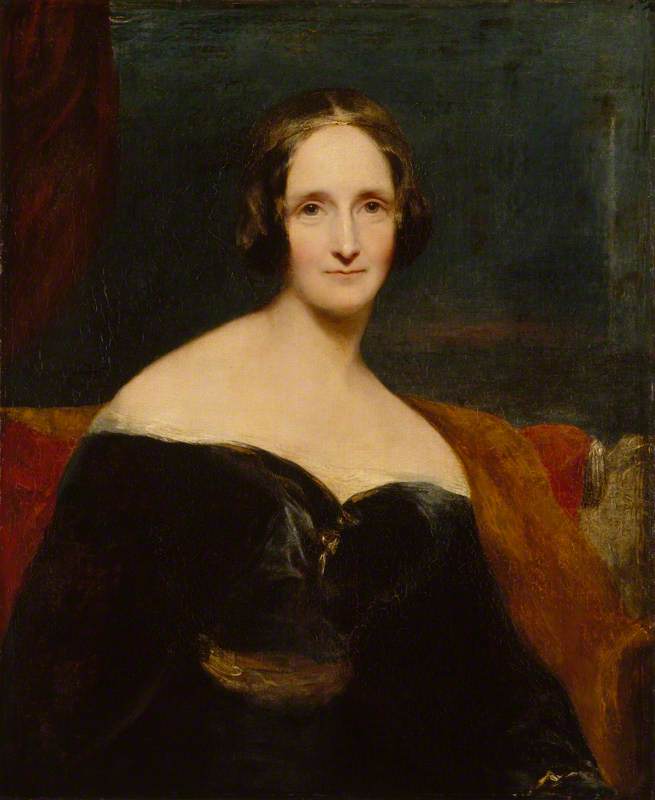
Photo of Mary Shelley
Photo: Richard Rothwell · Public domain · via source

Author profile

Mary Shelley

English Romantic-era novelist (1797–1851) who wrote Frankenstein at eighteen. Her Gothic, historical and speculative fiction, from Valperga to The Last Man, keeps asking what people owe the lives they create.

1 published book 0 published articles

About Mary Shelley

Mary Shelley was born Mary Wollstonecraft Godwin in London on 30 August 1797. Her father was the political philosopher William Godwin, her mother the feminist writer Mary Wollstonecraft, who died soon after the birth. She grew up among radical thinkers and married the poet Percy Bysshe Shelley. After his drowning in 1822 she kept writing and also edited his poems. She died in London on 1 February 1851.

She wrote across modes. Valperga (1823) is a historical novel set in medieval Italy. The Last Man (1826) imagines a plague wiping out humanity. The Fortunes of Perkin Warbeck, Lodore and Falkner followed. Loss, and the damage done by ambition, isolation or neglect, recur in all of them.

Frankenstein came first. She began it at eighteen during the wet summer of 1816 near Lake Geneva, when Lord Byron proposed that everyone in the party write a ghost story. It appeared anonymously on 1 January 1818, in a first printing of 500 copies. A revised edition with her own account of that summer came out in 1831. Stage and screen versions have been multiplying ever since, and the book is often considered an early landmark of science fiction.

Start with Frankenstein. The Penguin Classics edition prepared by Maurice Hindle adds an introduction and notes that help with the novel's background. If you finish it wanting more, read The Last Man next: it is bleaker, larger in scale, and shows how far her imagination ran beyond her famous creature.

Published books

Author

Frankenstein

Mary Shelley's Frankenstein follows a young scientist who builds a living being from lifeless matter, recoils from it in horror, and then watches the consequences spread from Switzerland across Europe and into the Arctic. The story is told through nested voices: an explorer, the scientist and the created being himself. Together they ask who is answerable for what knowledge produces, and what a maker owes to the one he has made. This Penguin Classics paperback, edited by Maurice Hindle, presents the revised 1831 text with a critical introduction, notes and extra material. It is often counted among the foundational science fiction books, and it remains one of the classic novels to read for anyone curious about the roots of modern arguments over technology, ambition and compassion.

View book