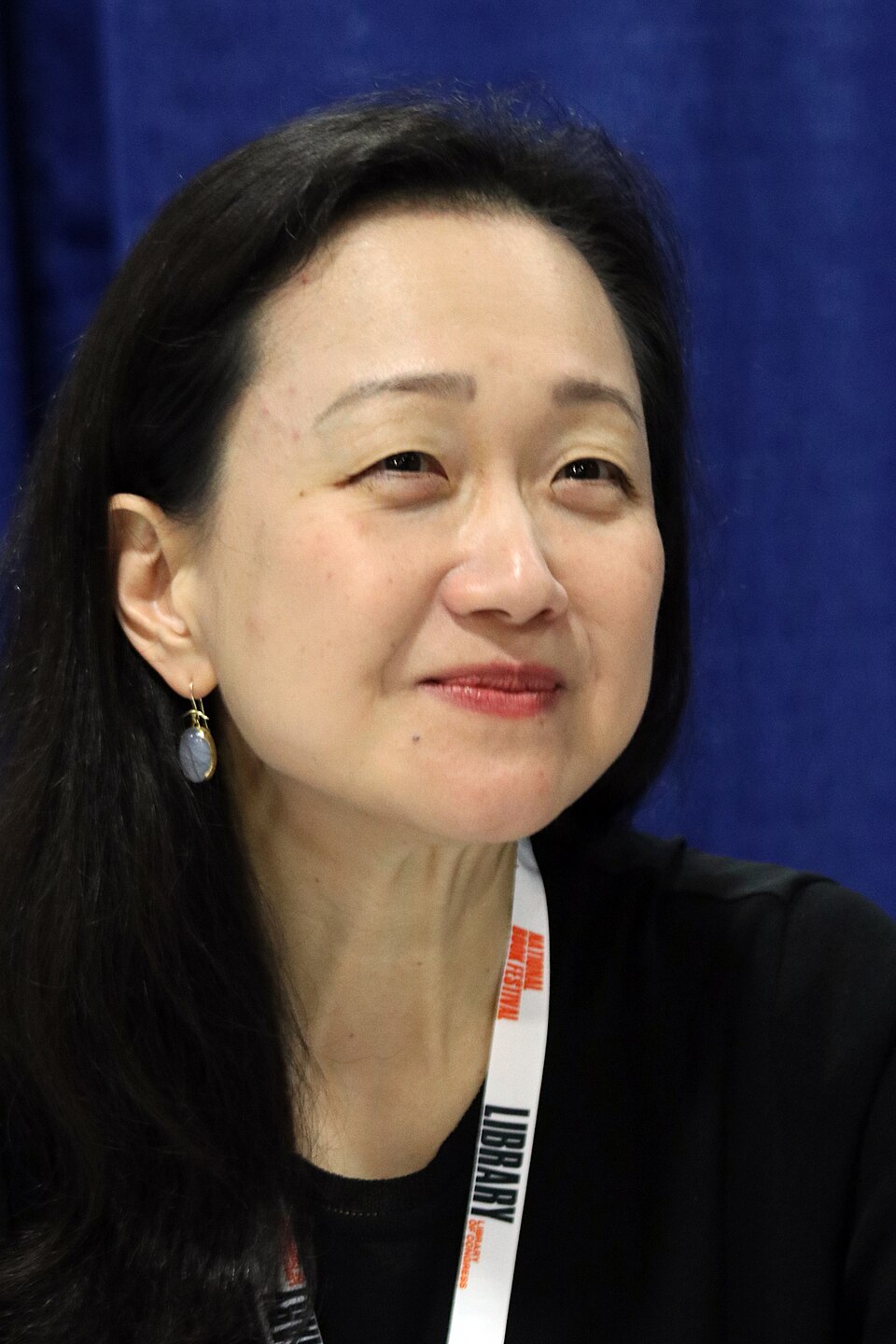
Photo of Min Jin Lee
Photo: Fuzheado · CC BY-SA 4.0 · via source

Author profile

Min Jin Lee

Korean American novelist and essayist Min Jin Lee writes about migration, class, family and the Korean diaspora. She is best known for Free Food for Millionaires and Pachinko.

1 published book 0 published articles

Official website

About Min Jin Lee

Born in Seoul, Min Jin Lee moved with her family to Queens, New York, at seven. She studied history at Yale and law at Georgetown, then worked briefly as a corporate lawyer before turning to writing. Her essays and criticism have appeared in publications including The New Yorker and The New York Times.

Lee writes expansive social novels shaped by close observation and extensive research. Her central subjects include migration, class, ambition and the costs of belonging. Free Food for Millionaires follows Casey Han, a young Korean American woman confronting money and status in New York. Pachinko shifts across four generations, beginning with Sunja in Japanese-occupied Korea and following her family’s life in Japan.

Pachinko was a finalist for the 2017 National Book Award for Fiction and was named one of The New York Times Book Review’s ten best books of that year. Apple adapted it as a multilingual television drama that premiered in 2022. Lee has also received fiction fellowships from the Guggenheim Foundation, Harvard’s Radcliffe Institute and the New York Foundation for the Arts.

Start with Pachinko. Its long historical reach is anchored in intimate choices about love, survival and family duty, while Sunja’s journey opens onto the often-overlooked history of Koreans in Japan. Readers drawn to contemporary New York and sharp studies of class can continue with Free Food for Millionaires.

Published books

Author

Pachinko

Pachinko is a multigenerational historical novel following a Korean family from a fishing village near Busan into immigrant life in Japan. Beginning during Japan’s colonial rule of Korea, the narrative develops from Sunja’s consequential early choices and follows their effects through successive generations. Family members confront poverty, war, displacement, social exclusion, religious conviction, commercial ambition, and changing ideas about what constitutes a successful life. Rather than treating history primarily through political leaders or military campaigns, Min Jin Lee places large historical forces inside homes, workplaces, marriages, schools, churches, and family relationships. Colonialism and discrimination become visible through restrictions on movement, employment, housing, education, reputation, and belonging. The novel’s wide time span also allows it to examine how hardship changes form: later generations may acquire education and money without escaping inherited stigma…

View book