
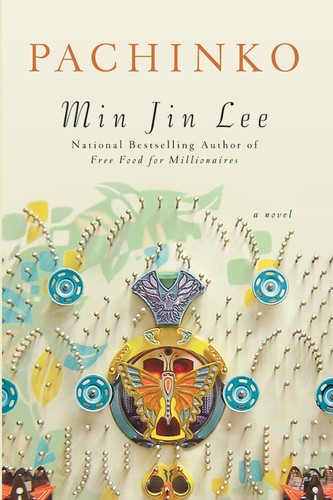
Pachinko
A Novel
Pachinko is a multigenerational historical novel following a Korean family from a fishing village near Busan into immigrant life in Japan. Beginning during Japan’s colonial rule of Korea, the narrative develops from Sunja’s consequential early choices and follows their effects through successive generations. Family members confront poverty, war, displacement, social exclusion, religious conviction, commercial ambition, and changing ideas about what constitutes a successful life. Rather than treating history primarily through political leaders or military campaigns, Min Jin Lee places large historical forces inside homes, workplaces, marriages, schools, churches, and family relationships. Colonialism and discrimination become visible through restrictions on movement, employment, housing, education, reputation, and belonging. The novel’s wide time span also allows it to examine how hardship changes form: later generations may acquire education and money without escaping inherited stigma…
Where to buy or borrow
Are you selling this book? Bookstores, publishers, authors and libraries can be listed here for free. Request a listing
About this book
Rather than treating history primarily through political leaders or military campaigns, Min Jin Lee places large historical forces inside homes, workplaces, marriages, schools, churches, and family relationships. Colonialism and discrimination become visible through restrictions on movement, employment, housing, education, reputation, and belonging. The novel’s wide time span also allows it to examine how hardship changes form: later generations may acquire education and money without escaping inherited stigma or uncertainty about identity.
The title refers to the Japanese gaming business that becomes economically important to several characters. Within the novel, pachinko also functions as a structural metaphor. Its mixture of chance, manipulation, repetition, and constrained possibility reflects lives in which effort matters but does not produce fair or predictable outcomes.
Deep Overview
Rather than treating history primarily through political leaders or military campaigns, Min Jin Lee places large historical forces inside homes, workplaces, marriages, schools, churches, and family relationships. Colonialism and discrimination become visible through restrictions on movement, employment, housing, education, reputation, and belonging. The novel’s wide time span also allows it to examine how hardship changes form: later generations may acquire education and money without escaping inherited stigma or uncertainty about identity.
The title refers to the Japanese gaming business that becomes economically important to several characters. Within the novel, pachinko also functions as a structural metaphor. Its mixture of chance, manipulation, repetition, and constrained possibility reflects lives in which effort matters but does not produce fair or predictable outcomes.
Key Themes
Names, legal identity, language, ancestry, and public reputation carry unusual weight. Characters must decide when to reveal or conceal their Korean origins, and those choices affect relationships, education, employment, and self-respect. The book also explores how gender shapes available forms of sacrifice and power: women’s labor often sustains the family even when public authority and financial control remain largely male.
A further theme is the difference between private morality and public respectability. Social institutions frequently label people according to ethnicity or occupation rather than conduct, while characters regarded as disreputable may provide essential protection or material support.
Historical and Cultural Context
A central context is the experience of Koreans resident in Japan, commonly discussed through the term Zainichi Korean. Their legal status, citizenship options, and social treatment changed over time, but discrimination remained a persistent force. The novel portrays exclusion not as a single event but as a condition reproduced through schools, employers, landlords, official documents, marriage expectations, and everyday prejudice.
Lee has explained that she first became interested in Koreans in Japan after hearing a lecture while in college. She later lived in Japan and interviewed people from varied Korean-Japanese backgrounds. Her account remains fiction rather than a comprehensive social history, but this research helps explain the novel’s attention to differences within the community rather than presenting a single representative experience.
Intended Audience
The book is likely to reward groups that want to discuss difficult questions without simple answers: loyalty across generations, the ethics of concealment, survival under discrimination, religious faith, social mobility, and the price of assimilation. Readers seeking a narrowly focused central protagonist or a fast, suspense-driven plot may find its broad cast and long historical arc less immediately suited to their preferences.
Reading Difficulty
No specialist historical knowledge is required. Some unfamiliar Korean and Japanese names, foods, customs, occupations, and political circumstances appear, but their significance is usually conveyed through context. The greater difficulty is emotional rather than technical: the narrative includes discrimination, poverty, illness, sexual exploitation, wartime danger, family separation, and suicide.
Helpful Background Knowledge
It is also useful to understand that Koreans in Japan were not a socially or politically uniform population. Migration occurred under different degrees of coercion and economic necessity, and later generations faced complicated questions involving nationality, residence, allegiance, language, and whether to identify with South Korea, North Korea, Japan, or a distinct Korean-Japanese community.
Knowing the basic operation and social reputation of pachinko can clarify the title. It is a mechanical gaming activity associated with specialized parlors; within the novel, the industry offers economic opportunity while carrying social stigma.
Why Read Pachinko?
Its generational scope also allows readers to compare different kinds of survival. One generation may define success as food and physical safety; another may pursue education, professional status, wealth, or social acceptance. The book is particularly valuable for considering why material advancement does not necessarily end inherited exclusion.
Pachinko was a finalist for the 2017 National Book Award for Fiction, confirming its substantial place in contemporary American literary discussion without implying that the award itself settles questions of interpretation or quality.
Potential Reader Takeaways
Readers may also reconsider conventional stories of upward mobility. In Pachinko, hard work can create opportunity, but outcomes remain influenced by inheritance, chance, social networks, prejudice, and historical circumstance. Family endurance is real, yet survival has costs that are not always visible to later generations.
The book also encourages attention to unrecorded labor. Food preparation, caregiving, informal commerce, emotional restraint, and repeated acts of practical sacrifice become forms of historical agency even when they receive little public recognition.
Editorial Strengths
The multigenerational structure permits meaningful contrasts between parents and children without reducing either generation to a simple moral lesson. Characters adapt to different environments, and the novel shows that strategies necessary for one generation can become burdens for another.
Another strength is its treatment of moral complexity. Love, money, protection, exploitation, faith, and ambition frequently overlap. Characters can be generous and controlling, resilient and secretive, principled and compromised. This complexity supports discussion rather than prescribing a single interpretation.
Limitations and Reader Cautions
Because the novel covers a large Korean-Japanese experience through one fictional family, it should not be treated as a complete history or as representative of every Zainichi Korean life. Supplementary historical sources are advisable for readers studying legal status, wartime migration, colonial policy, or political divisions within Korean communities in Japan.
The book’s accumulation of hardship can also feel emotionally relentless. Its accessible style should not be mistaken for light subject matter.
Important Concepts and Terms
Japanese colonial rule of Korea: The period formally lasting from 1910 to 1945, which establishes the novel’s initial political conditions and influences migration, language, economics, and identity.
Pachinko: A Japanese mechanical gaming activity and commercial industry. In the novel it is both a livelihood and a metaphor for constrained chance, repetition, risk, and social stigma.
Assimilation and passing: Strategies by which characters attempt to reduce discrimination by appearing socially or ethnically indistinguishable from the Japanese majority. The novel examines the psychological and relational costs of concealment.
Diaspora and intergenerational identity: The experience of belonging imperfectly to more than one national or cultural world, with later generations inheriting histories they did not personally experience.
Questions the Novel Explores
Reading Group Guide
Groups can track food, money, names, religious belief, education, and housing across the novel. Each reveals changes in security and status that a purely political timeline would miss. The title should be discussed both literally and metaphorically: consider who appears to control the game, who understands its mechanisms, and whether persistence changes the odds.
For historical grounding, pair the novel with a concise source on Japanese colonial rule in Korea and a reliable introduction to Korean communities in Japan. Participants should avoid treating any one fictional character as a universal representative of Korean, Japanese, immigrant, or religious experience.
Discussion Questions
2. Which characters possess formal authority, and which exercise power through labor, money, information, or care?
3. How do Sunja’s early decisions continue to shape relatives who did not participate in them?
4. When does concealment function as protection, and when does it become destructive?
5. How does the meaning of Korea change across generations that have different levels of direct connection to it?
6. What does Japan represent to those who arrive as immigrants compared with those born there?
7. How do religion and commercial ambition offer competing—or overlapping—ways of interpreting suffering?
8. Why is pachinko an effective title and organizing metaphor for the family’s history?
9. Does financial prosperity substantially alter the family’s social position? What remains unchanged?
10. How does the novel challenge distinctions between respectable and disreputable work?
11. Which historical events are shown directly, and which are registered mainly through their consequences?
12. Does the multigenerational structure deepen the characters’ stories, or does its breadth sometimes limit intimacy?
Sources and Verification
Comments
No published comments yet.
Available editions
Hardcover
First U.S. hardcover edition
- Publisher
- Grand Central Publishing
- ISBN-13
- 9781455563937
- Publication date
- Pages
- 496