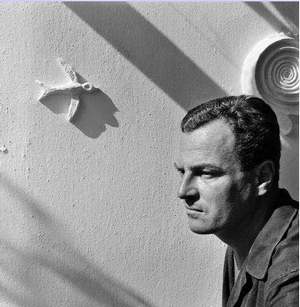
Photo of Patrick Leigh Fermor
Photo: Δημήτρης Παπαδήμος · CC BY-SA 3.0 · via source

Author profile

Patrick Leigh Fermor

British travel writer, soldier and scholar whose richly observed books join journeys with history, language and memoir. He is best known for A Time of Gifts and his writing on Greece.

1 published book 0 published articles

About Patrick Leigh Fermor

Patrick Leigh Fermor (1915–2011) was a British travel writer, scholar and soldier. From 1933 to 1935, he travelled largely on foot from Rotterdam to Istanbul. During the Second World War he served with the Special Operations Executive in occupied Crete, where he led the party that abducted German general Heinrich Kreipe. He was knighted in 2004.

His writing turns travel into an inquiry across centuries. Landscapes lead to architecture, songs, languages, religious customs and the traces left by conquest. The prose can be ornate and learned, but it remains alert to hospitality, conversation and the practical comedy of moving through unfamiliar places.

A Time of Gifts, published in 1977, recounts the first stretch of his youthful walk, from the Hook of Holland to Hungary, through a Europe already shadowed by Hitler’s rise. Between the Woods and the Water continues the journey to the Iron Gates; the posthumous The Broken Road draws on surviving notes and an earlier draft. His other major books include The Traveller’s Tree, about the Caribbean, and the Greek travel books Mani and Roumeli. A Time of Gifts received the WH Smith Literary Award.

Start with A Time of Gifts. It offers the clearest entrance to Leigh Fermor’s work: a young walker’s encounters remembered by an older writer, with the Rhine, the Danube, monasteries, farms and country houses opening into layers of European history.

Published books

Author

A Time of Gifts

In December 1933, eighteen-year-old Patrick Leigh Fermor began walking from the Hook of Holland toward Constantinople. A Time of Gifts follows the first portion of that journey through the Low Countries, Germany, Austria, Czechoslovakia, and toward Hungary. He moves between barns, inns, monasteries, workers’ homes, and aristocratic houses, observing landscapes and social worlds that would soon be transformed by dictatorship and war. Written more than four decades after the walk, the book combines youthful immediacy with an older writer’s historical knowledge. Rivers, buildings, songs, languages, legends, religious traditions, and chance encounters become routes into Europe’s layered past. The result is at once a travel narrative, a coming-of-age memoir, and an elegy for the cultural variety of interwar Central Europe. Its central achievement lies less in reaching a destination than in showing how attentive movement through unfamiliar places can turn geography into lived history.

View book