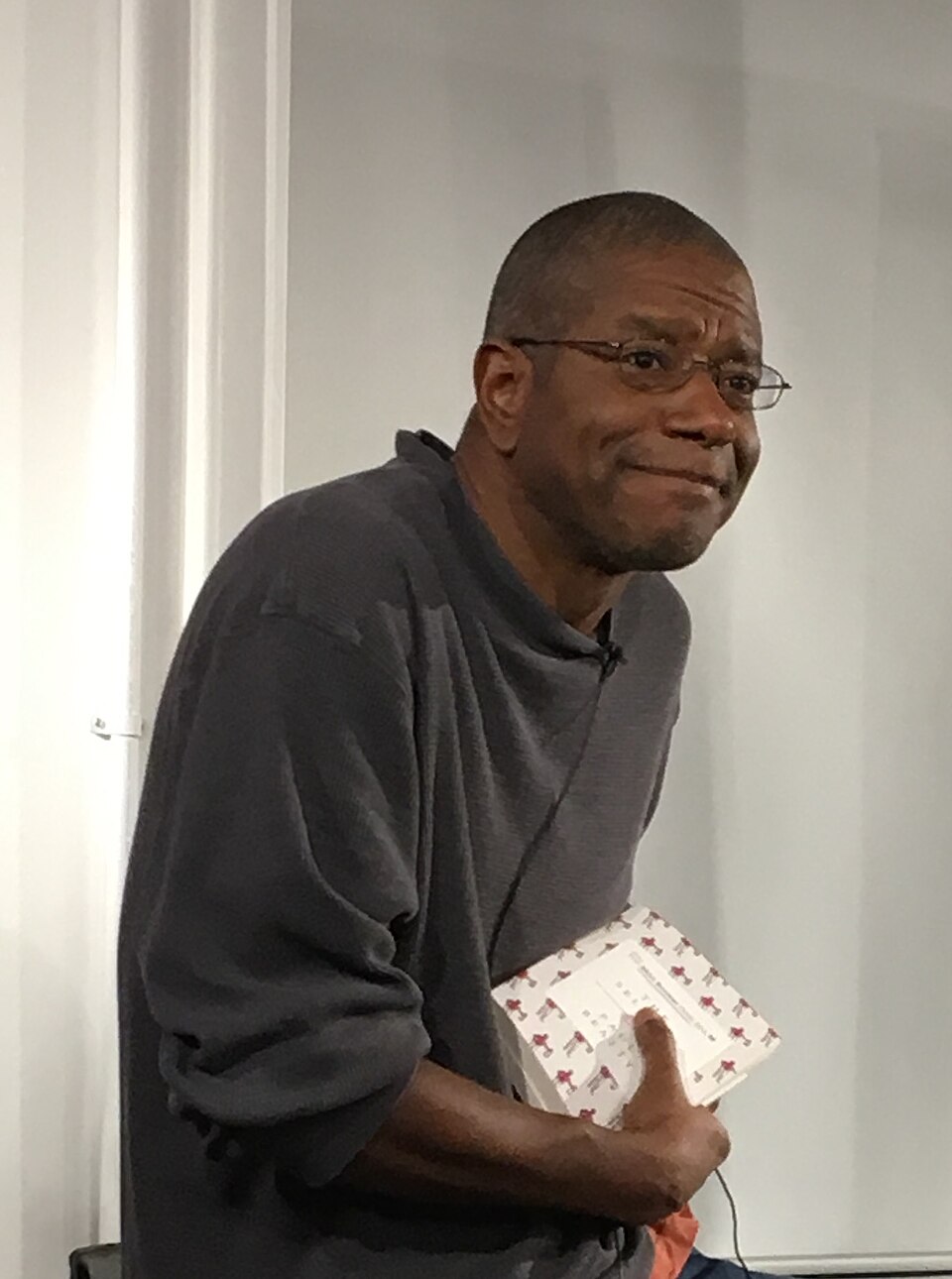
Photo of Paul Beatty
Photo: Munier2016 · CC BY-SA 4.0 · via source

Author profile

Paul Beatty

Paul Beatty is an American novelist and poet known for darkly comic, formally daring writing about race, language and American public life.

1 published book 0 published articles

About Paul Beatty

Born in Los Angeles in 1962, Paul Beatty began his literary career as a poet before turning to fiction. He has published the poetry collections Big Bank Take Little Bank and Joker, Joker, Deuce, and he edited Hokum: An Anthology of African-American Humor. He is also a professor of writing at Columbia University.

Beatty’s novels use satire, absurdity and densely layered wordplay to examine race, class, identity and the stories Americans tell about themselves. His comedy is confrontational rather than reassuring. The White Boy Shuffle follows a reluctant poet-prophet in Los Angeles, while Tuff and Slumberland move through New York and Berlin with the same alertness to speech, music and cultural performance.

The Sellout, his fourth novel, won the 2015 National Book Critics Circle Award for Fiction and the 2016 Booker Prize, making Beatty the first American writer to receive the Booker. The novel begins with its narrator before the US Supreme Court, then traces the events that brought him there: an attempt to restore his erased California hometown to the map by introducing segregation and accepting an elderly man as his slave.

Start with The Sellout. Its outrageous premise, rapid-fire references and sustained argument about racism make it demanding, but it offers the clearest introduction to Beatty’s combination of comic invention and intellectual provocation.

Published books

Author

The Sellout

Paul Beatty’s The Sellout is a ferocious comic novel about race, belonging, and the contradictions hidden inside American ideals. Its unnamed Black narrator lives in Dickens, a fictional community on the southern edge of Los Angeles that has been erased from official maps. Convinced that restoring the town requires drastic action, he attempts to reintroduce segregation and becomes entangled in an arrangement that others interpret as slavery. The resulting case carries him to the United States Supreme Court. Beatty uses this deliberately outrageous premise to examine racial identity, civic neglect, educational inequality, policing, historical memory, and the consolations offered by simplistic stories of progress. The novel’s jokes are dense, abrasive, and inseparable from its serious questions: Who is allowed to define a community? What does equality mean when institutions remain unequal? And what happens when the language of racial transcendence obscures the persistence of racism?

View book