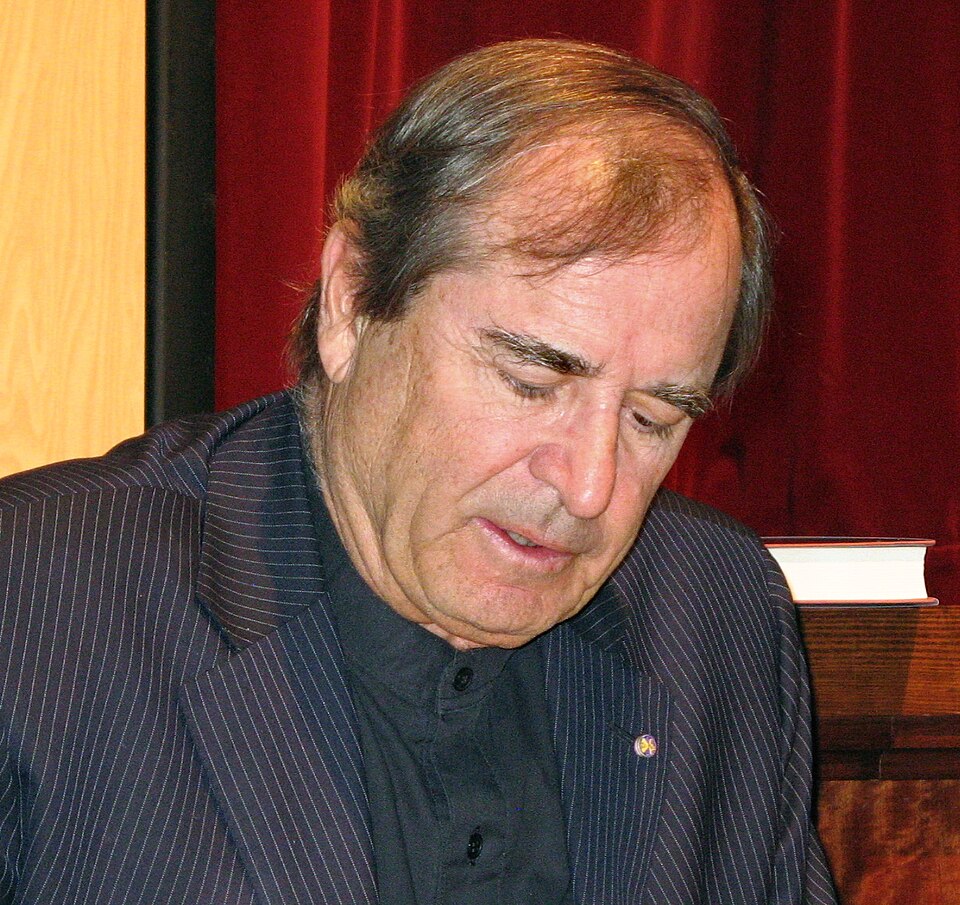
Photo of Paul Theroux
Photo: Ramnarasimhan · CC BY 3.0 · via source

Author profile

Paul Theroux

American novelist and travel writer Paul Theroux is known for keenly observed journeys by rail and fiction about outsiders, ambition and cultural collision.

1 published book 0 published articles

Official website

About Paul Theroux

Paul Theroux is an American novelist and travel writer born in 1941. After university, he joined the Peace Corps and went to Africa; his years abroad helped shape a career spent examining places through movement, conversation and close observation. He has also written short stories, essays and criticism.

His travel books are built around journeys with a clear physical structure: a railway line, a coastline, a road or a sequence of islands. The prose can be comic, skeptical and sharply attentive to fellow passengers. His fiction often places restless or estranged characters far from familiar ground, as in The Mosquito Coast and Hotel Honolulu.

The Great Railway Bazaar, published in 1975, follows trains from Britain through Europe and Asia, returning by the Trans-Siberian route. Other major travel books include The Old Patagonian Express, Riding the Iron Rooster and Dark Star Safari. Picture Palace won a Whitbread award, while The Mosquito Coast shared the James Tait Black Memorial Prize and was adapted for film. In 2015, the Royal Geographical Society awarded Theroux its Patron’s Medal.

Start with The Great Railway Bazaar. Its compartments, stations and chance encounters provide an ideal introduction to Theroux’s method: the route supplies the narrative, but the real subject is what people reveal while passing through unfamiliar territory.

Published books

Author

The Great Railway Bazaar

In The Great Railway Bazaar, Paul Theroux recounts a four-month rail journey begun in London in 1973. Traveling east through Europe, Turkey, Iran, the Indian subcontinent, Southeast Asia, and Japan, he eventually returns across the Soviet Union on the Trans-Siberian Railway. The itinerary supplies the book's structure, but its real substance lies in railway compartments, stations, border crossings, delays, landscapes, and conversations with strangers. Theroux treats each train as a temporary society in which class, nationality, loneliness, prejudice, curiosity, and political tension become unusually visible. His approach is literary rather than instructional: he selects telling encounters and sharp impressions instead of offering a comprehensive account of every destination. The result is both a record of a vanished network of overland travel and an influential example of personality-driven travel writing. Its wit and observational force remain central to its appeal, while its judgmen…

View book