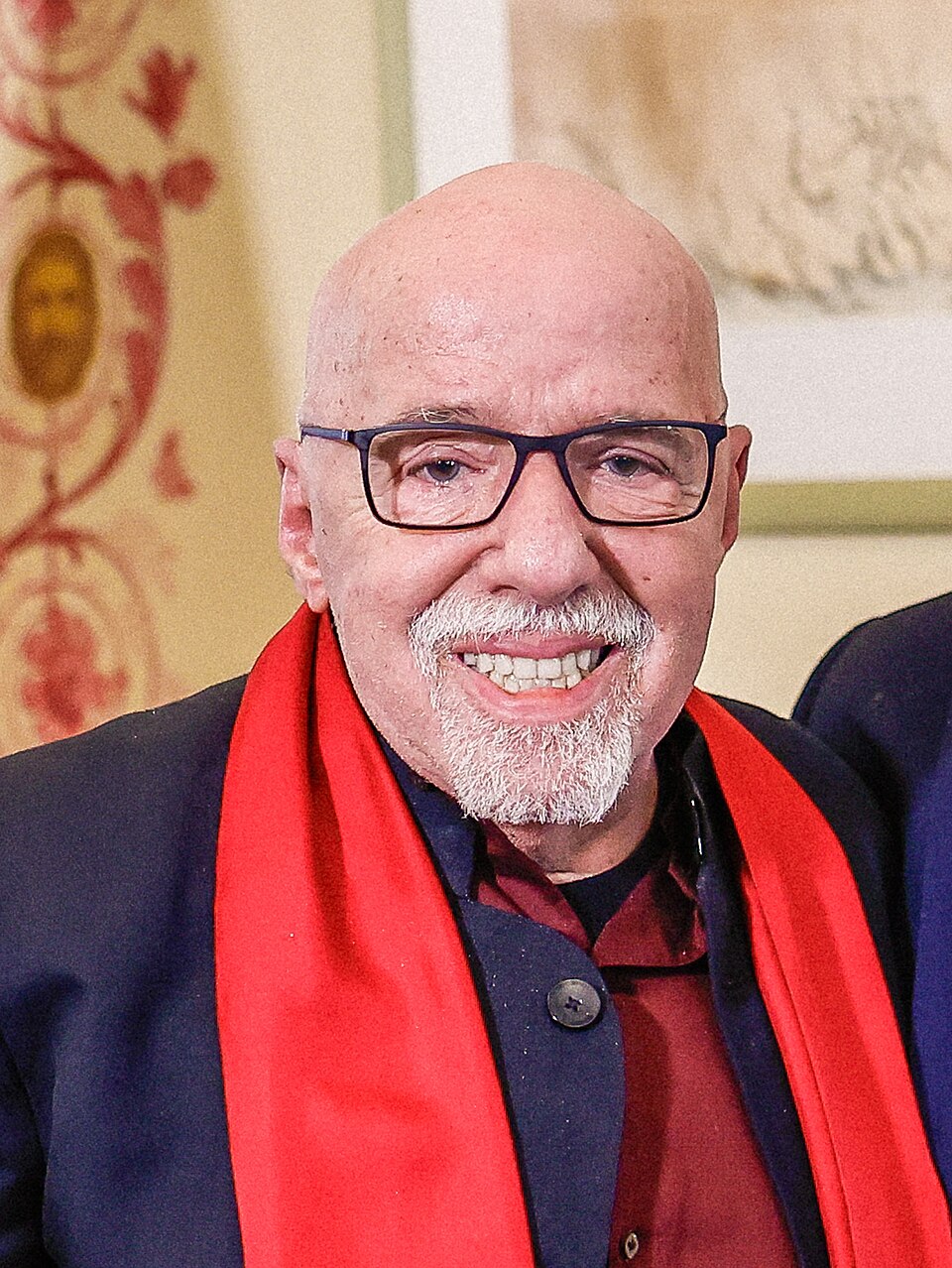
Photo of Paulo Coelho
Photo: Lula Oficial · CC BY-SA 2.0 · via source

Author profile

Paulo Coelho

Brazilian novelist and former song lyricist, born in Rio de Janeiro in 1947. He writes spiritual, parable-like fiction about following a personal calling, and is best known for The Alchemist.

1 published book 0 published articles

Official website

About Paulo Coelho

Paulo Coelho was born in Rio de Janeiro in 1947. Before fiction took over his life he wrote song lyrics for Brazilian performers, among them Elis Regina and Rita Lee. In 1986 he walked the pilgrim road to Santiago de Compostela in Spain. That journey became his first book, The Pilgrimage, published in 1987.

His novels read like parables. The chapters are short, the sentences plain, and the hero usually leaves home because of a dream or an inner pull. Spiritual searching, omens and the nerve to follow a personal calling come back from book to book.

The Alchemist followed in 1988. It tells of Santiago, a Spanish shepherd boy who sets out for Egypt after a recurring dream. The English translation by Alan R. Clarke came out from Harper San Francisco in 1993, under the subtitle A Fable About Following Your Dream. Pan Macmillan reports that the book earned Coelho a Guinness World Record in 2009 as the most translated author. He has been a member of the Brazilian Academy of Letters since 2002 and was named a United Nations Messenger of Peace in 2007.

Start with The Alchemist. It is short, it is the book that made his name, and it contains most of his habits in miniature. If you want to see where that outlook came from, read The Pilgrimage next, his account of the Santiago walk. After that, try a later novel such as Veronika Decides to Die or Eleven Minutes.

Published books

Author

The Alchemist

First published in Portuguese in 1988 and brought to English readers in 1993, The Alchemist is Paulo Coelho's short fable about Santiago, a young Andalusian shepherd who leaves a settled life to follow a recurring dream of treasure near the Egyptian pyramids. Along the way he meets people who test his resolve, and he learns to read omens, absorb setbacks, and tell a true calling from comfortable routine. Its central idea, that each person has a Personal Legend worth pursuing, helped make it one of the most widely circulated novels of recent decades and a frequent pick among spiritual books. Because it reaches English through Alan R. Clarke's translation, it is also a landmark of translated fiction. This profile covers the 2006 HarperCollins paperback and adds context, themes, cautions, and discussion starting points.

View book