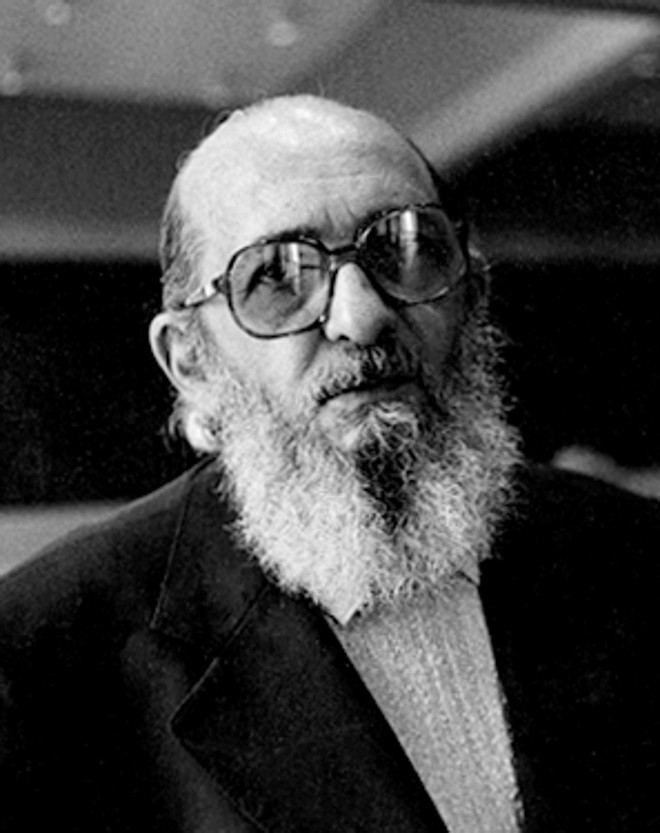
Photo of Paulo Freire
Photo: Slobodan Dimitro · CC BY-SA 3.0 · via source

Author profile

Paulo Freire

Brazilian educator and writer Paulo Freire transformed debates about literacy, power and teaching. His books argue for education built through dialogue, critical reflection and action.

1 published book 0 published articles

Official website

About Paulo Freire

Paulo Freire (1921–1997) was a Brazilian educator and educational thinker whose work grew from adult-literacy programs in northeastern Brazil. After the 1964 military coup, he was imprisoned and then exiled. He wrote Pedagogy of the Oppressed while living in Chile, later taught as a visiting professor at Harvard and worked as an educational adviser to the World Council of Churches.

Freire wrote nonfiction about education, politics and human freedom. His prose joins philosophical argument to practical teaching experience. Again and again, he returns to dialogue, critical consciousness and praxis: reflection joined to action. He rejects classrooms in which authorities simply deposit information into passive students, the model he famously calls “banking” education.

Pedagogy of the Oppressed appeared in 1968 and in English in 1970. It became a foundational work of critical pedagogy. Other major books include Education for Critical Consciousness, Pedagogy of Hope and Pedagogy of Autonomy. Brazil legally designated Freire the Patron of Brazilian Education in 2012, and UNESCO’s Memory of the World program recognizes his archival collection.

Begin with Pedagogy of the Oppressed. It introduces his central contrast between banking and problem-posing education, then develops his case for learning through dialogue. The argument is demanding and politically charged, but it provides the clearest foundation for reading his later work, especially Pedagogy of Hope.

Published books

Author

Pedagogy of the Oppressed

Paulo Freire’s Pedagogy of the Oppressed examines education as a field where social power is either reproduced or challenged. Freire criticizes the “banking” model, in which teachers treat learners as passive containers for authorized knowledge. He proposes instead a dialogical, problem-posing education rooted in learners’ experience and directed toward critical understanding of the world. Central to the book is praxis: the continuing union of reflection and action through which people can recognize oppression and participate in transforming the conditions that sustain it. Freire insists that liberation cannot be delivered to marginalized people as a gift; it must be developed with them as thinking and acting subjects. Moving from an account of dehumanization to contrasting theories of oppressive and liberatory cultural action, the book connects classroom relationships with wider struggles over authority, knowledge, and political agency. It remains a foundational work of critical peda…

View book