
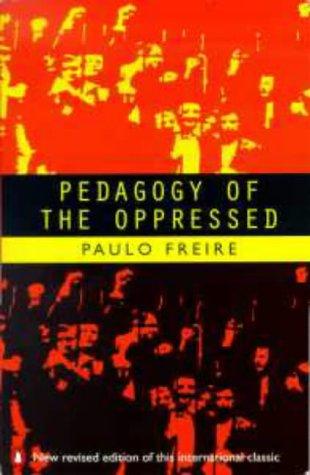
Pedagogy of the Oppressed
50th Anniversary Edition
Paulo Freire’s Pedagogy of the Oppressed examines education as a field where social power is either reproduced or challenged. Freire criticizes the “banking” model, in which teachers treat learners as passive containers for authorized knowledge. He proposes instead a dialogical, problem-posing education rooted in learners’ experience and directed toward critical understanding of the world. Central to the book is praxis: the continuing union of reflection and action through which people can recognize oppression and participate in transforming the conditions that sustain it. Freire insists that liberation cannot be delivered to marginalized people as a gift; it must be developed with them as thinking and acting subjects. Moving from an account of dehumanization to contrasting theories of oppressive and liberatory cultural action, the book connects classroom relationships with wider struggles over authority, knowledge, and political agency. It remains a foundational work of critical peda…
Where to buy or borrow
Are you selling this book? Bookstores, publishers, authors and libraries can be listed here for free. Request a listing
About this book
Deep Overview
A persistent danger is internalization: people subjected to domination may absorb the oppressor’s values, judgments, and image of success. Freedom can consequently feel threatening because it demands responsibility, uncertainty, and collective action rather than dependence on familiar authority. Freire also warns against paternalistic reform. When leaders claim to emancipate people without listening to them or sharing power, they reproduce the structure they profess to oppose.
The book’s best-known educational argument is its critique of banking education. In this arrangement, the teacher possesses knowledge and deposits it into students, who are expected to receive, store, and repeat it. Freire’s objection is not merely that lectures or memorization can be dull. The deeper problem is a social relationship that defines one party as an active knower and the other as a passive object. Such teaching trains learners to accept reality as fixed and authority as naturally concentrated elsewhere.
Problem-posing education offers a different relationship. Teachers and students investigate reality together, although Freire does not suggest that experience, expertise, or responsibility simply disappear. Knowledge emerges through inquiry into meaningful problems, especially those connected to learners’ material and cultural lives. Dialogue is essential because it allows participants to name their world, test interpretations, and recognize themselves as capable of understanding and changing it.
Freire calls the growth of this awareness conscientization, often rendered as critical consciousness. It is not the acquisition of approved political slogans. It is an increasingly rigorous ability to connect immediate experience with the social structures and historical forces that shape it. This consciousness must become praxis—the reciprocal movement between reflection and action. Reflection without action risks becoming detached verbalism; action without reflection risks reproducing the very patterns it seeks to overcome.
The later chapters broaden the argument from classroom method to cultural action. Freire contrasts antidialogical practices—conquest, division, manipulation, and cultural invasion—with dialogical practices—cooperation, unity, organization, and cultural synthesis. The distinction applies to educators, political leaders, institutions, and movements. His central test is whether people participate in interpreting their conditions and making history, or whether others define reality and act on their behalf.
Key Themes
**Education and power:** Teaching is never isolated from assumptions about who may speak, whose knowledge counts, and whether society is presented as fixed or changeable.
**Dialogue:** Genuine dialogue requires humility, trust, critical inquiry, and willingness to be changed by encounter. It is more demanding than casual conversation or classroom participation.
**Praxis:** Thought and action must continually correct one another. Understanding becomes liberatory only when it informs responsible action, while action must remain open to reflection and revision.
**Critical consciousness:** Learners move beyond treating hardship as private fate and begin examining the social, economic, cultural, and historical relationships that produce it.
**Internalized oppression:** Domination operates not only through external force but also through desires, fears, and standards absorbed by those living under it.
**Cultural action:** Institutions and movements can impose interpretations upon people or work with communities to investigate and transform shared reality.
Historical and Intellectual Context
Its intellectual vocabulary reflects several traditions rather than a single doctrine. Marxist analysis informs its attention to class, ideology, labor, and material power. Existentialism and phenomenology help frame people as unfinished beings who become more fully human through conscious engagement with the world. Christian humanism contributes its concern with love, hope, vocation, and solidarity, although the book is not a theological treatise. Its original Portuguese publication appeared in 1968, followed by the English translation in 1970. The work later became central to critical pedagogy and influenced discussions far beyond adult literacy, including teacher education, community organizing, cultural studies, and social movements.
Intended Audience
Readers seeking a reflective framework for examining authority and participation will find more here than those wanting ready-made lesson plans. It may also frustrate readers who prefer politically neutral accounts of schooling or who want claims grounded primarily in contemporary empirical education research. Its strongest audience is willing to treat the classroom as part of a larger social world and to question both institutional authority and the educator’s own role.
Reading Difficulty
Reading one chapter at a time and mapping its paired contrasts—oppression and liberation, banking and problem-posing, antidialogical and dialogical action—can make the structure clearer. Readers should also distinguish the core four-chapter text from the introductions, forewords, afterword, and interviews included in the anniversary edition. The supplementary material is useful, but beginning with it can create the impression that later commentators’ formulations are Freire’s own.
Helpful Background Knowledge
It is also useful to know that “oppressed” names a structural relationship, not merely an individual feeling of mistreatment. Likewise, “dialogue” is an ethical and political practice rather than an informal exchange of views. A brief introduction to Marxist accounts of class and ideology, existentialist ideas of freedom and responsibility, and liberation theology’s concern with faith and social transformation can illuminate the book’s mixed intellectual inheritance without requiring agreement with any of those traditions.
Why Read This Book?
The book is also useful beyond formal schooling. Its contrast between action done for people and action developed with them applies to nonprofit work, public policy, political organizing, leadership, research, and community engagement. Most importantly, Freire does not permit reformers to stand outside the analysis: anyone claiming to oppose domination must ask whether their own methods reproduce silence, dependency, or cultural imposition.
Reader Takeaways
The book also encourages readers to recognize learners as producers of knowledge rather than empty recipients, to connect individual experience with institutional structure, and to view education as a relationship carrying ethical and political consequences. Freire’s framework provides practical diagnostic questions: Who defines the problem? Who is authorized to interpret experience? Whose language frames the discussion? What actions become possible through learning? Readers may also become more alert to the difference between critical inquiry and indoctrination, and to the continuing need for reflection after action begins.
Strengths
Freire also exposes the contradiction within paternalistic reform. A program cannot plausibly cultivate agency while treating its participants as objects of expert management. His analysis therefore remains useful wherever institutions speak of empowerment while retaining control over knowledge and decisions.
The book is compact yet ambitious, moving from classroom relations to leadership, culture, organization, and political struggle. Its conceptual contrasts are memorable enough to travel across fields while still raising difficult questions about authority, participation, and responsibility.
Limitations and Cautions
Its opposition between oppressor and oppressed can illuminate structural domination, but it may oversimplify situations in which people occupy different positions across class, race, gender, disability, citizenship, and institutional role. Later feminist and intersectional thinkers have extended and criticized Freire, particularly regarding the male-centered language and insufficiently differentiated treatment of oppression in the original text.
There is also a practical tension between dialogical ideals and unequal expertise. Education can reproduce domination, but teachers still make consequential choices about evidence, sequence, standards, and safety. The book prompts rather than fully resolves the question of how authority can be exercised transparently and accountably without pretending that all participants hold identical roles or knowledge.
Important Concepts, People, Places, and Movements
**Banking education:** Freire’s model of teaching as one-way deposit. It matters because the hierarchy of knower over recipient becomes a rehearsal for social passivity.
**Problem-posing education:** Collaborative investigation of concrete problems. It replaces the delivery of finished reality with disciplined inquiry into a world that can be interpreted and changed.
**Praxis:** The continuing unity of reflection and action. For Freire, neither abstract analysis nor unexamined activism is sufficient for liberation.
**Conscientization:** The development of critical consciousness through which people perceive links among experience, history, and social structure.
**Dialogue:** A relationship of shared inquiry grounded in respect and responsibility. It is the foundation of Freire’s pedagogy, not merely one classroom technique among others.
**Generative themes:** Recurring issues and contradictions found within a community’s lived reality. Investigating them helps educational content arise from meaningful social experience.
**Cultural invasion and cultural synthesis:** Contrasting forms of cultural action. The first imposes an outsider’s worldview; the second develops understanding and action through engagement with a community.
**Brazil and northeastern Brazil:** The national and regional setting from which Freire’s early literacy practice and attention to poverty, exclusion, and political participation emerged.
**The 1964 Brazilian military coup:** The political rupture that ended Freire’s work in Brazil at the time and preceded his imprisonment and exile, making authoritarian power part of the book’s lived background.
**Myra Bergman Ramos:** The translator responsible for bringing Freire’s Portuguese text into English, a role especially important because the book’s concepts depend heavily on philosophical and political language.
**Critical pedagogy:** The educational movement most closely associated with Freire’s legacy. It examines how teaching may reproduce or challenge unequal arrangements of knowledge and power.
Questions the Book Explores
Can liberation be given by leaders or experts, or must it be created through participation by those directly affected?
How do oppressed people internalize the values and expectations of oppressive systems?
When does teaching become a form of cultural imposition?
What conditions make dialogue truthful and transformative rather than symbolic?
How should educators relate expertise to humility, authority to participation, and knowledge to lived experience?
Why must reflection and action remain joined in any durable movement for change?
How can a struggle overcome domination without reproducing its methods and hierarchies?
Reading Group Guide
Ask each participant to bring one example of an educational or organizational practice that claims to empower people. Examine who selected the problem, controlled the language, set the acceptable outcomes, and retained final authority. This turns Freire’s concepts into tools of analysis without assuming that every hierarchy is identical.
Give special attention to the transition from the second chapter’s educational models to the fourth chapter’s theories of cultural action. Consider whether cooperation, organization, and leadership can coexist without becoming manipulation. A productive group should also test Freire against later feminist and intersectional approaches, asking what his broad categories reveal and what social differences they may obscure.
Conclude by designing one modest change to a learning or decision-making process. State how it increases meaningful participation, how expertise remains accountable, and how the group would evaluate whether the change actually redistributes agency.
Discussion Questions
2. Is the banking model a criticism of particular teaching techniques, an institutional relationship, or both?
3. What is the difference between dialogue and a conversation in which everyone is merely allowed to speak?
4. Can problem-posing education include lectures, memorization, or direct instruction? Under what conditions?
5. How does internalized oppression complicate the idea that people naturally desire freedom?
6. What separates liberatory leadership from paternalism or manipulation?
7. How can educators acknowledge unequal expertise without defining learners as passive objects?
8. Which contemporary institutions rely most heavily on what Freire calls cultural invasion?
9. Where does the oppressor–oppressed distinction clarify social reality, and where might it become too binary?
10. How would an intersectional analysis change or extend Freire’s framework?
11. What would count as evidence that dialogue has produced critical consciousness rather than political conformity?
12. Which element of Freire’s thought is most transferable beyond education: dialogue, praxis, generative themes, or cultural synthesis?
Sources and Verification
Comments
No published comments yet.
Available editions
Paperback
4th edition; paperback
- Publisher
- Bloomsbury Academic
- ISBN-13
- 9781501314131
- Publication date
- Pages
- 232