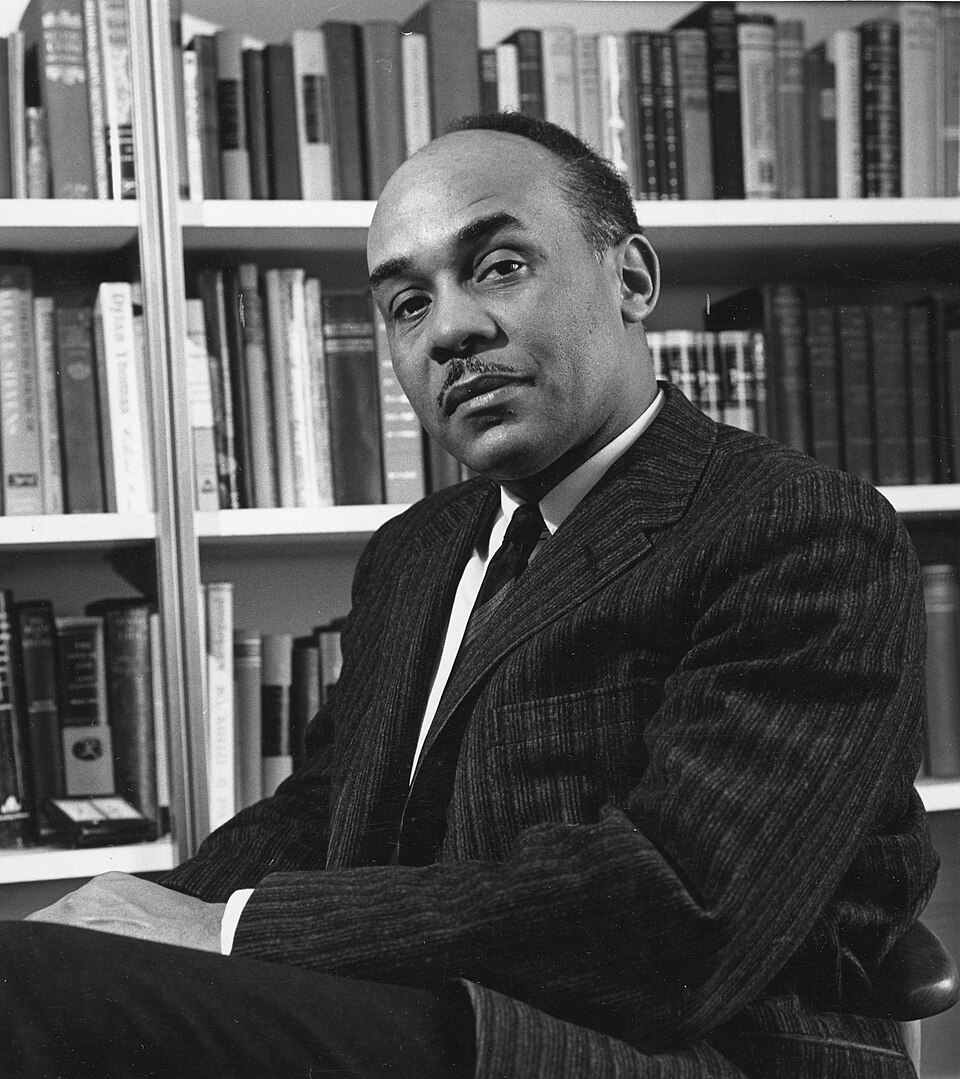
Photo of Ralph Ellison
Photo: United States Information Agency staff photographer · Public domain · via source

Author profile

Ralph Ellison

American novelist and essayist best known for Invisible Man (1952), which won the 1953 National Book Award. His work examines race, identity and being seen or unseen in the United States.

1 published book 0 published articles

About Ralph Ellison

Ralph Waldo Ellison was born in Oklahoma City in 1913 or 1914, depending on the source, and grew up in its Deep Deuce neighborhood. He went to Tuskegee Institute to study music. The turn toward writing came in the late 1930s, when Richard Wright invited him to review a book and then urged him to try fiction. Ellison served in the Merchant Marine during World War II, later taught at Bard College and other universities, and died in New York in 1994.

His subject is American identity: who gets seen, who gets overlooked, and what a person does about it. The fiction draws on a Southern youth and a move north to Harlem. The essays, gathered in Shadow and Act (1964) and Going to the Territory (1986), cover literature and public life with the same patience.

Invisible Man appeared in 1952 and won the 1953 National Book Award. It was the only novel he finished in his lifetime. In 1965 a New York Herald Tribune Book Week poll named it the most distinguished American novel since the war. Ellison received the National Medal of Arts in 1985 and the Presidential Medal of Freedom, and France made him a Chevalier de l'Ordre des Arts et des Lettres in 1970. A second novel occupied him for decades and stayed unfinished. His literary executor, John F. Callahan, edited the shortened Juneteenth (1999) and later Three Days Before the Shooting... Flying Home and Other Stories followed in 1996.

Start with Invisible Man. It follows a nameless narrator from the segregated South of the 1920s to Harlem, and it is the book that made his name. If you want to hear him explain himself, read Shadow and Act next.

Published books

Author

Invisible Man

Ralph Ellison's only novel published in his lifetime follows an unnamed young Black narrator from a Southern college to Harlem and finally underground, where he tells his story from a hidden cellar blazing with light. Along the way, institutions that claim to help him, from a respectable Black college to a political organization called the Brotherhood, each ask him to play a part rather than be a person. Issued in 1952, it is one of the award winning books of its decade, taking the 1953 National Book Award for Fiction. Part social satire, part surreal nightmare, part jazz-inflected confession, it remains one of the classic novels to read for anyone curious about American race, identity, and the price of being seen only as a symbol.

View book