
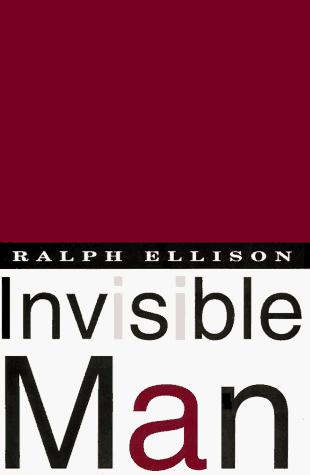
Invisible Man
Ralph Ellison's only novel published in his lifetime follows an unnamed young Black narrator from a Southern college to Harlem and finally underground, where he tells his story from a hidden cellar blazing with light. Along the way, institutions that claim to help him, from a respectable Black college to a political organization called the Brotherhood, each ask him to play a part rather than be a person. Issued in 1952, it is one of the award winning books of its decade, taking the 1953 National Book Award for Fiction. Part social satire, part surreal nightmare, part jazz-inflected confession, it remains one of the classic novels to read for anyone curious about American race, identity, and the price of being seen only as a symbol.
Where to buy or borrow
Are you selling this book? Bookstores, publishers, authors and libraries can be listed here for free. Request a listing
About this book
Deep Overview
In the first, set in the South, he is a gifted and eager student. A humiliating set piece, the so-called battle royal, has him fight blindfolded alongside other Black boys for the amusement of prominent white townsmen before they reward his speech with a scholarship. At the college he admires its president, Dr. Bledsoe, until a single mishap while driving a white trustee, Mr. Norton, around the countryside exposes him to the sharecropper Jim Trueblood and to the unruly patients of a tavern called the Golden Day. Bledsoe expels him and sends him north with sealed letters that he believes are recommendations.
The second movement is New York. Rebuffed by employers, he takes a job at Liberty Paints, is injured in a factory explosion, and is subjected to a bewildering hospital procedure. After he improvises an eloquent speech against an eviction in Harlem, he is recruited by the Brotherhood, an organization that preaches scientific, collective change. It is widely read as an allegory of Communist-era left politics, though the book never names a real party. He rises as a spokesman, but he gradually discovers that the group values him as an instrument and that its leaders will sacrifice Harlem's actual needs to a strategy decided elsewhere. Rival figures press on him from the other side, notably the black nationalist orator Ras the Exhorter, and the death of his friend Tod Clifton forces a crisis.
The final movement is a collapse into chaos: a night of riot in Harlem, an encounter with the shape-shifting figure Rinehart, who thrives on other people's inability to pin down who he is, and a literal fall into the dark. The epilogue does not offer a tidy solution. The narrator concludes that hiding is a stage rather than a destination, and he suggests that his story might speak for others.
Ellison's larger aim is to show that identity in America is not simply given or chosen; it is negotiated under pressure from other people's expectations, whether those are paternalistic, ideological, or hostile. Each authority figure supplies a script, and the narrator's growth is the slow, painful recognition that all the scripts are partial. Humor, dream logic, and set-piece speeches keep the argument dramatic rather than abstract.
Key Themes
Identity versus role: nearly every institution the narrator meets offers a defined part to play, and the novel asks what remains of the self once those parts are stripped away.
The limits of ideologies: accommodationist uplift, radical politics, and nationalism are each examined sympathetically and found incomplete when they treat individuals as means to an end.
Blindness, light, and sight: images of eyes, glass, bulbs, and darkness recur, linking the novel's politics to questions of knowledge and self-knowledge.
History, memory, and inheritance: the narrator is haunted by his grandfather's cryptic deathbed advice and by questions of what the past obliges him to do.
Masks and performance: figures such as Rinehart show how disguise can be both a survival tool and a form of freedom, with a cost.
American democracy: the book treats the country's ideals as a living, contested inheritance rather than as a settled fact.
Historical Context
The book also belongs to the early Cold War. Left-wing movements had attracted many Black intellectuals in the 1930s and 1940s, and the novel's portrait of the Brotherhood reflects disillusionment with organizations that put party strategy above local communities. Many readers also see echoes of earlier debates about how Black Americans should pursue education and advancement. Specific real-world models for characters and groups are interpretive and are debated by scholars.
On publication in 1952, Random House sent advance copies to reviewers equipped for a demanding book, and the novel received praise from writers such as Saul Bellow and Langston Hughes. It won the National Book Award for Fiction in 1953. It has also been among the most frequently challenged books in the United States, an aspect of its reception that continues to shape how it is taught.
Intended Audience
It may be a harder fit for readers looking for a straightforward linear plot, for those seeking a quick or light read, or for anyone who would prefer to avoid scenes of racial humiliation, violence, and sexual content. Younger readers will benefit from guidance from a teacher or parent given the book's mature material.
Reading Difficulty
Expect period vocabulary, offensive racial language used in depicting racism, and allusions to music, politics, and literature. No specialist knowledge is required, but readers who pause to think about the symbolism will get more out of the book. This paperback has a small-format trade layout; an audiobook edition is also available, which can help with the oratory.
Helpful Background Knowledge
On the literary side, familiarity with Dostoevsky's underground narrators, Eliot's The Waste Land, and Richard Wright's Native Son offers useful points of comparison, though none is needed. If you like to read an author's own explanation first, the edition's introduction by Ellison describes the circumstances under which the novel was written; some readers prefer to save it until the end.
Why Read This Book?
It also rewards in practical terms: its set pieces, such as the battle royal, the Trueblood episode, the Harlem eviction scene, and the funeral speech after Clifton's death, are some of the most discussed passages in American fiction, and knowing them makes much of later literature and criticism more legible. And the unnamed narrator's voice, bitter, funny, and self-mocking, is a sustained achievement in first-person fiction.
Reader Takeaways
Readers may find themselves paying closer attention to how symbols recur across episodes, to the role of music and speech in shaping identity, and to the moments in their own reading or lives when people are seen as types rather than individuals.
Strengths
It is also fair-minded in its critique. The narrator is not spared; his own ambition and naivety are exposed alongside the failures of the people around him. The book's refusal to endorse any single ideology contributes to its continuing ability to provoke debate.
Limitations and Cautions
The novel is long and episodic, and some readers find the later political sections more schematic than the early chapters. Its women characters are often read as secondary to the male narrator's quest, and some critics have raised this as a limit on the book's scope. Its allegorical treatment of the Brotherhood is also interpretive: readers who expect a direct portrait of any specific historical organization may be disappointed, and scholars disagree over how closely it maps to real groups. Finally, the book reflects the mid-century moment in which it was written, and its language and assumptions are not those of contemporary discussions of race.
Important Concepts, People, and Places
Invisibility: Ellison's central metaphor for being overlooked or seen only through others' preconceptions.
The Battle Royal: the opening-episode ritual in which Black youths are forced to fight for white spectators' entertainment, setting the book's pattern of humiliation disguised as opportunity.
Dr. Bledsoe and the college: a Black educator and the Southern institution he runs, representing a pragmatic, power-conscious form of uplift. The college is often compared to Tuskegee Institute, Ellison's own school, though the novel is fiction.
Mr. Norton and Jim Trueblood: a wealthy white trustee and a sharecropper whose story unsettles him, exposing the fantasies that benefactors have about those they help.
The Golden Day: the roadside tavern where patients from a nearby veterans' hospital upend the planned order of the trip.
Harlem: the northern setting for the narrator's political rise and his experience of community, rage, and riot.
The Brotherhood: the political organization that recruits the narrator and uses him as a spokesman; commonly read as an allegory of the organized left.
Ras the Exhorter: a nationalist street orator who opposes the Brotherhood and offers a rival model of Black political identity.
Tod Clifton: a young Brotherhood leader whose break from the organization and death raise the book's central crisis.
Rinehart: a figure of many identities, who shows the narrator the possibilities and dangers of fluidity.
Richard Wright and the protest tradition: the writer and the literary mode against which Ellison's novel is often placed.
Random House and the National Book Award: the publisher of the 1952 first edition and the prize awarded to the novel in 1953.
Questions the Book Explores
Reading Group Guide
Groups might trace one recurring image, such as light, eyes, or clothing, across the sections, or compare the different authority figures who give the narrator advice. It is helpful to agree at the start on how the group will talk about the book's racial language and its violent scenes. For a second meeting, pairing a chapter with a short reading from Ellison's essays or an excerpt of another mid-century novel can open comparison without overwhelming the discussion.
Discussion Questions
2. How does the battle royal set up the patterns that follow? Which later episodes echo it?
3. Compare Dr. Bledsoe, Mr. Norton, and the leaders of the Brotherhood. What does each want from the narrator?
4. Why might Ellison have left his protagonist unnamed, and how does that choice affect your relationship to him as a reader?
5. How do Ras the Exhorter and the Brotherhood represent competing answers to the question of how to change society? Does the book favor either?
6. What do you make of Rinehart? Is fluid identity liberating, dangerous, or both?
7. How do music, speech, and storytelling function as sources of power or deception in the book?
8. How does the narrator's final stance in the epilogue change or confirm your reading of the prologue?
9. Which of the book's ideas still seem relevant to contemporary life, and which feel tied to its period?
10. How should readers weigh the book's portrayal of women in relation to its larger aims?
Sources and Verification
Comments
No published comments yet.
Available editions
Paperback
2nd Vintage International edition
- Publisher
- Vintage
- ISBN-13
- 9780679732761
- Publication date