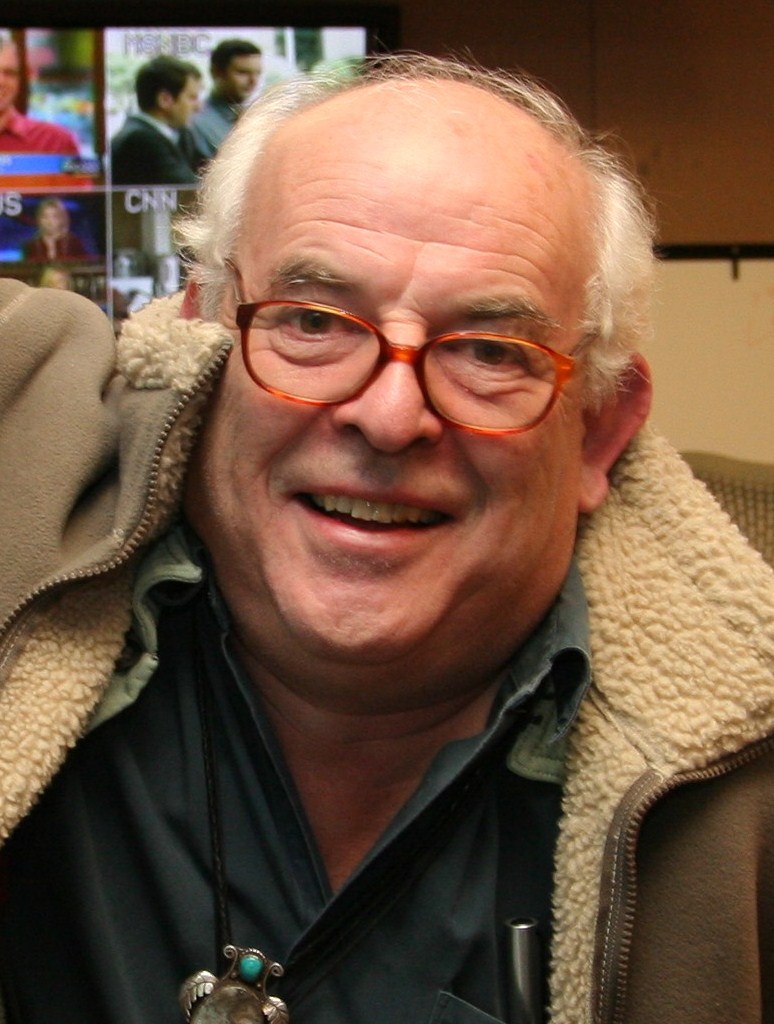
Photo of Ralph Steadman
Photo: Dave · CC BY-SA 2.0 · via source

Author profile

Ralph Steadman

British illustrator and cartoonist known for ink-spattered satire and for his drawings for Hunter S. Thompson's Fear and Loathing in Las Vegas. He has also illustrated Orwell, Carroll and Stevenson, and written and drawn his own books.

1 published book 0 published articles

Official website

About Ralph Steadman

Ralph Steadman is a British illustrator and cartoonist, born in 1936 and brought up partly in north Wales. He studied at East Ham Technical College and the London College of Printing, then drew for Punch and Private Eye, among other publications. Anyone who has seen a Steadman page knows it at once, even without a signature.

His line looks thrown rather than drawn: splashes of ink, shaky outlines, faces that seem to be coming apart. The humor is cruel and aimed upward, at politicians, war and hypocrisy. Away from journalism he has illustrated Alice in Wonderland, Treasure Island and Animal Farm. He has also written and drawn his own books, including studies of Sigmund Freud and Leonardo da Vinci.

His name is tied to Hunter S. Thompson. They began working together in 1970. Fear and Loathing in Las Vegas ran in Rolling Stone in November 1971 and came out as a Random House book in 1972. Steadman's pictures of the journalist Raoul Duke and his attorney Dr. Gonzo are now part of the book's identity, as much as Thompson's prose. A signed original from the book has gone to auction at Christie's. Steadman also drew for Thompson's Fear and Loathing on the Campaign Trail '72.

Start with Fear and Loathing in Las Vegas, the book listed here. Read it for Thompson's text, and notice how much the drawings add to its fever. If you like his work as a solo illustrator, his edition of Orwell's Animal Farm shows the same savage energy applied to a fable.

Published books

Illustrator

Fear and Loathing in Las Vegas: A Savage Journey to the Heart of the American Dream

Hunter S. Thompson's 1971 book follows Raoul Duke, a journalist standing in for the author, and his attorney, Dr. Gonzo, on a chaotic trip to Las Vegas. Duke is meant to cover a desert motorcycle race and later a law-enforcement conference on drugs. Instead, the pair spend most of the book in a haze of drugs, wrecked hotel rooms and rental-car mayhem. Thompson uses the binge to ask what had become of the 1960s counterculture and of the American Dream. Part reportage, part fiction and part confession, it is the best-known example of gonzo journalism, in which the writer is the story. Often found on lists of books made into movies, it began as a Rolling Stone serial, with Ralph Steadman's illustrations, and has remained a cultural touchstone.

View book