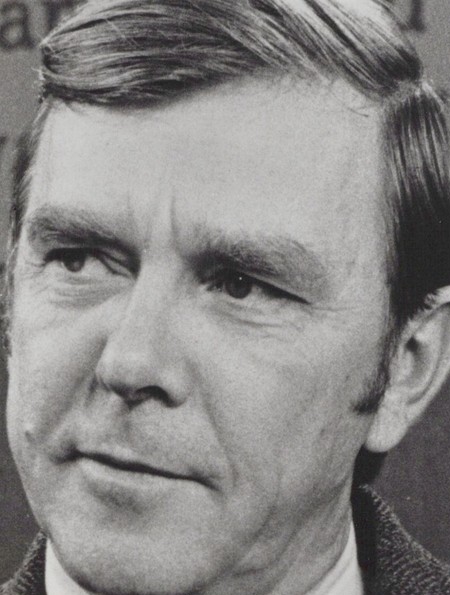
Photo of Russell Baker
Photo: PBS · Public domain · via source

Author profile

Russell Baker

Russell Baker (1925-2019) was an American newspaper humorist and memoirist. His Observer column ran in The New York Times for 36 years, and his childhood memoir Growing Up won a Pulitzer Prize.

1 published book 0 published articles

About Russell Baker

Russell Baker was born in 1925 in Loudoun County, Virginia, and grew up partly in New Jersey after his father died young. He studied at Johns Hopkins, started as a reporter at the Baltimore Sun, ran its London bureau, and then covered Washington for The New York Times. In 1962 he swapped news reporting for a column. Late in life he also hosted the PBS series Masterpiece Theatre.

That column, Observer, ran for 36 years and close to 5,000 installments. Baker used it for dry, whimsical commentary on American habits, politicians and the small absurdities of daily life. Collections such as No Cause for Panic and Poor Russell's Almanac gather the lighter pieces. He also edited The Norton Book of Light Verse and Russell Baker's Book of American Humor, and after retiring from the column he wrote essays for The New York Review of Books, some of them collected in Looking Back.

He won the Pulitzer Prize for distinguished commentary in 1979 and a second Pulitzer, for biography, in 1983 for Growing Up. He took two George Polk Awards and chaired the Pulitzer Prize Board in 1994.

On WebToTell his name appears on the Signet Classics edition of George Orwell's Animal Farm, where he is credited with an afterword. Read Orwell's fable first, then his piece. To meet Baker as a writer in his own right, start with Growing Up, a Depression-era childhood told with a good deal of humor. The Good Times follows him into newsrooms and picks up where that book stops.

Published books

Contributor

Animal Farm

Animal Farm is George Orwell's short political fable, first published in 1945, about farm animals who expel their human owner and try to run the place on principles of equality. Once the pigs take charge, commandments are quietly rewritten, rivals are driven out, and hardship returns under new management. Orwell drew on the Russian Revolution and Stalin's rise, yet he told the story so plainly that it also works as a study of how propaganda and unchecked power can turn ideals into their opposite. It is brief enough to read in an afternoon and is frequently assigned in schools. This Signet paperback adds an introduction by Téa Obreht and an afterword by Russell Baker, and it suits anyone who likes classic books or dystopian novels and wants a sharper, shorter satire.

View book