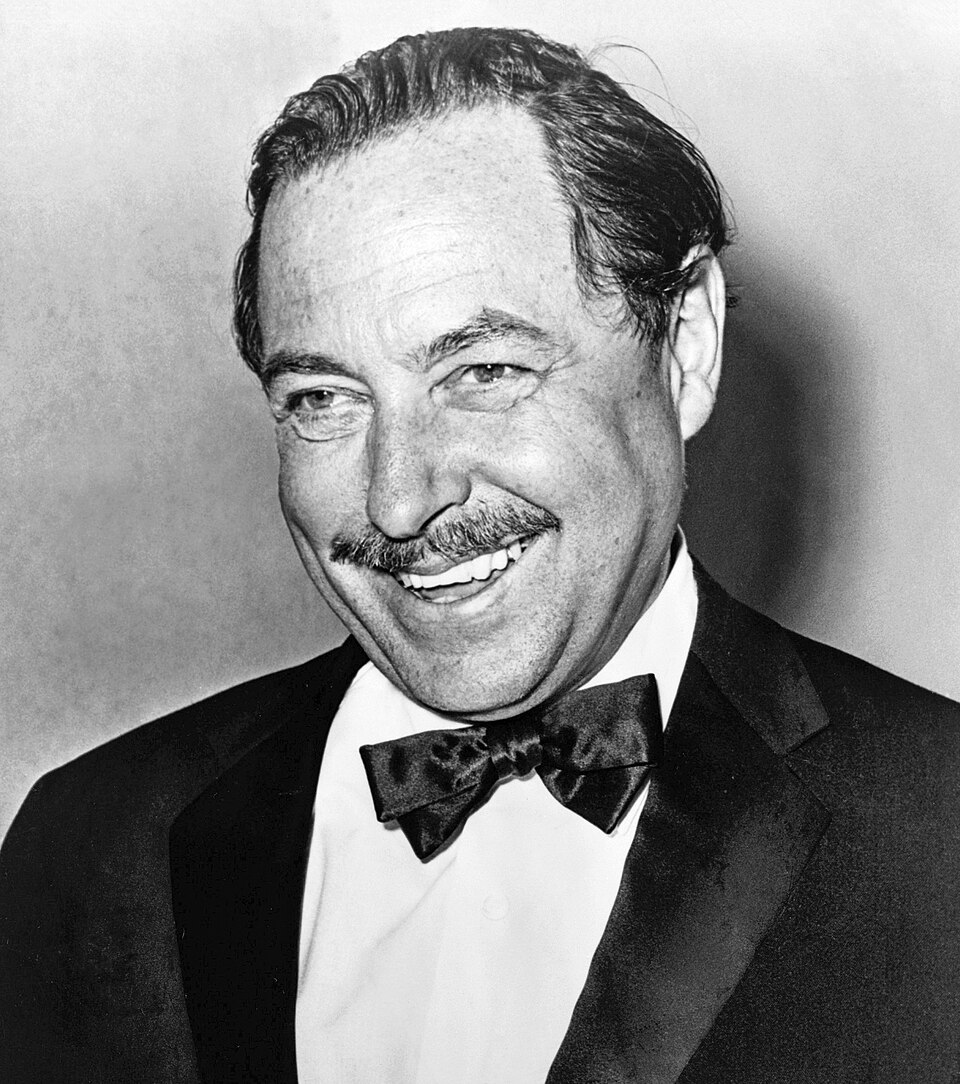
Thomas Lanier Williams III was born in Columbus, Mississippi, in 1911. His family moved to St. Louis in 1918, when he was seven, and that city would anchor his work for decades. He earned a degree from the University of Iowa in 1938 and was writing under the name Tennessee Williams by 1939. He died in New York in 1983.
He wrote plays first and foremost, along with screenplays, short stories and poems. His characters are often Southern, poor, or socially adrift, and they cling to small illusions the way a man clings to a railing. Memory and desire are his central engines. He called The Glass Menagerie a "memory play," and the scenes in it are shaped by feeling as much as by plot.
Recognition came in a burst. The Glass Menagerie opened in Chicago in December 1944, reached Broadway in March 1945, and won the New York Drama Critics' Circle Award. A Streetcar Named Desire took the Pulitzer Prize for Drama in 1948, and Cat on a Hot Tin Roof won it again in 1955. The Night of the Iguana opened on Broadway in December 1961 and took the Drama Critics' Circle Award for the 1961–62 season. In 1980 he was awarded the Presidential Medal of Freedom.
For a first read, The Glass Menagerie is the obvious pick. It is a short, two-act play set in a single St. Louis apartment in the late 1930s, narrated by Tom Wingfield, who looks back on the family he left. It contains nearly everything Williams does in a small, concentrated space, and it asks very little of a reader beyond sitting down and watching a family try to hold itself together.