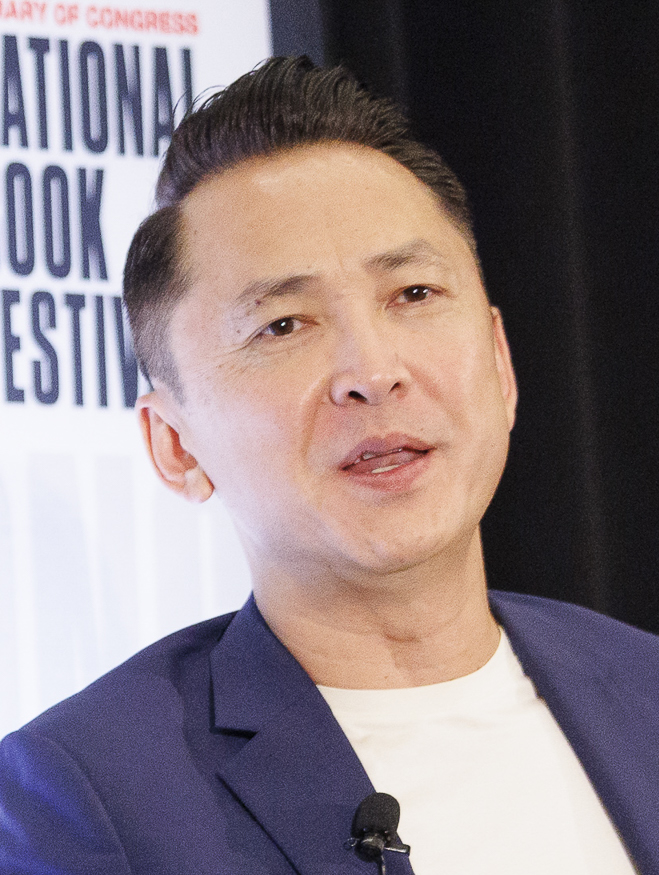
Photo of Viet Thanh Nguyen
Photo: Library of Congress Life · CC0 · via source

Author profile

Viet Thanh Nguyen

Vietnamese American novelist, essayist and literary scholar whose fiction examines war, displacement, memory and divided loyalties. He won the 2016 Pulitzer Prize for Fiction for The Sympathizer.

1 published book 0 published articles

Official website

About Viet Thanh Nguyen

Viet Thanh Nguyen is a Vietnamese American novelist, essayist and literary scholar. Born in Vietnam and raised in the United States, he studied English and ethnic studies at the University of California, Berkeley, later earning a doctorate in English. His academic work has focused on Asian American literature, race, war, memory and the Vietnamese diaspora.

Nguyen writes fiction, criticism and nonfiction. Across these forms, he returns to refugees, colonial histories, political commitment and the stories nations tell about war. His prose often joins intellectual argument to dark comedy and the momentum of crime or espionage fiction. In The Sympathizer, an unnamed communist double agent recounts his escape from Saigon, his life among Vietnamese exiles in Los Angeles and his work as an adviser on a Hollywood war film.

The Sympathizer, Nguyen’s debut novel, received the 2016 Pulitzer Prize for Fiction. Its narrator’s story continues in The Committed, set largely in Paris. Nguyen also wrote the story collection The Refugees and the nonfiction study Nothing Ever Dies: Vietnam and the Memory of War. The Sympathizer became an HBO limited series in 2024, co-created by Park Chan-wook and Don McKellar.

Start with The Sympathizer. It introduces Nguyen’s central concerns through a suspenseful confession shaped by satire, betrayal and competing versions of history. Readers drawn to its narrator can continue directly with The Committed.

Published books

Author

The Sympathizer

The Sympathizer is a literary espionage novel framed as the confession of an unnamed Vietnamese narrator being held and interrogated. A communist agent embedded in the South Vietnamese military, he escapes Saigon with a general and other refugees in April 1975, resettles in Southern California, and continues reporting to his revolutionary contact. His divided assignment forces him to betray people he loves while participating in an exile community that regards communist victory as catastrophe. The novel moves beyond conventional spy suspense by making divided consciousness its central method. The narrator is Vietnamese and partly French, communist and American-educated, observer and participant, betrayer and loyal friend. His ability to recognize competing perspectives gives him unusual insight, but it does not grant moral freedom. Instead, every allegiance creates another obligation he cannot satisfy. The narrative expands from the fall of Saigon and refugee resettlement into politic…

View book