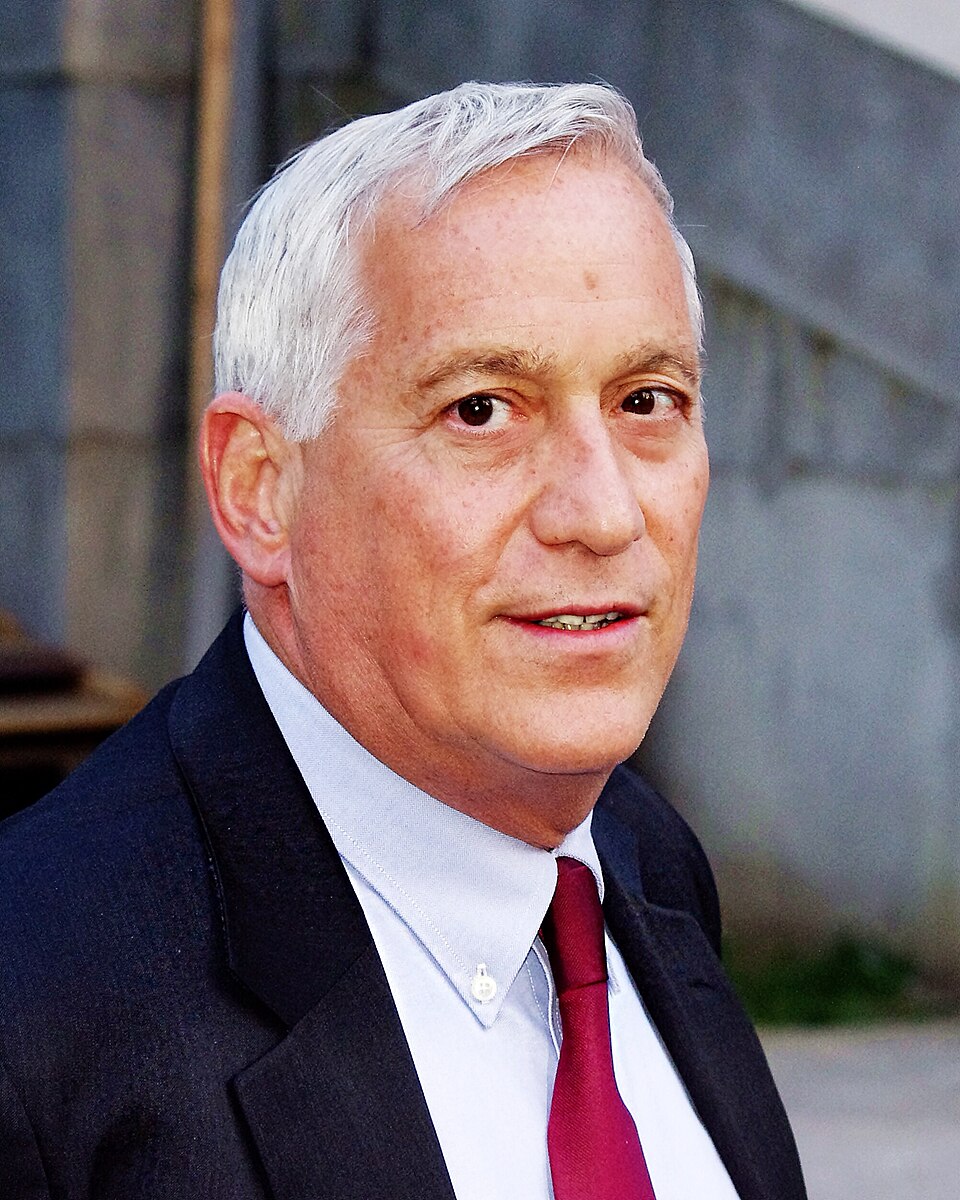
Photo of Walter Isaacson
Photo: David Shankbone · CC BY 3.0 · via source

Author profile

Walter Isaacson

American biographer, historian and former media executive who writes about innovators and the meeting point of science, technology and the humanities.

1 published book 0 published articles

Official website

About Walter Isaacson

Walter Isaacson is an American biographer, historian and former journalist, born in New Orleans in 1952. A Harvard graduate and Rhodes Scholar at Oxford, he became editor of Time, chairman and CEO of CNN, and president and CEO of the Aspen Institute. He is now a professor of history at Tulane University.

His nonfiction often follows inventive people at close range while placing their achievements within a larger history of ideas. Across his work, he returns to curiosity, ambition, teamwork and the fertile exchange between the arts and sciences. His direct, narrative approach makes technical subjects accessible without separating discoveries from the personalities, rivalries and institutions behind them.

Isaacson’s books include Benjamin Franklin: An American Life, Einstein: His Life and Universe, Steve Jobs, Leonardo da Vinci, The Code Breaker, about biochemist Jennifer Doudna, and Elon Musk. He also co-wrote The Wise Men, a group portrait of six American statesmen. In 2023, he received the 2021 National Humanities Medal for his contribution to the nation’s understanding of history and American achievement.

Start with The Innovators. Beginning with Ada Lovelace and moving through Alan Turing, Grace Hopper, the makers of the microchip, personal-computer pioneers and architects of the internet, it replaces the lone-genius myth with a history of collaboration. It is an ideal introduction to Isaacson’s central interests: how new ideas emerge, why teams matter and what happens when human creativity meets technology.

Published books

Author

The Innovators

Walter Isaacson’s The Innovators traces the development of computers, software, semiconductors, personal computing, the internet, and the web through the people and teams behind them. Beginning with Charles Babbage and Ada Lovelace, the narrative moves through wartime computing, Bell Labs, the microchip, Silicon Valley, hobbyist culture, Microsoft, Apple, online communities, and the World Wide Web. Its central argument challenges the familiar image of the solitary inventor: transformative technologies usually emerge when theorists, engineers, programmers, entrepreneurs, institutions, and earlier generations exchange ideas. Isaacson also emphasizes the productive meeting of technical skill with imagination, design, and human needs. Written as a broad, character-driven history rather than a technical manual, the book explains how linked breakthroughs accumulated into the digital revolution and why collaboration, institutional culture, and the ability to turn concepts into usable systems…

View book