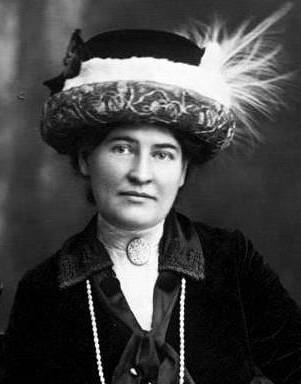
Photo of Willa Cather
Photo: Photographer: Aime Dupont Studio, New York · Public domain · via source

Author profile

Willa Cather

American novelist (1873-1947) who grew up on the Nebraska plains. She wrote O Pioneers!, My Ántonia and Death Comes for the Archbishop, and won the Pulitzer Prize for One of Ours.

1 published book 0 published articles

About Willa Cather

Willa Cather was born in 1873 near Winchester, Virginia. When she was nine, her family moved to Nebraska, and the prairie she met there became the ground of her best-known fiction. She graduated from the University of Nebraska in 1895, later settled in New York, and died there in 1947.

Her subject was settlers and frontier life, and she treated them as people with inner lives. O Pioneers! (1913) and The Song of the Lark are set in the Great Plains. A Lost Lady and Alexander's Bridge are also among her main novels. My Ántonia (1918) is often called her finest work. Her prose is plain and carefully weighed, and she gives landscape as much weight as plot.

She won the Pulitzer Prize for the novel One of Ours, which was published in 1922. She also received a gold medal from the National Institute of Arts and Letters. Her Nebraska ties are still kept alive by the Willa Cather Foundation in Red Cloud and by the scholarly Willa Cather Archive at the University of Nebraska-Lincoln.

Death Comes for the Archbishop (1927) is the book to read first if it is the one that brought you here. It moves away from Nebraska to mid-nineteenth-century New Mexico. There it follows Jean Marie Latour, a French priest sent to a new diocese, and his friend Father Vaillant. The two characters are based on the real figures Archbishop Lamy and Father Joseph Machebeuf. The pace is unhurried, and the desert is a presence in the story. If you want her prairie side after that, try My Ántonia.

Published books

Author

Death Comes for the Archbishop

Willa Cather's 1927 narrative follows Jean Marie Latour, a French priest sent to organize the Catholic church in newly American New Mexico, and his friend and vicar Joseph Vaillant. Loosely modeled on the real Archbishop Jean-Baptiste Lamy and Father Joseph Machebeuf, the book unfolds as a sequence of journeys, portraits and legends rather than a tightly plotted story. Its subject is the slow work of building faith, friendship and institutions across a landscape shaped by Pueblo, Navajo, Hispanic and European presences. Often counted among the major works of American historical fiction, it is valued for its restrained style, its sense of place and its quiet reflection on a life's work and its ending.

View book