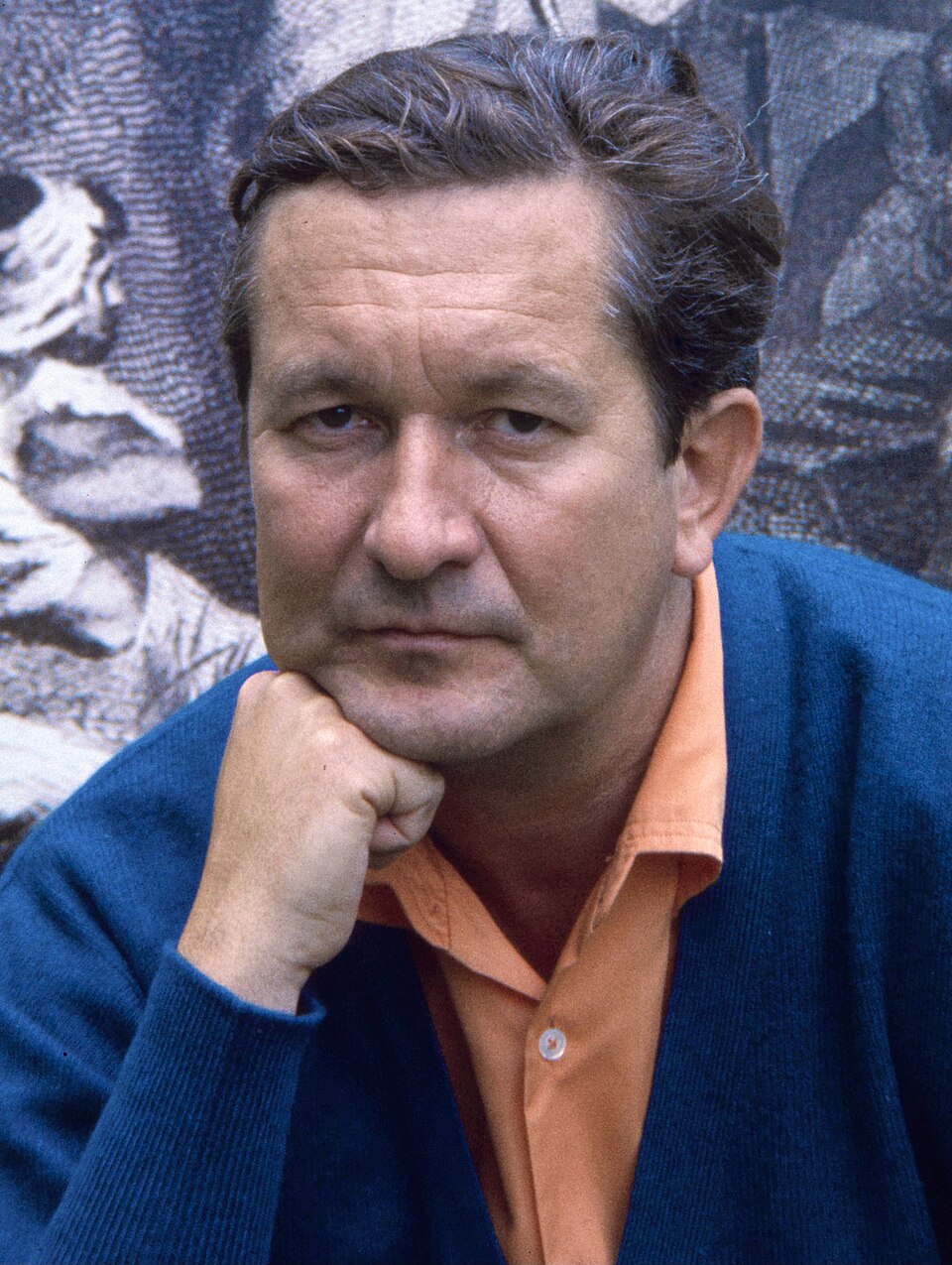
William Styron was born in 1925 in Newport News, in Virginia's Tidewater, and the region stayed with him through a long career. He graduated from Duke, served in the Marine Corps and worked briefly as an editor at McGraw-Hill. His first novel, Lie Down in Darkness, appeared in 1951, when he was twenty-six. Soon afterward he was in Paris, where he helped found The Paris Review.
Guilt runs through his books, along with inherited wrongdoing and the pull of despair. Lie Down in Darkness follows a Southern family toward a daughter's suicide. The Confessions of Nat Turner is narrated in the voice of the leader of the 1831 Virginia slave revolt, and it stirred sharp debate when it came out. In 1990 he published Darkness Visible, a short memoir about his own depression that grew out of a magazine article.
His honors include the Rome Prize for his debut, a Pulitzer Prize for Nat Turner, the National Book Award for Sophie's Choice and the National Medal of Arts. Alan J. Pakula adapted Sophie's Choice for the screen in 1982, and Meryl Streep won the Academy Award for Best Actress for the title role. Styron died in 2006 at age 81.
Start with Sophie's Choice. Its narrator, Stingo, is a young Southerner who wants to be a writer and ends up in a Brooklyn boarding house, close to Sophie, a Polish survivor of the camps, and her volatile lover Nathan. It is his best-known novel, and it shows how he mixes memory, history and moral pressure. If you want something shorter afterward, Darkness Visible is a brisk read of about eighty pages.