
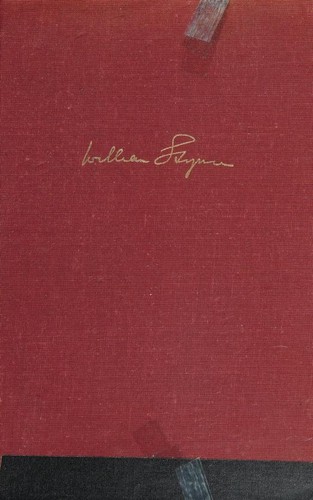
Sophie's Choice
William Styron's Sophie's Choice, a National Book Award winner and a landmark of American literary fiction, is set in Brooklyn in 1947. Stingo, a young Southern writer, rents a room in a boarding house and is drawn into the volatile love affair of Nathan Landau, a charismatic and unstable Jewish man, and Sophie Zawistowska, a Polish Catholic who survived Auschwitz. As Stingo learns her history piece by piece, the novel moves between postwar New York, a trip to the South, and wartime Poland and the camp. It asks how guilt, memory and love endure after atrocity. Among award winning books about the Holocaust, it is both widely read and sharply debated, because of how it frames suffering, evil and who may imagine them.
Where to buy or borrow
Are you selling this book? Bookstores, publishers, authors and libraries can be listed here for free. Request a listing
About this book
Deep Overview
The book works as three stories braided together. One is Stingo's own apprenticeship. It involves money, sexual frustration, literary ambition and a Southern inheritance tied to the history of slavery. The second is the Nathan–Sophie relationship, which swings between ecstasy and terror. The third, and the heart of the book, is the past Sophie guards. Stingo gets it only in installments, and Sophie herself lies, revises and withholds. Early accounts of her life in Poland, her father and her time in the camp prove to be partial or self-protective. The structure makes the reader share Stingo's experience of learning by degrees how much has been hidden.
As the layers peel away, the novel moves from Poland before the war to Auschwitz-Birkenau. Sophie's work in the household of the camp commandant, Rudolf Höss, is one of its central episodes. There she tries to use her position to help her son. Her most devastating memory is the moment of the title: at the camp she was forced to decide which of her two children would live. The novel treats this not as a puzzle to solve but as a wound that shapes everything Sophie does afterward, including her dependence on Nathan and her inability to forgive herself.
Nathan is a counterweight to this history. His rages, his delusions and the drugs that feed them belong to a separate, American form of catastrophe. The book insists these private ruins and the public horror of the camps are connected, though critics disagree about how legitimate that connection is.
Styron's argument is moral and imaginative as well as narrative. He wants to show that the Holocaust cannot be understood only as the history of one group's victimization. He presents it as a revelation of the capacity for evil in human beings and in Western culture generally. He ties this to Southern slavery, to anti-Semitism within Polish Catholic society and to the older Stingo's self-examination. Those claims are contested, and the novel's reception is inseparable from that debate. Beneath them is a gentler theme: the way art, sexuality and memory try, and often fail, to make sense of loss.
Key Themes
Memory and unreliable testimony: Sophie's story comes out in shifting versions, and Stingo, looking back from later life, is also an imperfect witness. The novel is partly about how stories of trauma get told, revised and handed on.
Evil and its universality: Styron explores whether the Nazi genocide should be read as a uniquely Jewish catastrophe or as a broader human and cultural failure. He leans toward the second reading, a stance critics have challenged.
Love, desire and destruction: Eroticism runs through the novel, from Stingo's youthful longing to the Nathan–Sophie relationship. The book links desire to dependence, escape and self-erasure.
Madness and instability: Nathan's illness and drug use illustrate how charm and cruelty can coexist, and how love can be bound to harm.
Region and race: Stingo's Southern background lets Styron draw comparisons between American slavery and Nazi persecution. Those comparisons are among the most disputed parts of the book.
The writer's vocation: Stingo's ambition to write a significant novel frames the whole narrative and raises the question of what a writer owes to the suffering of others.
Historical Context
Styron came to the subject as a white Southern novelist known for Lie Down in Darkness and for The Confessions of Nat Turner, a 1967 novel about the leader of a slave rebellion that had itself drawn heated argument. Sophie's Choice carries over his interest in how history's worst crimes can be imagined from the inside. For the camp sections he drew on historical material, including the autobiography of Auschwitz commandant Rudolf Höss, which is credited on the copyright page according to one academic study.
The reception that followed belongs to a wider debate over representation. Critics such as Cynthia Ozick and Alvin Rosenfeld asked whether a non-Jewish novelist, and a novel centered on a Catholic survivor, risked blurring the specifically anti-Jewish purpose of the Nazi genocide. Others saw the book as a serious attempt to bring the subject to a broad readership. Primo Levi's concept of the "grey zone," from The Drowned and the Saved, has also become a tool for assessing the book's treatment of moral ambiguity. The 1982 film directed by Alan J. Pakula and starring Meryl Streep widened the novel's audience.
Intended Audience
It may be less suitable for readers wanting a fast, plot-driven story, or for those who prefer historical accounts to novelistic reconstructions. People sensitive to depictions of genocide, harm to children, sexual violence, mental illness and suicide should know the book treats these subjects directly and at length. Readers looking for a documentary account of Auschwitz should look to survivor memoirs and historical studies instead, since this is an imaginative work with its own interpretive agenda.
Reading Difficulty
The structure is not hard to follow, but it rewards attention. The older Stingo tells the story, moves between time periods and withholds key facts, so readers need to track which version of Sophie's past they are hearing. The Random House hardcover runs to roughly 515 pages. Vintage's paperback, according to Penguin Random House, runs to 576 pages, so page counts vary by edition. No specialist background is required, but readers may find that some knowledge of the war helps.
Helpful Background Knowledge
It is useful to know that debates exist over how fiction should portray the Holocaust. Reading a short critical essay, or Primo Levi's reflections on the moral ambiguity of camp life, gives a point of comparison. Readers might also want a general picture of New York in the late 1940s, when many refugees and survivors were settling in neighborhoods like Brooklyn.
Why Read This Book?
It is also valuable as a case study in the ethics of representation. Whether or not a reader accepts Styron's view of the Holocaust, the book gives strong material for thinking about authorship, memory and responsibility. The film adaptation is well known, but the novel gives far more room to Stingo's perspective and to the ideas behind the story.
Reader Takeaways
Readers may also reconsider what they expect from novels about historical atrocity. They may notice how narrative choices, such as a retrospective narrator, delayed revelation and the choice of a non-Jewish protagonist, shape moral and emotional response. Finally, readers can practice weighing a book's literary power against criticisms of its historical and interpretive claims.
Strengths
The central relationship feels emotionally real, and the book creates in Sophie a character who is neither a symbol nor a saint. The novel also engages seriously with large questions of evil, memory and responsibility, and has generated a rich critical conversation that makes it rewarding for study and group discussion. The book won the 1980 National Book Award for Fiction according to the National Book Foundation.
Limitations and Cautions
The prose can feel indulgent, especially in Stingo's lengthy sexual and autobiographical digressions, and the pace slows in places. The sexualized aspects of some scenes, including in the camp sections, have also drawn criticism. Readers should expect disturbing content involving the death of children, mental illness, suicide, sexual material and genocide. This is a novel, not a historical account, and it should not be used as a source for factual claims about Auschwitz.
Important Concepts, People, and Places
Sophie Zawistowska: a Polish Catholic survivor of Auschwitz and the book's emotional center, whose concealed past drives the narrative.
Nathan Landau: Sophie's charismatic and unstable lover, whose mental illness and drug use are central to the tragedy.
The choice: the title refers to the forced decision Sophie faced about which of her children would live. It stands for the book's inquiry into guilt under coercion.
Auschwitz-Birkenau: the camp complex where much of Sophie's history unfolds, and the novel's main setting for atrocity.
Rudolf Höss: the Auschwitz commandant, in whose household Sophie works and whose memoir Styron drew on.
Brooklyn, 1947: the postwar setting that anchors the main narrative.
The grey zone: Primo Levi's term for morally ambiguous behavior under extreme oppression, often used by critics to analyze the book.
Cynthia Ozick and Alvin Rosenfeld: critics whose essays challenged the novel's universalizing view of the Holocaust.
The 1982 film: Alan J. Pakula's adaptation, starring Meryl Streep, which carried the story to a wider public.
Questions the Book Explores
Reading Group Guide
A useful first session can focus on the narrator, since the book's meaning depends on how far Stingo can be trusted. Later sessions can turn to the ethics of representation. Pairing the novel with Primo Levi's discussion of the grey zone, or a critical essay such as Cynthia Ozick's response, gives members a way to test the book against its critics. Groups that have seen the film can compare how it handles Sophie's story and Stingo's perspective. As book club books go, this one rewards disagreement, so it helps to invite members to state where they find the novel persuasive and where they do not.
Discussion Questions
2. Why do you think Sophie's story is revealed gradually and in contradictory versions? What does this do to the experience of reading it?
3. What does the novel suggest about guilt when someone acts under extreme duress? Do you agree?
4. How do Nathan's illness and cruelty connect to the novel's larger themes, if at all?
5. Styron makes his central survivor a Polish Catholic rather than a Jewish character. What does this choice gain, and what might it risk?
6. How persuasive do you find the novel's comparisons between American slavery and Nazi persecution?
7. What role do desire and sexuality play in the book, including in its darker scenes? Do they illuminate or distract?
8. What responsibilities do novelists have when imagining historical atrocity? Does this book meet them?
9. How does Stingo's ambition as a writer comment on the book's own act of storytelling?
10. After finishing, what do you think the phrase from the title should mean when people use it today?
Sources and Verification
Comments
No published comments yet.
Available editions
Hardcover
First Edition
- Publisher
- Random House
- ISBN-13
- 9780394461090
- Pages
- 515