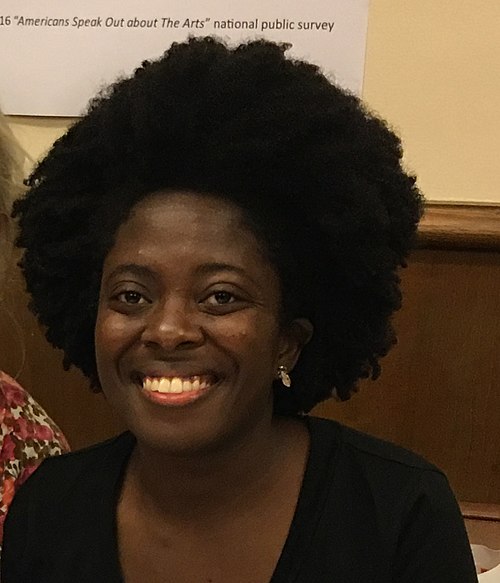
Photo of Yaa Gyasi
Photo: Bank Square Books · CC BY 2.0 · via source

Author profile

Yaa Gyasi

Ghanaian American novelist Yaa Gyasi writes literary fiction about family, history, faith and the forces that shape Black lives across generations.

1 published book 0 published articles

About Yaa Gyasi

Yaa Gyasi was born in Ghana and raised in Huntsville, Alabama. She studied English at Stanford University and earned an MFA from the Iowa Writers’ Workshop. Her fiction draws on both Ghanaian and American histories, often asking how inherited circumstances shape identity, belief and belonging.

Her debut, Homegoing, begins with half-sisters Effia and Esi in eighteenth-century Ghana. One lives in Cape Coast Castle while the other is imprisoned in its dungeon before being transported across the Atlantic. Alternating between their descendants, the novel follows two family lines through enslavement, colonialism, migration and racial injustice. Its linked chapters give individual lives room while building a broad historical arc.

Gyasi’s second novel, Transcendent Kingdom, is more intimate in scale. Its narrator, Gifty, is a Ghanaian American neuroscientist studying reward-seeking behavior while wrestling with addiction, depression, evangelical Christianity and grief. Across both novels, Gyasi returns to family memory, displacement and the uneasy relationship between what people inherit and what they can change.

Homegoing received the PEN/Hemingway Award and the National Book Critics Circle’s John Leonard Award, and Gyasi was named a National Book Foundation 5 Under 35 honoree. It is the best starting point: ambitious but accessible, it introduces her recurring concerns through Effia, Esi and the generations that follow them.

Published books

Author

Homegoing

Beginning in eighteenth-century Ghana, Homegoing follows two branches of one family whose histories divide before its members know they are related. Effia becomes the wife of a British officer at Cape Coast Castle, while her half sister, Esi, is imprisoned below and transported into American slavery. Yaa Gyasi then moves through successive generations in alternating chapters, tracing lives shaped by the slave trade, British colonial power, racial slavery in the United States, convict leasing, migration, segregation, and their modern consequences. Each character receives a concentrated story, yet together those stories form a family saga spanning roughly 250 years. The novel’s central achievement is to make historical inheritance visible without reducing descendants to symbols of suffering. Love, ambition, complicity, estrangement, and survival remain intensely personal even as institutions limit what each person can choose. Homegoing presents history not as a finished past but as a fo…

View book