
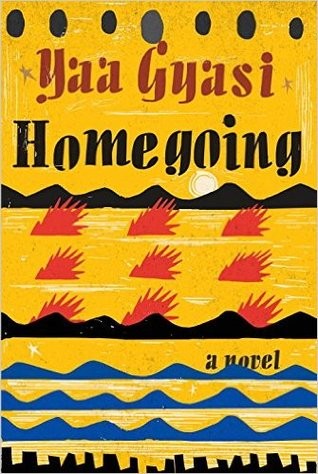
Homegoing
Beginning in eighteenth-century Ghana, Homegoing follows two branches of one family whose histories divide before its members know they are related. Effia becomes the wife of a British officer at Cape Coast Castle, while her half sister, Esi, is imprisoned below and transported into American slavery. Yaa Gyasi then moves through successive generations in alternating chapters, tracing lives shaped by the slave trade, British colonial power, racial slavery in the United States, convict leasing, migration, segregation, and their modern consequences. Each character receives a concentrated story, yet together those stories form a family saga spanning roughly 250 years. The novel’s central achievement is to make historical inheritance visible without reducing descendants to symbols of suffering. Love, ambition, complicity, estrangement, and survival remain intensely personal even as institutions limit what each person can choose. Homegoing presents history not as a finished past but as a fo…
Where to buy or borrow
Are you selling this book? Bookstores, publishers, authors and libraries can be listed here for free. Request a listing
About this book
Gyasi began the project after visiting Cape Coast Castle in Ghana in 2009. The contrast between its upper quarters, where British officers lived, and its dungeons, where captive Africans were confined, became the novel’s foundational image. She has described the book as requiring extensive historical research and spanning about 250 years of Ghanaian and American history. The result is neither a conventional multigenerational chronicle nor a historical survey. It is a deliberately discontinuous reconstruction of family memory, asking readers to recognize connections that many characters cannot see for themselves.
Deep Overview
From there, chapters move down each branch of the family tree. In Ghana, Effia’s descendants confront the entanglement of Fante and Asante power, commerce in enslaved people, missionary Christianity, British colonial influence, and struggles over cultural and personal independence. Quey inherits divided loyalties involving family, desire, and commercial obligation. James attempts to escape an inherited role in slave trading, but withdrawal cannot erase the system that produced his choices. Later generations experience missionary education, colonial rule, nationalism, uncertain parenthood, and migration between Ghana and the United States.
Esi’s American descendants encounter another chain of transformations. Ness endures plantation slavery and the violent destruction of family bonds. Her son Kojo builds a life in Baltimore under the constant danger posed by the Fugitive Slave Act. H is swept into the post-emancipation system of racialized imprisonment and convict labor, revealing how coerced work survived slavery’s formal abolition. Willie joins the Great Migration to Harlem, where colorism, economic inequality, gender, and the possibility of passing reshape family life. Sonny’s activism and addiction show both the necessity and personal cost of fighting structural injustice. Marcus, studying the convict-leasing system generations later, possesses scholarly tools for investigating the past but remains emotionally unsettled by how much of his own ancestry is inaccessible.
Across both lines, fire and water accumulate symbolic force. Fire is associated with danger, inherited fear, destruction, and origins that characters cannot fully understand. Water evokes the Atlantic crossing, separation, terror, and eventual return. A black stone pendant also travels through the family history, functioning as a fragment of connection where records and stories have been lost.
The closing movement brings Marcus together with Marjorie, a descendant of Effia living between Ghanaian and American identities. Their meeting does not repair the historical catastrophe or restore complete genealogical knowledge. Instead, it creates a form of recognition unavailable to their ancestors. The novel suggests that return cannot mean recovering an untouched home. It may instead involve confronting inherited fear, entering places marked by suffering, and forming relationships across histories that were violently divided.
Key Themes
**Slavery’s changing institutions:** The novel connects Atlantic enslavement to later systems, including fugitive-slave enforcement, convict leasing, exploitative labor, segregation, housing inequality, and racialized policing. The form changes while coercion persists.
**Family separation and missing knowledge:** Captivity, migration, secrecy, premature death, and abandonment repeatedly interrupt the transmission of family history. The reader can reconstruct relationships that the characters themselves cannot.
**Complicity and constrained choice:** The Ghanaian chapters resist a simple division between innocent Africans and European perpetrators. They examine local participation in slave trading while keeping British commercial and colonial power in view.
**Home, exile, and return:** Home can mean ancestry, language, nation, memory, safety, or an imagined place of belonging. No single definition satisfies every generation.
**Race, color, and identity:** The American line explores slavery and anti-Black racism, while both lines examine mixed ancestry, colorism, cultural displacement, and the pressure to suppress parts of oneself.
**Belief and cultural power:** Traditional spiritual practices, Christianity, missionary authority, and skepticism influence how characters interpret suffering, morality, and community.
Historical Context
The American chapters pass through chattel slavery, the Fugitive Slave Act era, the Civil War’s aftermath, convict leasing, Jim Crow, the Great Migration, Harlem’s cultural life, and twentieth-century struggles over housing and civil rights. Convict leasing is especially important because it demonstrates how criminal law and forced labor could reproduce conditions resembling slavery after emancipation.
In Ghana, the later story encompasses missionary influence, formal British colonial rule over the Gold Coast, anticolonial politics, independence, and postcolonial movement between Ghana and the United States. Readers should remember that the novel uses fictional lives to interpret these contexts; it is not a substitute for a comprehensive history of either Ghana or African American life.
Intended Audience
Readers who prefer to remain with one protagonist for an entire novel may find the frequent generational transitions frustrating. The book also contains slavery, racial violence, sexual violence, family separation, addiction, imprisonment, and other distressing material. Its treatment is purposeful rather than sensational, but the emotional intensity is considerable.
Reading Difficulty
Much of the difficulty is historical and emotional rather than syntactic. Gyasi often introduces a setting quickly and expects readers to infer the surrounding period from institutions, work, language, and social pressures. Chapters are compact, so characters may disappear just as readers become attached to them. That compression is central to the book’s effect, but it can make the pace feel both rapid and demanding.
Helpful Background Knowledge
For the American line, useful reference points include the Fugitive Slave Act, Reconstruction, convict leasing, Jim Crow segregation, the Great Migration, Harlem, racial passing, and twentieth-century housing discrimination. For the Ghanaian line, familiarity with Christian missionary activity, British rule on the Gold Coast, Ghanaian independence, and postcolonial migration will clarify the later chapters.
None of this is required to follow the family story. The most practical preparation is simply to bookmark the family tree and note parent-child relationships as each chapter begins.
Why Read Homegoing?
The Ghanaian and American branches complicate histories often studied separately. The novel places African participation in slave trading, European imperial power, American racial slavery, colonialism, migration, and modern identity within one connected design. Its value lies not in providing exhaustive explanations, but in making relationships among these histories emotionally and structurally intelligible.
Reader Takeaways
Readers may reconsider what counts as ancestry. Biological descent matters deeply here, yet language, memory, objects, stories, and chosen relationships also carry identity. The book further demonstrates that recognizing complicity does not require distributing responsibility equally; individuals and communities act within systems whose power is uneven.
Finally, Homegoing invites attention to narrative form itself. Who receives a chapter, what remains between chapters, and what one generation never learns are as significant as the events directly narrated.
Strengths
Recurring images and inherited traits create cohesion without requiring implausible continuity of family knowledge. The family tree turns genealogy into part of the reading experience, while the episodic form dramatizes the historical rupture the book examines.
Gyasi is also effective at showing institutions through individual stakes. Convict leasing, missionary education, racial passing, colonial authority, and housing inequality become concrete because they affect work, marriage, parenting, safety, and self-understanding.
Limitations and Considerations
Because the characters often stand at major historical turning points, individual chapters can sometimes feel shaped to carry a large thematic burden. The clear genealogical and symbolic design may also strike some readers as more deliberate than naturalistic.
Homegoing should not be treated as a complete history of Ghana, the Atlantic slave trade, or the African American experience. Its focus is one imagined family, and its historical compression necessarily excludes many regions, communities, and competing interpretations. Supplementary nonfiction is advisable in educational settings.
Important Concepts, People, and Places
**Maame:** Mother of Effia and Esi. Her fragmented story links the sisters even though they grow up without knowing one another.
**Cape Coast Castle:** The Ghanaian coastal fortress where British domestic and commercial life exists directly above dungeons holding captive Africans. It is the novel’s foundational setting and later a site of confrontation with ancestral history.
**The Gold Coast and Ghana:** “Gold Coast” identifies the colonial-era setting that later becomes independent Ghana. The change in name accompanies political transformation but does not end arguments over memory, identity, and colonial inheritance.
**Fante and Asante:** Communities and political powers whose conflicts, alliances, and commercial relations shape the early Ghanaian chapters. Their presence prevents the African setting from being represented as culturally undifferentiated.
**Atlantic slave trade:** The transoceanic system that separates Esi from Africa and establishes the conditions under which her American descendants live.
**Fugitive Slave Act:** The legal threat surrounding Kojo’s family in Baltimore, showing that residence in a nominally free place did not ensure safety from capture.
**Convict leasing:** The post-emancipation system that forces H into brutal mine labor. It is also the historical subject Marcus studies generations later, connecting scholarship to buried family experience.
**Great Migration:** The movement of Black Americans from the South to northern cities. Willie’s journey to Harlem reveals both the possibilities of relocation and the racial and economic barriers that follow migrants.
**Harlem:** A setting for music, church life, activism, labor, addiction, and color prejudice in Willie’s and Sonny’s chapters.
**Marjorie and Marcus:** Present-day descendants of the separated branches. Their relationship brings the two lines together symbolically, although they do not possess the full genealogy available to the reader.
**Black stone pendant:** An inherited object connecting descendants to a past that written records and family testimony cannot fully preserve.
**Fire and water:** Recurring elements associated with inherited fear, destruction, the Atlantic crossing, memory, and the possibility of confronting rather than escaping the past.
Questions the Book Explores
What survives when families lose names, records, languages, and direct memories?
Can a person escape a harmful inheritance without understanding the institutions that produced it?
How should responsibility be understood when people participate in an unjust system under unequal conditions?
What replaces slavery when emancipation changes legal status but not the demand for controlled labor?
Can migration create freedom, or does it relocate older conflicts into a different social order?
What makes a place “home” when ancestry, citizenship, language, and lived experience point in different directions?
Can reunion or return heal a history that cannot be fully recovered?
Reading Group Guide
Examine Cape Coast Castle as both a physical building and a model of historical awareness. Some lives unfold above suffering that remains hidden below. Groups can consider where similar separations between comfort and exploitation appear later in the novel.
Compare one Ghanaian chapter with one American chapter from a similar generation. Discuss what is inherited in each line, what differs because of place and institutions, and what parallels should not be overstated.
Pay attention to the gaps between chapters. Ask what has been lost during each jump in time and how the reader’s privileged access to the family tree changes the emotional effect.
Conclude with Marjorie and Marcus. Rather than treating the ending as simple reconciliation, consider what it restores, what remains unknowable, and whether symbolic connection is enough.
Discussion Questions
2. What does Cape Coast Castle reveal through the contrast between its upper rooms and dungeons?
3. Which characters possess the most meaningful freedom, and what limits remain on their choices?
4. How does the novel distinguish responsibility, complicity, survival, and resistance?
5. Where do you see slavery’s logic continuing after legal emancipation?
6. What forms of family knowledge survive, and what repeatedly causes knowledge to disappear?
7. How do Christianity and traditional belief function as sources of comfort, authority, conflict, or estrangement?
8. How do colorism and racial passing complicate the idea of a shared Black identity?
9. What do fire, water, and the black stone contribute that historical explanation alone could not?
10. Does the novel’s brevity with each protagonist intensify loss, or does it keep some characters at too great a distance?
11. How do Marjorie and Marcus experience displacement differently?
12. What kind of homecoming, if any, occurs at the end?
Sources and Verification
Comments
No published comments yet.
Available editions
Hardcover
First edition; hardcover
- Publisher
- Alfred A. Knopf
- ISBN-13
- 9781101947142
- Publication date
- Pages
- 320