
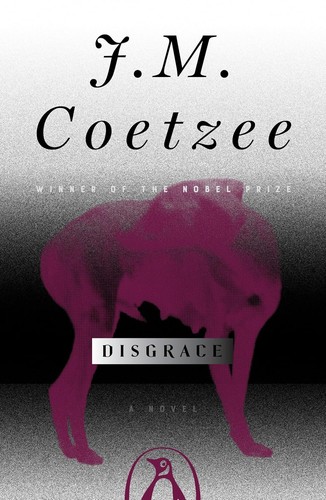
Disgrace
Disgrace follows David Lurie, a middle-aged Cape Town literature professor whose career ends after he abuses his position with a student and refuses to perform the contrition his university expects. He retreats to his daughter Lucy's smallholding in the Eastern Cape, where a violent attack changes both their lives and exposes how far the old order of power has shifted in post-apartheid South Africa. Coetzee's spare, unsettling story examines shame, privilege, desire, and responsibility without offering easy moral comfort. It won the 1999 Booker Prize and is one of the most discussed Booker Prize books of its era. As literary fiction, it rewards slow reading and still provokes strong disagreement.
Where to buy or borrow
Are you selling this book? Bookstores, publishers, authors and libraries can be listed here for free. Request a listing
About this book
Deep Overview
The second movement takes Lurie to Salem in the Eastern Cape, where his daughter Lucy farms a small plot, sells produce, and boards dogs. Rural life tests Lurie's assumptions. Lucy has built an independent life, and she will not defer to her father's judgment. Her neighbour Petrus, once her helper, is now a landowner and a figure of growing local power. The balance between the two households is already uneasy when three men attack the farm. Lurie is injured, and Lucy is raped. What follows is neither a story of revenge nor one of reassurance. Lurie wants Lucy to treat the crime as a rupture that demands flight or justice. Lucy insists on a response that he finds baffling and sometimes intolerable, and the novel never fully endorses either view. The rift between them is the book's emotional centre.
Lurie's work on a chamber opera about Byron, which was meant to be an elegant vehicle for erotic feeling, keeps changing as his circumstances shrink. At the same time he begins helping Bev Shaw at an animal welfare clinic, where much of the work is euthanising unwanted dogs. Through that work Coetzee probes the limits of dignity, compassion, and the sentimental language people use for suffering. The scenes are quiet but among the most demanding in the book.
The narration is in the present tense and stays close to Lurie, yet it does not simply adopt his self-justifications. Readers can see more than he does, and that gap carries the novel's irony. Coetzee does not tell readers how to judge Lurie, Lucy, or the new society around them. Instead he sets individual shame, sexual power, racial history, and ordinary obligation against one another and leaves the tension unresolved. The book shows a man's disgrace in several senses: the public scandal, the private humiliation, and a more ambiguous condition in which he may or may not become humbler.
Key Themes
Power in several forms: sexual, institutional, racial, and economic power overlap and shift. Lurie loses status as a professor while Petrus gains it as a landowner.
Gender and violence: the novel sets Lurie's treatment of Melanie beside the attack on Lucy, inviting readers to notice patterns that the characters themselves resist naming.
The limits of the Romantic imagination: Lurie's literary tastes give him a vocabulary of desire and genius, but they fail him when he has to deal with ordinary people.
Animals and compassion: the dogs force the question of what dignity, care, and killing mean when no human language of justification is available.
Historical reckoning: the book addresses inheritance, land, and the unfinished business of apartheid, mostly through the private lives of two people rather than through direct political argument.
Historical Context
Coetzee had spent decades writing about South Africa through allegory, historical distance, and philosophical fiction, as in Waiting for the Barbarians and Life & Times of Michael K. Disgrace is more directly set in the present day. It is also in conversation with English Romantic poetry, particularly Byron, whose life Lurie turns into an opera.
The novel's reception was part of its history. Some readers saw an honest, unsparing study of white vulnerability and moral failure, while others, in South Africa and elsewhere, objected to its portrayal of Black characters and of the attack. Readers should look at that debate in critical writing rather than assume a settled verdict.
Intended Audience
It may be a poor fit for readers who want a clear moral lesson, a sympathetic protagonist, or a plot that resolves its conflicts. Those who find depictions of sexual coercion or sexual violence distressing should know that both are central to the story, though they are not described in gratuitous detail. Some scenes involving animals are also painful.
Reading Difficulty
A few Afrikaans and Xhosa terms and references to English poetry appear, but most readers can follow without looking them up. The emotional weight is greater than the length suggests, and many readers find it useful to read the book over several sittings.
Helpful Background Knowledge
It may also help to know something about Coetzee himself: his earlier fiction, his work as a critic and academic, and his reputation for reticence about his own intentions. That reputation is a reminder that the novel does not offer an authorial verdict on its characters.
Why Read This Book?
It is also a good book for rereading. A second pass often changes how readers judge Lurie, Lucy, and Petrus, because first impressions depend heavily on whose perspective one trusts. For anyone wanting to understand why Coetzee is considered one of the major writers of his generation, it is a concise starting point, and it can lead on to his earlier novels.
Reader Takeaways
Strengths
Limitations and Cautions
The book is also set in a specific moment of South African history, so some details now read as period-specific. It contains sexual coercion, sexual violence, and the killing of animals, which may be difficult for some readers.
Important Concepts, People, and Places
Melanie Isaacs: Lurie's student, whose experience of his advances is central to the question of institutional and personal accountability.
Lucy Lurie: David's daughter, an independent farmer whose response to the attack tests her father's assumptions and the novel's moral frame.
Petrus: Lucy's neighbour and co-worker, who represents shifting land and power relations in the Eastern Cape.
Bev Shaw: an animal welfare worker whose clinic gives Lurie an unexpected, humbling task.
Lord Byron: the Romantic poet whose life Lurie is turning into a chamber opera, mirroring his own self-image.
Salem, Eastern Cape: the rural setting for the second half of the novel, where Lucy's smallholding stands.
Post-apartheid South Africa and the Truth and Reconciliation Commission: the historical setting and moral background against which private acts of shame and apology are weighed.
Booker Prize: the 1999 award that brought the novel and Coetzee to wider attention.
Questions the Book Explores
Reading Group Guide
Discussion Questions
2. How does the narration shape your sympathy for Lurie, and when does it withhold sympathy?
3. How should readers understand Melanie's experience, given that we see it only through Lurie?
4. Why does Lucy respond to the attack as she does, and is her decision a form of agency, surrender, or something else?
5. How does Petrus change in the course of the novel, and what does he represent beyond his role as a neighbour?
6. What is the purpose of the animal clinic scenes, and how do they alter Lurie?
7. How does the Byron opera comment on Lurie's own life?
8. Does the ending suggest change, resignation, or the lack of both?
9. How does the title work in the story, and who or what is disgraced?
10. How might a reader today weigh the novel's artistic strengths against criticisms of its portrayal of race and gender?
Sources and Verification
Comments
No published comments yet.
Available editions
Paperback
- Publisher
- Penguin Books
- ISBN-13
- 9780140296402
- Publication date
- Pages
- 224