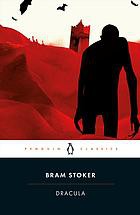
Cover for Dracula

Gothic Horror

Dracula by Bram Stoker , Maurice Hindle , Christopher Frayling

Dracula is Bram Stoker's 1897 Gothic horror novel, and one of the classic novels to read for anyone curious about where the modern vampire story began. Told through diaries, letters, telegrams and newspaper clippings, it follows the solicitor Jonathan Harker's disturbing stay in a Transylvanian castle and the Count's later arrival in England. There a small circle of friends, a physician and a Dutch professor of unusual learning try to understand and stop him. Beneath the chase, the book stages late-Victorian anxieties about invasion, sexuality, disease, science and belief. This Penguin Classics edition adds a preface by Christopher Frayling and an introduction and notes by Maurice Hindle, which help modern readers place the novel in its time.

Where to buy or borrow

Are you selling this book? Bookstores, publishers, authors and libraries can be listed here for free. Request a listing

About this book

Dracula is a Victorian novel of Gothic horror, and it has long been counted among the classic novels to read in English. It belongs to the late nineteenth-century revival of supernatural fiction, but its method is unusual. Stoker assembles the story from journals, phonograph recordings, letters, telegrams, ship's logs and press reports, so the reader works like a member of the hunting party, piecing together a case from scattered documents. No single voice controls the whole account. The book has three broad movements: Harker's journey and imprisonment in the East, the Count's campaign in England, and the pursuit back across Europe. The result is both a thriller about a pursuit and a record of modern tools such as shorthand, typewriters and rapid communication being used against something ancient. The Penguin Classics edition is a scholarly paperback rather than a bare text. Hindle's introduction and notes and Frayling's preface treat the novel as a document of its culture and a source for later vampire stories, which makes it a good version for students and curious general readers.

Deep Overview

The story begins in Transylvania. Jonathan Harker, a young English solicitor, travels to the castle of Count Dracula to finish a property transaction for a London house. His courteous host gradually turns out to be his captor. Harker's diary records locked doors, unnatural strength, and women in the castle whose attention is a different kind of danger. Stoker keeps the horror close to the surface of everyday paperwork. A man trained to read contracts and timetables slowly finds that none of his professional habits protect him.

The focus then shifts to England. Mina Murray, Harker's fiancée, writes to her friend Lucy Westenra, who is courted by three men: Arthur Holmwood, the American Quincey Morris, and the physician John Seward. Dracula comes ashore at Whitby on a wrecked ship, and Lucy begins to waste away. The first major crisis of the book is medical and moral as well as supernatural. Seward calls in his old teacher Abraham Van Helsing, whose mixture of advanced medicine, folklore and religious ritual becomes the group's working method. Their repeated blood transfusions are a scientific attempt to hold back what the book treats as a spiritual contagion.

In the second half the group becomes an organization. The friends share their papers, type up the evidence, compare timetables, and trace the Count's boxes of native earth across London. Mina is central to this effort. She organizes the records, and her connection to Dracula becomes both the group's greatest risk and its best means of tracking him. Renfield, a patient in Seward's asylum who is drawn to the Count, gives the book a disturbing mirror of devotion and appetite. The final movement leaves England for a long pursuit toward Transylvania.

Stoker's argument is made through form as much as plot. Modern efficiency is pitted against a very old kind of predator, and the book keeps returning to the question of what counts as evidence. The characters have to accept testimony that their scientific training says is impossible. Dracula himself is more a threatening presence than a speaker. Most of what we learn about him comes through the fears and descriptions of others. That is why interpretations of him have varied so widely, from a figure of foreign invasion to a figure of repressed desire. Hindle's notes and the supporting material make this layered reception easier to follow.

Key Themes

Invasion and reverse colonization: Dracula moves from the margins of Europe to the centre of the British Empire, and many critics read this as a late-Victorian fear that imperial power might be turned back on its home. This is an interpretation, not the only one.

Science against superstition: the characters use phonographs, medicine and typewriters beside garlic and sacred objects, and the book asks whether modern knowledge can absorb what it cannot explain.

Sexuality and gender: Lucy and Mina are treated very differently, and the vampire's attack mixes desire, fear and contamination. Readers disagree about whether the novel reinforces Victorian ideas of womanhood or exposes their strain.

Disease and contagion: blood, infection, and the spread of a hidden illness run through the narrative.

Collective action: the book's heroes succeed only by pooling their knowledge, which gives the plot an unexpectedly cooperative, bureaucratic shape.

Faith and moral order: the Count's powers are countered with religious symbols, and the novel treats damnation and salvation as real stakes.

Historical Context

Stoker was an Irish writer who spent much of his career in London as business manager of the Lyceum Theatre under the actor Henry Irving. Dracula appeared in 1897 and followed several years of work on the idea. According to biographical accounts, his research drew on Whitby, on a reference to a historical Dracula in William Wilkinson's book on Wallachia and Moldavia, and on Emily Gerard's travel writing about Transylvania. Scholars continue to debate how much Stoker knew about the historical Vlad III, so the link between the character and the real ruler should be treated with caution.

The book belongs to a decade of widespread anxiety about degeneration, criminality, foreign influence and changing gender roles, including debates over the New Woman. Imperial confidence was also being questioned. Critics such as Stephen Arata have read Dracula as part of a body of fiction about reverse colonization, in which the empire's subjects or rivals threaten the metropolis. The novel also reflects the period's fascination with new technology, psychiatry and early medical practice. Later stage and film adaptations, beginning in the early twentieth century, changed how readers imagine the character, so the original text can feel quite different from its popular image.

Intended Audience

This edition suits readers who want the original text with the support of an introduction and notes: students of Victorian literature, Gothic fiction or film, and general readers who know the Count only from adaptations. It is also useful for anyone building a reading list of foundational horror and supernatural fiction.

It may be less suitable for readers expecting a fast modern horror novel. The pacing is episodic, the prose is formal, and the story spends long stretches on logistics and correspondence. Readers who dislike dated attitudes toward women, foreigners and class may find parts of the book hard going without context.

Reading Difficulty

The language is Victorian but not especially dense. Sentences are long at times, and several characters write in dialect: Van Helsing's English is deliberately foreign, and the Whitby fisherman Mr Swales and Quincey Morris each speak distinctively. The multiple narrators can feel slow at first, because the reader has to keep track of whose journal or letter is being read and when. The pace picks up considerably after Lucy's decline and again in the final chase.

No specialist knowledge is needed. The notes and introduction in this edition are helpful for obscure references, and the book is long, so readers may prefer to read in sections. The full-length Penguin paperback is a physical book with scholarly apparatus, so it is better suited to study than to a quick read on a phone.

Helpful Background Knowledge

A basic idea of the late Victorian period helps: the British Empire at its height, the status of women and marriage, and the public interest in science, spiritualism and psychology. It also helps to know that Dracula was not the first vampire story in English. John Polidori's The Vampyre and Sheridan Le Fanu's Carmilla are earlier works that Stoker's novel is often compared with. A quick look at the geography of Transylvania, Whitby and north London will also make the movements in the plot clearer.

It is better to put film versions aside while reading. Many familiar images, such as the cape and the elegant seducer, are not in the book in the way viewers expect.

Why Read This Book?

Reading the novel itself shows what the many adaptations have changed or left out. It is more procedural and more unsettling than its reputation suggests, with scenes built from timetables, shorthand notes and medical records. It is also an unusually clear example of how an author can use form to create dread. This edition is a practical choice because its editorial apparatus gives readers a way to see Dracula as both an entertainment and a cultural document, and because Frayling's preface and Hindle's notes explain where the book stands in the long history of vampire fiction.

Reader Takeaways

A careful reader may come away understanding how a multi-voiced structure can build suspense and credibility. They may also notice how the novel treats evidence and belief, and how medicine, law and technology are brought into a story of the supernatural. Many readers reconsider the Count's role, since he appears directly in only a small portion of the text. Others rethink the book's female characters, who are more active than their reputation suggests, yet are still shaped by the period's ideas. Finally, it is worth noticing how far the cultural image of the vampire has moved from this source.

Strengths

The book's inventive structure is its main strength: the documents give the story pace, variety and a convincing sense of reality. The opening chapters in the castle are among the most atmospheric in Gothic fiction, and the Whitby section combines landscape and menace effectively. The ensemble cast lets the novel look at the same events from several psychological angles. The Penguin edition's introduction, preface and notes add real value by explaining sources, allusions and critical debates.

Limitations and Cautions

The novel reflects its time. Its treatment of women, of Eastern Europeans and of Roma characters carries Victorian prejudice, and readers may find some passages uncomfortable. Characterization can be thin, especially among the male heroes, who are often more representative than individual. The middle of the book moves slowly, with a lot of repeated explanation. Many interpretations, whether imperial, sexual or medical, are plausible but disputed, and no single reading explains the whole work. This particular edition's page count differs between catalogues, and readers should treat the numbers as approximate. Any adaptation-based expectations will also need adjusting.

Important Concepts, People, and Places

Count Dracula: the Transylvanian nobleman and vampire whose move to England drives the plot. He is shown mostly through the reactions of others.

Jonathan Harker: the solicitor whose Transylvanian journal opens the book and who later joins the pursuit.

Mina Murray (later Harker): a schoolmistress and Harker's wife, who organizes the group's records and whose link with the Count shapes the final chase.

Lucy Westenra: Mina's friend, whose illness and transformation form the book's central English tragedy.

Abraham Van Helsing: the Dutch physician and scholar who supplies the group's knowledge of vampires and leads the hunt.

John Seward, Arthur Holmwood and Quincey Morris: the three suitors who become Van Helsing's allies.

Renfield: a patient in Seward's asylum, whose behaviour links the Count to the English setting.

Transylvania, Whitby, Carfax and London: the places that trace the Count's journey from his castle to the city's heart. Whitby is where he lands, and Carfax is the estate he buys near Seward's asylum.

Epistolary form: the document-based structure that shapes how information is revealed.

Reverse colonization: a critical concept used by scholars to read the novel as an expression of imperial anxiety.

Bram Stoker and Henry Irving: the author and the actor-manager whose Lyceum Theatre world formed Stoker's working life.

Questions the Book Explores

What happens to confident modern institutions, such as law, medicine and the press, when they meet something they cannot classify? How far can a community defend itself if its members do not trust each other's testimony? What makes a threat feel foreign, and who decides where the boundary between native and outsider lies? How are desire and danger linked, and who is allowed to be seen as innocent or corrupt? Is salvation in the novel a matter of individual faith or of collective action? And why does a story told through documents feel more convincing than a single narrator's account?

Reading Group Guide

The book divides naturally into four meetings: Harker's castle journal; Whitby and Lucy's illness; the formation of Van Helsing's group and the asylum material; and the pursuit. Groups can ask each member to follow one narrator across the book and report on how that voice changes. It is worth setting aside time to compare the novel with a favourite film or television version, noting what has been added or dropped. If your group is using the Penguin edition, assign readers to bring one point from Hindle's notes or the preface to each session. Some members may want to read around the topic with Polidori's The Vampyre or Le Fanu's Carmilla. These book discussion questions work best when readers have finished at least the Whitby section.

Discussion Questions

1. Why might Stoker have chosen documents rather than a single narrator, and how does this affect your trust in the story?
2. How does the novel present Count Dracula when he is absent from the page, and what is gained by keeping him partly hidden?
3. In what ways are Lucy and Mina treated differently, and what values does the book seem to attach to each?
4. Does the novel endorse the group's use of science, or does it show the limits of scientific confidence?
5. How do you read the Count as a foreign threat? What assumptions about nation, class or race are involved, and how might a modern reader respond?
6. What role does cooperation play in the group's success?
7. How does the setting change the mood between the Transylvanian, Whitby and London sections?
8. Which adaptation choices do you think have most changed the public image of Dracula, and do they improve or distort the original?
9. What does the ending suggest about the resolution of fear, and does it satisfy you?

Sources and Verification

This profile draws on the publisher's page for the Penguin Classics edition, library catalogue records that carry the ISBN and the edition statement, and a bookseller listing used only to confirm edition details. Background on Stoker, the novel's first publication and its sources comes from reference and biographical pages, and the discussion of critical readings draws on academic and journal material about Victorian anxieties and reverse colonization. Sources disagree on this edition's page count and exact publication date, so those details are not given. Interpretations of the novel are presented as critical readings, not settled facts. The summary of the story is the editor's own.

Comments

No published comments yet.

Sign in to add a comment.

Available editions