
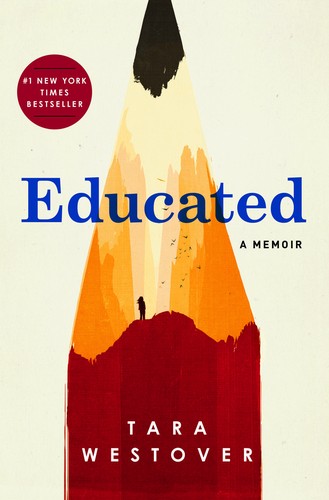
Educated
A Memoir
Educated is Tara Westover’s memoir of growing up in an isolated survivalist family in rural Idaho and gradually building a life beyond the boundaries of her childhood. Without conventional schooling, she works in her father’s junkyard, absorbs a worldview shaped by religious certainty and distrust of public institutions, and initially lacks basic knowledge that her future classmates take for granted. Self-directed study eventually brings her to Brigham Young University and, later, to Cambridge and Harvard. Yet education does not function as a simple escape route. As Westover acquires language for history, power, violence, and personal autonomy, she must reconsider memories and loyalties that formed her identity. The memoir’s central conflict is therefore not ignorance versus knowledge alone, but belonging versus self-definition. It examines what happens when intellectual growth makes a former understanding of home impossible to sustain—and when telling one’s own story carries the risk…
Where to buy or borrow
Are you selling this book? Bookstores, publishers, authors and libraries can be listed here for free. Request a listing
About this book
Deep Overview
The memoir does not present Tara as someone who immediately recognizes this environment as extraordinary. Its power over her comes partly from its familiarity: the family’s explanations constitute the only reality she knows. Early aspirations in music and theater offer glimpses of another life, while her brother Tyler’s departure for college makes formal education imaginable. Tara studies independently for the ACT and enters Brigham Young University with large gaps in both academic and social knowledge. College exposes those gaps, but it also reveals that what she had understood as universal truth was one worldview among many.
Her intellectual development unfolds through encounters with history, literature, religion, and political thought. Learning about the Holocaust and the American civil rights movement shows her the scale of what has been omitted from her upbringing. At Cambridge, figures such as historian David Runciman and ideas associated with John Stuart Mill and Isaiah Berlin give her language for considering gender, authority, and liberty. These encounters matter because they allow her to examine her life rather than merely endure or defend it.
The emotional center of the book concerns violence within the family and the struggle over whether Tara’s account will be believed. Her changing understanding of an older brother’s behavior forces her to question the family narratives that minimize or deny harm. When she seeks acknowledgment, relatives respond in conflicting ways, and her father’s authority becomes entangled with the demand that she distrust her own perception. The issue is no longer simply whether she will attend university; it is whether she can claim interpretive authority over her experience.
Education consequently brings both freedom and fracture. Academic achievement carries Tara far from Idaho, but credentials do not automatically erase shame, self-doubt, or the desire to return home. The memoir resists an easy triumph in which intelligence solves every problem. Instead, it presents self-creation as an incomplete and costly process. Westover’s eventual separation from parts of her family is neither celebrated as uncomplicated liberation nor dismissed as betrayal. It becomes the price of preserving a self capable of remembering, judging, and choosing.
Key Themes
• **Family loyalty and personal autonomy:** The memoir repeatedly asks whether love requires agreement, obedience, or continued proximity. Tara’s growth makes the conflict between belonging and self-preservation increasingly severe.
• **Authority over reality:** Competing versions of accidents, abuse, illness, and family history turn memory into a struggle over power. Believing her own perception becomes central to Westover’s independence.
• **Isolation and institutional distrust:** The family’s distance from schools, hospitals, and government protects its internal worldview from outside correction. The book shows how isolation can make dangerous practices appear normal.
• **Gender and power:** Expectations about women, modesty, obedience, and credibility shape Tara’s childhood and influence how violence is interpreted within the family.
• **Transformation without simple closure:** Academic success changes Tara’s circumstances, but it does not neatly resolve grief, attachment, or estrangement. The memoir treats freedom as real yet emotionally expensive.
Historical and Social Context
The book’s university chapters introduce another context: the expansion of Tara’s historical consciousness. Subjects such as the Holocaust, the civil rights movement, women’s rights, and European intellectual history reveal how limited her earlier frame of reference had been. Her movement into higher education also highlights less visible barriers to academic participation—financial insecurity, unfamiliar social codes, gaps in background knowledge, and the difficulty of recognizing oneself as someone who belongs in an elite institution.
Intended Audience
Readers who appreciate reflective nonfiction with the momentum of a dramatic narrative are likely to find it accessible. Those seeking an educational-policy analysis, a general account of Mormon life, or a systematic study of survivalist communities should look elsewhere; Westover’s subject is her own formation within one particular family. The book may also be difficult for readers sensitive to descriptions of physical danger, domestic abuse, coercive behavior, and family rejection.
Reading Difficulty
The greater difficulty is emotional and interpretive. Scenes of serious accidents, physical violence, manipulation, and estrangement can be intense. Readers must also remain attentive to changing names, alliances, and competing recollections within a large family. The memoir’s treatment of uncertain memory asks for more nuance than a straightforward tale of escape from ignorance.
Helpful Background Knowledge
Brief familiarity with American homeschooling, rural survivalism, Brigham Young University, the University of Cambridge, and the Gates Cambridge Scholarship can clarify the magnitude of Tara’s transitions. Isaiah Berlin’s distinction between negative and positive liberty and John Stuart Mill’s writing on women become meaningful reference points, but the book supplies enough context to follow their importance without advance study.
Why Read This Book?
The book is also compelling because it refuses to reduce family attachment to a puzzle with an obvious solution. Tara can recognize danger and still long for home; she can gain independence and still grieve what independence costs. Readers interested in memory, credibility, coercive family systems, or the difference between forgiveness and reconciliation will find substantial material to consider. Its combination of narrative urgency and reflective restraint makes it particularly productive for shared discussion.
Reader Takeaways
It may also sharpen awareness of the costs attached to changing social worlds. Leaving a controlling environment does not instantly remove its rules from the mind, and external success does not eliminate divided loyalties. Readers may reconsider how families establish a shared version of reality, why some members defend that version, and what happens when one person refuses it. Finally, the book encourages a distinction between loving someone, forgiving someone, accepting someone’s account, and maintaining a relationship with that person.
Strengths
The narrative is well shaped, moving from childhood episodes to intellectual awakening without treating academic success as a magical cure. Recurring images, family stories, and acts of naming acquire new meanings as Tara’s perspective changes. Her acknowledgment of conflicting recollections adds complexity to the presentation of memory. The book also integrates ideas from history and political thought into lived experience, showing why concepts such as liberty or gender can matter urgently to an individual rather than remaining abstract classroom material.
Limitations and Cautions
The book’s unusual circumstances can also invite overly broad conclusions. One household cannot stand for all homeschooling families, rural communities, survivalists, or members of the Church of Jesus Christ of Latter-day Saints. Nor does the narrative offer a general program for overcoming educational deprivation or family abuse. Institutions such as universities become crucial sources of possibility, but the memoir gives less attention to the systemic conditions that determine who can gain access to similar opportunities. Its strongest scope remains personal: the formation and defense of one consciousness.
Important Concepts, People, and Places
• **Buck’s Peak and Clifton, Idaho:** The mountain and rural area associated with Westover’s childhood. Buck’s Peak becomes a symbol of home, family mythology, isolation, and enduring attachment.
• **Gene Westover:** Tara’s father, whose religious certainty, survivalism, opposition to public institutions, and authority define the household’s worldview. The name Gene is a pseudonym used in the memoir.
• **Faye Westover:** Tara’s mother, who works as a midwife and herbal practitioner. Her changing position within the family is important to Tara’s hopes for support and recognition. Faye is also a pseudonym.
• **Tyler Westover:** The brother whose pursuit of college helps Tara imagine formal education as a possible path and who becomes an important source of support.
• **Shawn Westover:** The pseudonym for the older brother whose alleged violence and coercive behavior become central to the family conflict over memory, credibility, and loyalty.
• **Brigham Young University:** Tara’s first formal educational institution and the setting where she confronts major gaps in academic knowledge, finances, health practices, and social experience.
• **University of Cambridge and Trinity College:** The academic environment in which Tara develops as a historian and encounters teachers and ideas that help her reinterpret freedom and identity.
• **Harvard University:** A further stage in her widening intellectual life and geographical distance from Idaho.
• **David Runciman:** A Cambridge scholar and mentor who recognizes Tara’s academic potential and helps make advanced study conceivable.
• **John Stuart Mill:** His arguments concerning women help Tara question claims that restrictive gender roles are fixed by nature.
• **Isaiah Berlin:** His concepts of positive and negative liberty give Tara a framework for thinking about external control, internalized limits, and the difficulty of becoming free.
• **Memoir and contested memory:** Westover includes notes about differing recollections, foregrounding the problem of reconstructing a shared past when family members disagree.
• **Self-authorship:** The book’s implicit name for the process of acquiring enough intellectual and moral independence to describe one’s experience and choose a life beyond inherited expectations.
Questions the Book Explores
• How does a family’s shared vocabulary determine what its members can recognize or question?
• Can a person reject a parent’s authority without ceasing to love that parent?
• When accounts of the past conflict, how does someone decide whether to trust personal memory?
• Why can harmful environments retain a powerful emotional claim on those who leave them?
• What distinguishes forgiveness from reconciliation or renewed contact?
• How do gender expectations affect whose pain is acknowledged and whose testimony is believed?
• Can self-invention occur without some form of loss or perceived betrayal?
• What practical and psychological barriers confront a student who enters education without conventional preparation?
Reading Group Guide
A second productive approach is to map the family’s competing accounts of reality. Notice where accidents, illness, violence, and motives are renamed or disputed. Discuss how the inclusion of alternative memories affects trust in the narrator and what it reveals about memoir as a form.
Groups can also compare the roles played by Tara’s father, mother, Tyler, Shawn, friends, professors, and university officials. Ask which relationships enlarge her choices and which narrow them. Pay particular attention to moments when practical help—medical treatment, financial aid, mentorship, or simple explanation—changes what she can imagine.
Because the material includes abuse and estrangement, establish respectful boundaries before discussion. Avoid treating participants’ personal histories as required evidence. The most fruitful conversation will examine the book’s ethical tensions without assuming that every family conflict has the same appropriate outcome.
Discussion Questions
2. Which nonacademic experiences contribute most significantly to her education?
3. How does Buck’s Peak change in meaning as the memoir progresses?
4. Why does Tara repeatedly return to her family after recognizing patterns of danger and denial?
5. How do her mother’s choices affect Tara differently from her father’s choices?
6. What is gained—and what remains unresolved—when Westover includes relatives’ conflicting memories?
7. How do money, medical access, clothing, and social knowledge influence Tara’s ability to function as a student?
8. In what ways do John Stuart Mill and Isaiah Berlin provide more than academic knowledge?
9. Does the memoir portray estrangement primarily as freedom, grief, necessity, or some combination of these?
10. How does Westover distinguish forgiveness from reconciliation?
11. Which people serve as teachers even when they do not occupy formal teaching roles?
12. By the end, what does the title Educated mean that it did not mean at the beginning?
Sources and Verification
Comments
No published comments yet.
Available editions
Hardcover
First U.S. edition; hardcover
- Publisher
- Random House
- ISBN-13
- 9780399590504
- Publication date
- Pages
- 352