Deep Overview
The book is built from two parts. The first gathers stories in which a single strange idea is pushed to its logical limit. In "Tlön, Uqbar, Orbis Tertius," a narrator tracing an obscure entry in a reference work uncovers a conspiracy to invent a whole world. That world's philosophy gradually crowds out ours. In "Pierre Menard, Author of Don Quixote," the narrator reviews the career of a minor French writer who tries to compose passages of Cervantes's novel afresh. The story asks whether identical words can mean different things when written in a different era. "The Library of Babel" imagines a universe of hexagonal rooms holding every possible book. It treats the dream of total knowledge as a source of both hope and despair. "The Garden of Forking Paths" works as a wartime spy story. Its real subject is a novel in which every choice branches into every possible outcome, so time is a web of parallel futures.
The second part, Artificios, shifts toward the tale of crime, memory, treachery and fate. "Funes the Memorious" portrays a man who forgets nothing and so cannot think. "Death and the Compass" turns the detective story into a trap whose design the investigator mistakes for a solution. "The Secret Miracle" gives a condemned playwright a private extension of time. "Three Versions of Judas" parodies and takes seriously the tools of theological scholarship. The later additions from 1956 include the tense, quieter pieces "The End," "The Sect of the Phoenix" and "The South."
What unites these varied stories is a method. Borges seldom begins with characters whose feelings drive a plot. He begins with an idea, whether infinity, identity, authorship, chance or memory, and lets it turn into a narrative situation. His narrators are often bookish, uncertain and compromised, and they cite sources that may not exist. The reader is made to doubt where fact stops and invention begins. This is not decoration. It is the book's argument that all knowledge, including the texts we trust, is constructed, selective and provisional.
The stories also converse with one another. Dreamers invent dreamers, libraries echo encyclopedias, and a lottery stands in for the whole cosmos. Read together, they build a coherent picture of a mind in love with order yet convinced that order is always a human fiction, and perhaps an unbearable one. The Sturrock introduction in this edition helps readers see how the pieces fit together and why Borges is better understood as a writer of narrative than of abstract philosophy.
Key Themes
Infinity and the limits of knowledge recur in the library, the lottery and the endless garden of possibilities. Reality as a construction appears in invented worlds, dreamed people and doubted sources. Identity and authorship are tested when a copy can count as an original, or when a writer vanishes behind the books attributed to him. Time and fate surface in stories where outcomes are already set, branching, or suspended. Memory and its excess or loss shape the story of Funes. Violence, betrayal and the ethics of belief run beneath the more abstract pieces. Finally, the book returns again and again to reading and interpretation as acts that create meaning.
Historical Context
Borges wrote these stories in Buenos Aires in the late 1930s and early 1940s. He was a librarian and critic who published in the literary magazine Sur, which linked Argentine writers to European and American currents. The period was dominated by the Second World War, which sits in the background of several stories, and by political turbulence in Argentina. The collection draws on a wide range of reading: Cervantes, English detective fiction, Kabbalistic and Gnostic ideas, Arabic and Chinese motifs, and philosophers who questioned the reality of the self and of time. Borges also collaborated with Adolfo Bioy Casares on detective writing under a shared pseudonym during this era, and the genre's logic is visible in several stories. The book became widely known in English in the 1960s through Grove Press's complete edition and the New Directions anthology Labyrinths. It played a major part in making Latin American writing visible to world readers. Many later authors have acknowledged its influence.
Intended Audience
The collection suits curious readers who enjoy ideas as much as plot, including people who like puzzles, labyrinths, metafiction and the borderlands between fiction and essay. It is a good choice for students of world literature, for writers interested in how short fiction can compress a big idea, and for anyone who wants an entry point to twentieth-century Latin American writing. It may suit readers less well if they want rounded characters, emotional immersion, or a linear storyline. Readers hoping for a conventional detective novel or a sweeping narrative may find the stories cool and cerebral. Those who dislike open endings and ambiguity should also expect some frustration.
Reading Difficulty
The stories are short, and the book is slim, so length is not the obstacle. The difficulty lies in density. Sentences often compress several ideas, and narrators rely on references to philosophers, theologians, authors and books, some real and some invented, without always telling the reader which is which. Pacing is deliberate. A few stories, such as "The Library of Babel" or "Tlön, Uqbar, Orbis Tertius," reward a second reading. Others, such as "The South," read more smoothly and offer a gentler way in. No formal philosophy background is required, though comfort with abstract thought helps. The hardcover is compact and easy to carry, and the English text is a translation, so some of the Spanish wordplay and cadence is inevitably reshaped.
Helpful Background Knowledge
Nothing is required, but a few touches of preparation make the experience richer. A basic idea of who Cervantes was and what Don Quixote is will help with Pierre Menard. A rough sense of idealism in philosophy, which questions whether matter exists independently of mind, clarifies Tlön. Knowing the outline of the classic detective story, with its logic of clues and a solution, helps with Death and the Compass. A short biography of Borges, covering his Buenos Aires life, his work in libraries and his later blindness, adds useful context. Reading the Sturrock introduction first, or after, is a good way to frame the stories. Readers do not need to know the plots in advance, and the surprises are worth preserving.
Why Read This Book?
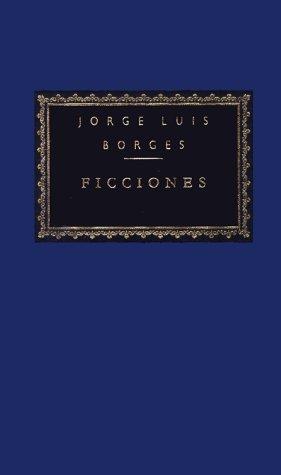
Few books show so clearly how fiction can think. In a few pages, Borges produces a vivid scenario that stays in the mind and keeps raising questions long afterward. The collection is also historically important, since it helped shape modern ideas about metafiction, the fantastic and the story that treats reading as its subject. For those who enjoy books that make you think, it offers puzzles without pat solutions. This particular edition adds the Everyman's Library hardcover format and an introduction by a critic who knew Borges's work well, which suits readers who want some guidance alongside the text. The book also rewards re-reading, because details that seemed incidental the first time often turn out to carry weight.
Reader Takeaways
A careful reader may come away with a sharper sense of how texts create their own authority, and of how footnotes, reviews and citations can be used to build worlds. They may reconsider what originality means when every writer inherits earlier books. They may notice how Borges uses the forms of detective fiction, the treatise and the review to carry ideas that would otherwise stay abstract. Readers may also find themselves questioning the neatness of systems of knowledge, from catalogues to cosmologies. Finally, they are likely to appreciate how much a short story can hold when it is built with this much economy.
Strengths
The collection is remarkably compact and inventive. Each story proposes a self-contained conceit, and the best ones keep opening outward after the last page. Borges's mix of precision and mystery is distinctive, and the range of forms across the volume keeps it varied. The book has had unusual influence on literature and criticism, and it is a useful way into the larger Borges canon. The introduction in this edition provides orientation, and the portable format makes the volume easy to dip into. Because the stories are short, readers can sample them in any order and build up gradually.
Limitations and Cautions
The stories privilege ideas over emotional development, and some readers find the characters thin or the tone remote. The scholarly apparatus of invented sources can be disorienting, and some allusions assume a wide reading background. As a translation, the English cannot fully reproduce the Spanish, and translations of Borges differ in tone and word choice. This edition's translation is credited by the publisher to Anthony Kerrigan, though other translators have also worked on Borges's stories. Readers who want the revised fuller collection in a more recent translation can compare the Penguin Collected Fictions. The book also reflects its period and its author's literary tastes, which lean heavily toward European and Western traditions with selective borrowings from elsewhere. Some stories contain violence and gloomy fatalism.
Important Concepts, People, and Places
Jorge Luis Borges (1899–1986) wrote every piece in the collection. He was an Argentine poet, essayist and librarian who produced most of these stories while working as a junior assistant in a municipal library in Buenos Aires. In 1955 he became director of Argentina's National Library. His years among catalogues and shelves help explain why so many of the stories are about books, reference works and archives.
Buenos Aires is where Borges wrote and published the book, and it is more than a backdrop. The city and the surrounding plains appear in pieces such as "The South" and "Death and the Compass." In those stories, familiar streets and outskirts become places shaped by fate and geometry.
Sur was the Buenos Aires literary magazine where several of these stories first appeared. Its publishing house, Editorial Sur, issued the first edition of Ficciones in 1944. Emecé published the 1956 revision, which added later stories such as "The End," "The Sect of the Phoenix" and "The South."
Adolfo Bioy Casares was Borges's close friend and frequent co-author. He appears under his own name at the start of "Tlön, Uqbar, Orbis Tertius," where a remark he makes over dinner sets off the search for Uqbar. Putting a real person into the story is part of how Borges blurs fact and invention.
Tlön, Uqbar and Orbis Tertius are the invented planet, country and secret project at the center of the opening story. They show what happens when a made-up world, described in a carefully forged encyclopedia, starts to replace the real one.
Miguel de Cervantes and Don Quixote are the model behind "Pierre Menard, Author of Don Quixote." Pierre Menard is an imaginary French writer. His attempt to produce Cervantes's text anew lets Borges ask how far a text's meaning depends on who writes it, when, and for whom.
The library and the labyrinth are the book's two main images. In "The Library of Babel," the endless library turns the universe into a collection of every possible text. The labyrinth appears in several forms: as a real maze, as a novel, and as the branching structure of time imagined by Ts'ui Pên in "The Garden of Forking Paths." There it stands for choices that never stop multiplying.
Idealism is the philosophical view that reality depends on the mind perceiving it. It is the basis of Tlön's language and science. Kabbalah and Gnostic thought inform the stories about names, secret orders and heresy, including "Death and the Compass" and "Three Versions of Judas."
Ireneo Funes is the young man from Uruguay who forgets nothing. He is the book's most memorable picture of perception without the ability to abstract. Erik Lönnrot, the overconfident detective of "Death and the Compass," shows the classic detective story turned against itself. Borges knew the genre well, and that knowledge gives the reversal its force.
The English translation in this edition goes back to the 1962 Grove Press Ficciones, the first full English version of the collection. Anthony Kerrigan edited that volume and translated some of the stories himself. Alastair Reid, Anthony Bonner, Helen Temple and Ruthven Todd translated the others. The translation is therefore properly credited to Kerrigan and others, not to Kerrigan alone. John Sturrock, a British critic who wrote about Borges, provided the introduction for the Everyman's Library edition.
Labyrinths, published by New Directions the same year as the Grove edition, was a separate English anthology. It mixed stories from Ficciones with essays and parables. Together, the two 1962 books introduced Borges to a wide English-speaking readership.
Questions the Book Explores
Can an invented world become more convincing than the real one? What does it mean to be the author of a text if the words are borrowed or already exist? Is a universe containing every possible book a source of wisdom or of meaninglessness? If each choice produces every outcome, what remains of responsibility? Can perfect memory be a handicap rather than a gift? How reliable are the narrators, scholars and documents that we use to understand the past? And is the human desire for order a discovery about the world or something we impose on it?
Reading Group Guide
Because the book is a set of separate stories, groups can pick a handful rather than read everything at once. One approach is to begin with "The South" or "Funes the Memorious," which are more accessible, then move on to "Tlön, Uqbar, Orbis Tertius" and "The Library of Babel." Another is to pair a more cerebral piece with a story of crime or betrayal to compare how Borges handles ideas and action. Groups may enjoy mapping the invented sources, noting which references are real, and discussing how the narrators shape what the reader believes. It is also useful to compare the Sturrock introduction with the group's own impressions. Allow time for rereading, since several stories change on a second pass.
Discussion Questions
1. Which story most changed your sense of what fiction can do, and why?
2. How does Borges's use of fake scholarship and invented books affect your trust in the narrator?
3. In what sense, if any, is Pierre Menard's work the same as Cervantes's, and what does your answer say about reading?
4. Does the infinite library offer comfort, dread, or both?
5. How do the detective and spy forms serve Borges's larger ideas, and where do they break down?
6. What is gained and what is lost when a story puts ideas ahead of character?
7. How does the book portray fate and free will across its different tales?
8. Do the stories feel dated, timely or both in an age of digital archives and endless information?
9. How might a different translation change your experience of a given story?
Sources and Verification
Bibliographic details for this edition, including the ISBN, imprint, date, page count, translator credit and introduction, come from the publisher's own catalogue pages, cross-checked against a bookseller listing for the ISBN-10. Background on the collection's publication history and contents draws on an encyclopedia entry and an open reference article, supplemented by an institutional Borges research site and a cultural institute's event notes on the stories' early appearance in magazines. Some bookseller listings give different page counts, so the publisher's figure is used. The description of individual stories, themes and context is the editor's own synthesis. Translator credits for individual stories in the Everyman's Library edition are only broadly confirmed.