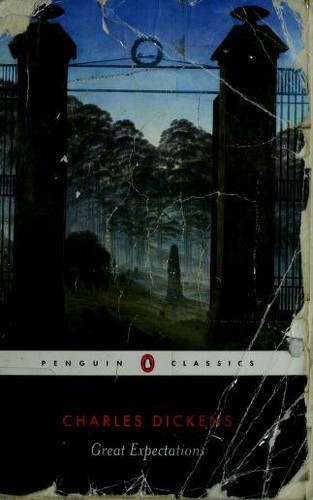
Deep Overview
The book begins in a churchyard on the Kent marshes, where young Pip Pirrip, who lives with his sister and her husband, the blacksmith Joe Gargery, is menaced by an escaped convict. That frightened act of kindness sets the plot in motion. Soon afterwards Pip is taken to Satis House, home of the embittered Miss Havisham, and meets her ward Estella, whose scorn teaches him to be ashamed of his own home, his hands and his boots. When a London lawyer, Mr Jaggers, announces that Pip has 'great expectations' from an anonymous benefactor, the boy assumes he knows where the money comes from and what it is for. Much of the novel is the slow correction of that assumption.
Dickens organises the story in three stages. In the first, Pip's expectations are only a child's longing for refinement, shaped by humiliation. In the second, he lives in London, learns the manners of a gentleman, befriends Herbert Pocket, and drifts into debt and snobbery while quietly neglecting Joe. The third stage is driven by revelation. The source of the fortune is exposed, and Pip has to reckon with what his gentility has cost him and others. (Readers new to the book may prefer to discover that turn for themselves.)
The retrospective narration is what holds the book together. The adult Pip is a witness who is still partly embarrassed by himself. He lets readers see more than the younger Pip could, and the irony works on two levels: the comedy of a boy's pretensions, and the sorrow of an adult who recognises them. Around Pip, Dickens arranges characters who act as moral measures. Joe stands for loyalty without calculation. Jaggers and his clerk Wemmick show how the law can divide a person into a public face and a private one. Miss Havisham, who stopped her clocks on the day she was jilted, treats a child as an instrument of revenge, and the book then asks what she owes the person she has shaped.
The novel also asks what makes a gentleman. Pip's early belief is that the answer is money, polish and education. His experience, and the contrast between the people he admires and the people who actually help him, steadily undermines that belief. Crime and punishment run underneath the social story, because Pip's world is full of prisons, courts and men and women marked by the penal system.
The ending has a history of its own. Dickens wrote a bleaker conclusion, then revised it after his friend the novelist Edward Bulwer-Lytton urged a more hopeful close. Editions differ in how they present the alternatives, and the difference changes how a reader weighs Pip's self-knowledge against what his life has actually become.
Key Themes
Ambition and self-invention: the book examines what happens when a person remakes himself to match someone else's idea of success. Class and gentility: the novel contrasts social rank with moral worth, and asks whether refinement can be bought. Guilt and conscience: from the opening scene, Pip carries a sense of wrongdoing that outlasts any specific offence, and it shapes his choices. Gratitude and loyalty: the story measures how well people repay those who have helped them, often at the expense of their own vanity. Crime, justice and punishment: the legal system appears as both a social force and a moral problem, and the book is interested in the people it ensnares. Love as distortion: Pip's feeling for Estella is entangled with shame and desire for status, and Miss Havisham's care for her ward is bound up with revenge. Memory and narration: because Pip tells his own story late in life, the book keeps asking how far a person can be honest about his own younger self.
Historical Context
Dickens wrote the novel in 1860–61, when he owned and edited the weekly magazine All the Year Round, founded in 1859. Its first serial was A Tale of Two Cities. When Charles Lever's A Day's Ride proved unpopular and sales fell, Dickens put aside his plan for a longer monthly serial and began Great Expectations in the weekly format. It ran from 1 December 1860 to 3 August 1861. Scholarship on the novel's reception records that circulation recovered and settled at around 100,000 copies a week, so the book was a commercial success from the start. Chapman & Hall issued it in three volumes in 1861. The story itself is set earlier in the nineteenth century, in Kent and London, in a society where legal reform, penal transportation to the Australian colonies, and the expanding commercial city all shaped what a young man could hope to become. Victorian ideas about respectability and self-improvement, and anxieties about the new money that could buy them, form the social background to Pip's ambitions.
Intended Audience
The book suits readers who want a first Dickens novel that is shorter and more tightly constructed than his earlier works. It also suits students of Victorian literature, anyone interested in the English bildungsroman, and general readers who enjoy first-person narrators who are unreliable about themselves. Book groups will find plenty to debate. It is a good fit for readers who like social comedy sharpened by moral seriousness. Readers who expect fast, modern pacing may find the early chapters slow, and those who dislike Victorian sentiment and coincidence may be frustrated by some plot devices. Younger readers can enjoy the opening, but the book's psychological and social themes reward an older reader's perspective.
Reading Difficulty
The sentences are long by modern standards, and some vocabulary and period references (legal terms, currency, coaching and trade) will be unfamiliar. The prose is nonetheless direct and very readable, with a lot of dialogue and strongly drawn scenes, and the plot is easy to follow. Pacing varies: the opening in the marshes and the early visits to Satis House move quickly, the London middle section is more episodic, and the closing chapters accelerate. Conceptually the book is accessible, though its irony takes some attention, because the narrator's older self often comments on the younger one. At 544 pages in this edition, the length includes front matter, editorial apparatus and notes, so the novel itself is shorter than the page count suggests. The notes and introduction help with period detail and are best treated as optional extras: reading the introduction after the novel avoids spoilers.
Helpful Background Knowledge
No specialist knowledge is needed. A few basics help: the idea of a bildungsroman, the English class system of the early nineteenth century, and the way Dickens's novels first appeared in instalments. Knowing that Victorian law could send convicts to penal colonies, and that returning from transportation was itself a crime, will make several scenes clearer. Readers may also find it useful to know that Dickens's own early hardships and his later rise in society are often discussed in connection with Pip's anxieties, though the novel is not an autobiography. If you plan to use the editorial notes, keep a bookmark at the back so you can check them without losing your place.
Why Read This Book?
Choose this book if you want Dickens at his most controlled. The plot is planned around a long, delayed revelation, and the imagery of marsh mist, forge fire, stopped clocks and decaying cake recurs with purpose. It gives you a narrator who is neither a hero nor a villain, but a flawed person whose self-assessment is part of the story. The book is also influential: Miss Havisham, Magwitch and Estella are among the best-known figures in English fiction, and many later novels about ambition and class echo its structure. This Penguin Classics edition adds a scholarly introduction and notes, which suit readers who want help with period detail without a heavy academic apparatus.
Reader Takeaways
A careful reader will come away with a clearer sense of how a retrospective narrator can shape what we know and when we know it. You may reconsider the assumption that kindness and status go together, and notice how often the novel puts generosity in unglamorous places. You will see how Dickens uses repeated images and mirrored characters, for example in comparing the people who have shaped Pip. You may also come away with a sharper eye for the difference between guilt that is deserved and guilt that is merely absorbed from others. Finally, you will have a working knowledge of the issues Victorian readers brought to this book: class mobility, the justice system and the cost of respectability.
Strengths
The novel is unusually well organised for a Victorian serial, with its three-stage structure and carefully planted clues. Its characters are vivid and memorable, and its comedy (Pumblechook, Wemmick's 'Castle') relieves the darker material without cancelling it. The first-person retrospective voice gives psychological depth that Dickens's third-person novels sometimes lack. The book is also admirably rich in images and scenes that stay with readers. The Penguin Classics edition is helpful for first-time readers, since it combines an editor's notes with an introduction by a specialist, David Trotter, and a relatively compact, portable paperback format.
Limitations and Cautions
Some of the plot relies on coincidence and sudden revelation, which can feel contrived to modern readers. The female characters, particularly Estella and Miss Havisham, are strongly shaped by Pip's viewpoint and by Victorian conventions, so readers should expect a limited perspective on them. The treatment of the penal system reflects Dickens's own sympathies and period assumptions and should not be read as a neutral account of nineteenth-century justice. The ending is contested: Dickens's first conclusion differs from the revised one that he published, and different editions handle this differently, so readers may want to check how their copy presents it. Introductions and notes can contain spoilers, so it is wise to read them after the novel.
Important Concepts, People, and Places
Pip (Philip Pirrip): the orphan narrator whose story is an extended act of self-examination. Joe Gargery: the blacksmith who is Pip's brother-in-law and moral counterweight. Mrs Joe: Pip's strict sister, whose harsh upbringing of him shapes his early sense of guilt. Abel Magwitch: the convict Pip helps in the graveyard, whose return redirects the plot. Miss Havisham: the wealthy, jilted woman who lives in Satis House and brings up Estella. Estella: Miss Havisham's ward, trained to be cold, and the object of Pip's longing. Mr Jaggers: the London criminal lawyer who delivers the news of Pip's expectations. John Wemmick: Jaggers's clerk, who keeps office life and home life strictly apart. Herbert Pocket: Pip's friend in London and a gentle counter to snobbery. Satis House: Miss Havisham's decaying mansion, a symbol of arrested time. The Kent marshes and London: the book's two worlds, the rural and the metropolitan. Bildungsroman: the literary form of a character's moral and social development, which the novel both uses and complicates. All the Year Round: the weekly magazine in which the novel was first serialised. Transportation: the practice of sending convicts to penal colonies, which underlies Magwitch's history.
Questions the Book Explores
What does it mean to be a gentleman, and who decides? How far can a person be held responsible for the shame others teach him? Is wealth that comes from an unexpected source a gift or a debt? What do we owe to those who help us before we are successful? Can justice be separated from social standing? How reliable is an adult's memory of his own motives? And can people who have been shaped by bitterness or cruelty, as Estella and Miss Havisham have, change?
Reading Group Guide
The novel's three stages make a natural way to divide the reading across three sessions: the childhood chapters, the London chapters, and the closing section. Groups may want to track a small set of repeated images, such as hands, mist, clocks and food, and note where they recur. Because Pip narrates from hindsight, it can be useful to mark places where the adult voice interrupts the younger one. A short comparison of the two endings, once everyone has finished, can generate a strong closing conversation. Members who have read other Dickens novels can compare how tightly this one is plotted. Anyone who dislikes spoilers should postpone the introduction and notes until the group has met.
Discussion Questions
1. How does Dickens use Pip's adult hindsight to shape our sympathy for his younger self?
2. Which characters in the novel best embody the idea of a true gentleman, and why?
3. Why do you think Pip is so ashamed of Joe, and how far is that shame learned rather than natural?
4. How does Miss Havisham's treatment of Estella compare with the way other characters treat the people in their care?
5. What role do prisons, courts and crime play in the story, and how do they connect to social class?
6. Which scenes use humour most effectively, and what do they add to the darker material?
7. How do the two endings change the meaning of Pip's journey, and which do you find more convincing?
8. Is Pip a reliable narrator? Where does he seem to be telling the truth about himself, and where might he be sparing himself?
9. How does the setting, from the marshes to London, shape Pip's choices?
10. What does the book suggest about gratitude, and can it be repaid?
Sources and Verification
This profile draws on publisher and bookseller listings to identify the edition and its ISBN, a library catalogue listing and a library-scanning record to confirm that the ISBN corresponds to the title, and academic and reference sources for the history of the novel's serialisation, circulation and endings. Listings disagree on this printing's publication date, so none is given here. The page count follows the publisher and a major UK bookseller. The discussion of themes and context is the editor's own synthesis. Details of how this particular Penguin edition presents the alternative endings were not confirmed, so readers should check the edition's contents page or notes.