Deep Overview
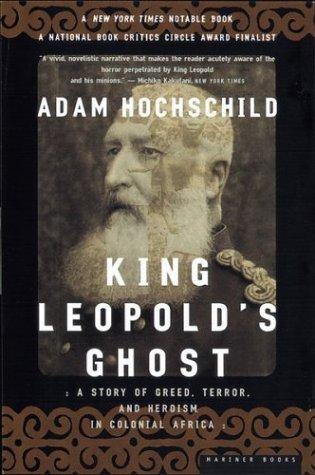
Hochschild begins with Leopold II’s determination to acquire an overseas possession despite Belgium’s limited enthusiasm for colonial expansion. Leopold presented himself as a sponsor of exploration, free trade, humanitarian work, and the suppression of the slave trade. Behind this language, he assembled associations and committees that appeared international and philanthropic but increasingly served his private ambitions. The explorer Henry Morton Stanley became essential to the project by establishing stations and obtaining agreements in the Congo basin. European and American recognition, followed by the diplomatic settlement associated with the Berlin Conference of 1884–1885, helped make Leopold the sovereign of the Congo Free State.
The book then turns from diplomatic construction to material extraction. Ivory initially offered profit, but the expanding international demand for rubber made the Congo especially valuable. Communities were compelled to supply labor and forest products through a system enforced by officials, concessionary companies, and the Force Publique. Hostages, imprisonment, village destruction, beatings, killings, and mutilation became associated with the pressure to meet quotas. Hochschild stresses that these abuses were not merely the actions of a few uncontrolled agents. They arose from an economic and administrative structure that rewarded production, minimized accountability, and treated African life as expendable.
Because the surviving written record was disproportionately produced by Europeans and Americans, Hochschild frequently approaches Congolese suffering through fragmentary testimony, missionary reports, official inquiries, and photographs. He acknowledges the resulting absence at the book’s center: millions experienced the regime, yet comparatively few Congolese names and firsthand accounts entered the archives used by later historians. Figures such as the Congolese leader Nzansu and witnesses recorded by missionaries offer important glimpses, but they cannot fully repair that archival imbalance.
The second major movement of the book follows the campaign against Leopold’s rule. African American historian and minister George Washington Williams issued an early public indictment after visiting the Congo. Presbyterian missionary William Henry Sheppard documented violence in the Kasai region. British consul Roger Casement conducted an official investigation, while shipping employee turned journalist E. D. Morel recognized that vessels were carrying valuable commodities out of the Congo while transporting weapons and personnel inward. Morel transformed that observation into sustained political organizing through publications, lectures, alliances, and the Congo Reform Association. Missionaries including Alice Seeley Harris supplied photographs that gave audiences visual evidence of the human consequences of the rubber system.
International criticism eventually helped force a change in legal ownership: in 1908 Belgium annexed the Congo Free State. Hochschild nevertheless resists presenting annexation as complete liberation. Colonial domination continued under the Belgian state, and reformers could themselves retain paternalistic or imperial assumptions. The closing chapters examine how Leopold’s reputation was protected, how records disappeared, and how European public memory minimized the catastrophe. The “ghost” of the title is thus both Leopold’s legacy and the historical absence created when colonial societies preserve the names of conquerors more readily than the lives of those they conquered.
Key Themes
The book repeatedly contrasts humanitarian language with extractive practice. Leopold’s organizations claimed to advance civilization and oppose slavery while creating conditions of coerced labor and political terror. A related theme is the distance between decision and consequence: policies devised in European offices became violence in Congolese villages, allowing powerful beneficiaries to deny personal responsibility. Hochschild also investigates information as a form of power. Secrecy, lobbying, official terminology, and favorable publicity protected the regime, while testimony, investigative reporting, diplomatic documentation, and photography weakened it. Another major theme is the unequal preservation of memory. Colonial archives provide abundant information about administrators and reformers but far less about Congolese individuals. Finally, the book explores the possibilities and limits of moral activism. The reform campaign achieved international visibility and contributed to political change, yet it did not end colonial rule or fully center Congolese self-determination.
Historical Context
The events belong to the late nineteenth-century European partition of Africa, when imperial powers converted commercial, strategic, missionary, and nationalist ambitions into territorial claims. The Berlin Conference established rules among competing powers but did not represent African consent. Leopold’s unusual achievement was to gain recognition for a vast territory held under his personal sovereignty rather than initially as a conventional Belgian colony. Industrialization also shaped the crisis: demand for ivory and, later, natural rubber connected Central African labor to consumer and manufacturing markets abroad. The period simultaneously saw the growth of mass-circulation newspapers, missionary networks, reform organizations, public lectures, and portable photography. Those developments made it possible for reports from the Congo to become an international political controversy. Readers should also distinguish the Congo Free State of 1885–1908 from the Belgian Congo that followed it and from the later independent states known as the Republic of the Congo and the Democratic Republic of the Congo.
Intended Audience
This book is well suited to readers seeking an accessible introduction to the Congo Free State, European imperialism, forced-labor systems, human-rights campaigning, or the politics of historical memory. It may particularly interest readers of narrative history because Hochschild develops individuals, conflicts, discoveries, and public campaigns with considerable dramatic momentum. Students can use it as an entry point before moving to specialized scholarship on Congolese society, Belgian colonial administration, African resistance, or demographic history. Readers wanting a history told primarily through Congolese perspectives may find the book’s European and American cast frustrating, even though Hochschild discusses the archival conditions that produced this imbalance. The descriptions of killing, mutilation, hostage-taking, and family suffering also make it emotionally demanding.
Reading Difficulty
The prose is generally clear and does not require academic training, but the large cast and shifting geography demand attention. Readers must keep track of political organizations whose humanitarian names often concealed changing purposes, as well as officials, missionaries, concessionary companies, diplomats, and reformers operating across several countries. The chronological progression provides structure, and the biographical focus makes many developments easier to follow. The greatest difficulty is emotional rather than stylistic: the evidence of coercion and atrocity accumulates across the book. Notes, bibliography, index, illustrations, and the map support closer study, although their placement and pagination vary in later editions.
Helpful Background Knowledge
Before reading, it is useful to locate the Congo River basin and understand that the modern Democratic Republic of the Congo is distinct from the neighboring Republic of the Congo. A basic grasp of the nineteenth-century partition of Africa will clarify how European recognition could be treated as sufficient authority over territories whose inhabitants had no meaningful role in the negotiations. Readers may also benefit from knowing that natural rubber was collected from wild vines in much of Leopold’s Congo rather than simply produced on orderly plantations. Familiarity with Joseph Conrad’s Heart of Darkness is not required, but it can enrich the book’s discussion of how literary representations of the Congo emerged from the colonial world.
Why Read This Book?
King Leopold’s Ghost offers a particularly clear case study of how respectable institutions and moral rhetoric can shelter systematic exploitation. It connects financial incentives to violence without reducing history to economics alone, showing the roles of ambition, racism, bureaucracy, technology, publicity, and personal conscience. The book also provides a valuable history of early transnational activism: evidence moved through missionary correspondence, official reports, newspapers, photographs, meetings, and political organizations long before modern digital campaigns. Readers interested in evaluating public claims will find its contrast between Leopold’s carefully constructed image and the material record especially instructive. Its final attention to forgetting makes the work relevant beyond its immediate subject, inviting scrutiny of whose monuments, archives, and biographies become the accepted public version of the past.
Reader Takeaways
A careful reader will gain a working understanding of how the Congo Free State was created, financed, defended, exposed, and transferred to Belgian rule. The book encourages readers to recognize forced labor as a system sustained by markets, administrative incentives, armed enforcement, and political euphemism rather than as a collection of isolated cruelties. It also demonstrates that documentation does not automatically produce reform: evidence must be collected, made credible, circulated, and connected to organized pressure. At the same time, readers may become more alert to the limits of archives produced under colonial conditions. The surviving record can illuminate injustice while still reproducing inequalities by preserving the words of rulers and foreign observers more fully than those of the people subjected to their power.
Strengths
Hochschild’s chief strength is synthesis. He brings diplomacy, political economy, biography, missionary activity, journalism, literature, visual evidence, and social-movement history into a coherent account. His character-centered structure gives institutional developments human stakes without losing sight of the system behind individual actions. The book is especially effective in explaining how Leopold cultivated international legitimacy and how Morel converted shipping information into a broader indictment of colonial rule. It also avoids treating reform as the achievement of a single heroic outsider by tracing earlier witnesses and overlapping networks. The discussion of erased archives and public forgetting adds a self-critical dimension, drawing attention to the conditions under which the history itself can be written.
Limitations and Cautions
The book’s narrative depends heavily on records left by Europeans and Americans, so foreign rulers, agents, missionaries, diplomats, and reformers occupy more space than Congolese communities and political actors. Hochschild acknowledges this problem, but acknowledgment cannot substitute for the missing testimony. His vivid biographical method can also make the history appear to turn on unusually forceful individuals when institutions, local social structures, regional variation, and collective African resistance require further study. Population loss remains especially difficult to quantify because no reliable precolonial census exists and mortality resulted from interconnected causes including violence, hunger, displacement, declining birth rates, and disease. Readers should therefore distinguish the firmly documented existence of mass coercion and devastation from debates over a precise numerical death toll. The book is best treated as a major narrative introduction, not the final scholarly word on Congolese history.
Important Concepts, People, and Institutions
King Leopold II of Belgium is the political architect of the Congo Free State, using international associations, diplomatic recognition, and humanitarian claims to secure personal sovereignty over the territory. The Congo Free State, which existed from 1885 to 1908, is the central political entity examined in the book. Henry Morton Stanley’s exploration and treaty-making helped Leopold establish stations and territorial claims, although the meaning and legitimacy of agreements obtained from African leaders were profoundly unequal.
The Force Publique was the colonial armed force used to impose authority and enforce labor demands. Rubber and ivory were not merely commodities; they connected coercive extraction in Central Africa to distant markets and profits. Concessionary companies extended this system by receiving territorial rights and economic incentives that encouraged extreme pressure on local communities.
George Washington Williams, an African American historian, minister, and former legislator, became one of the earliest prominent international critics after visiting the Congo. William Henry Sheppard, an African American Presbyterian missionary, investigated and publicized abuses in the Kasai region. Roger Casement, serving as a British consul, gathered testimony for an official report that strengthened demands for action. E. D. Morel identified the revealing imbalance in Congo shipping and became the leading organizer of the Congo Reform Association, a major transnational pressure group.
Alice Seeley Harris and other missionaries documented victims and survivors; their photographs became important instruments of public persuasion. Joseph Conrad appears both as a former Congo sailor and as the author of Heart of Darkness, a literary work shaped by the colonial environment. Jules Marchal, a Belgian diplomat and historian, later recovered and analyzed extensive documentary evidence, providing scholarship on which Hochschild drew. The Berlin Conference of 1884–1885 matters because international agreements among imperial powers helped legitimize Leopold’s claim without meaningful African participation. Belgian annexation in 1908 ended Leopold’s personal state but established the Belgian Congo rather than Congolese independence.
Questions the Book Explores
How did Leopold transform philanthropic language into internationally recognized political control? What made forced extraction profitable, and how did economic incentives translate into everyday violence? Why were officials and companies able to distance themselves from acts committed in pursuit of their policies? How did race shape whose suffering was believed, ignored, or treated as politically important? What combination of testimony, journalism, photography, diplomacy, and organization allowed reformers to challenge a sovereign ruler? Why did the exposure of abuse lead to annexation rather than self-government? How should historians estimate human loss when records are incomplete and demographic data are uncertain? Finally, how do archives, monuments, schoolbooks, and national myths determine which parts of an imperial past remain visible?
Reading Group Guide
A group may begin by tracking the difference between the public language used by Leopold’s organizations and the institutions they created in practice. Participants can compare three kinds of power presented in the book: armed coercion in the Congo, diplomatic influence in Europe, and control over information. Another productive approach is to follow the chain connecting consumers and industries to labor demands imposed on Congolese communities. Groups should notice whose words survive directly, whose experiences are reported by intermediaries, and how this affects emotional identification with the book’s cast. The reform campaign also invites comparison between moral conviction and political effectiveness: different figures supplied eyewitness evidence, official authority, visual proof, organizational skill, or access to the press. The concluding discussion of forgetting can be connected to present-day debates about museums, monuments, colonial collections, public apologies, and historical responsibility without assuming that symbolic recognition alone resolves material legacies.
Discussion Questions
1. Which political or rhetorical strategy was most important to Leopold’s acquisition of the Congo?
2. How does the book connect international demand for rubber with violence at the village level?
3. To what extent does responsibility belong to Leopold personally, and to what extent does it belong to a broader colonial system?
4. Why did E. D. Morel’s shipping observations become such powerful evidence?
5. How did the roles of George Washington Williams, William Henry Sheppard, Roger Casement, and Alice Seeley Harris differ?
6. What did photographs contribute that written testimony could not, and what ethical problems accompany their use?
7. Does Hochschild’s focus on individual reformers clarify or narrow the history?
8. How does the relative absence of named Congolese voices affect the reader’s understanding?
9. Why should Belgium’s annexation of the territory be viewed as both a political defeat for Leopold and an incomplete victory for reformers?
10. What does the book suggest about the relationship between exposing injustice and ending it?
11. How should readers discuss population loss when the evidence supports catastrophe but not an exact count?
12. What forms of historical forgetting described in the book remain recognizable in public life today?
Sources and Verification
Bibliographic facts are corroborated by major library catalogs, including records for the 1998 Houghton Mifflin edition and its ISBN. Hochschild’s published interview provides direct context for his use of libraries, source notes, surviving records, and Jules Marchal’s scholarship after the destruction of much of the Congo Free State archive. Institutional history and academic criticism supply additional context but do not eliminate the archive’s pronounced colonial imbalance. The evidence firmly supports extensive coercion, violence, and demographic devastation; it does not permit an exact death toll, because dependable baseline population data are unavailable and the losses had multiple, overlapping causes.