
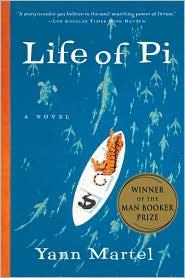
Life of Pi
Life of Pi is a Canadian novel by Yann Martel about Piscine Molitor Patel, called Pi, the teenage son of a zookeeper in Pondicherry, India. When the family's ship sinks in the Pacific Ocean, Pi ends up in a lifeboat with a Bengal tiger named Richard Parker. The novel follows his 227 days of improvised survival. It is also a book about belief, because Pi has grown up practising several religions at once. The story asks what separates a factual account from a meaningful one. First published in 2001, it won the 2002 Man Booker Prize and is one of the best-known Booker Prize books of its era. This profile covers the paperback edition with ISBN 9780156027328.
Where to buy or borrow
Are you selling this book? Bookstores, publishers, authors and libraries can be listed here for free. Request a listing
About this book
Deep Overview
The novel opens in a reflective register. A narrator who says he is a writer tells how he came to hear Pi's story, and Pi's own voice then takes over. Early chapters are not an ordinary prelude to the shipwreck. They build the boy who will survive it. Pi grows up in Pondicherry, where his father runs a zoo. From watching animals, he learns that wild creatures are governed by territory, fear and habit, not by sentiment. That knowledge later shapes how he handles the tiger. Pi is also drawn to Hinduism, Christianity and Islam, and he practises all three. The adults around him find this baffling, and the comedy of those scenes carries a real question. Why should devotion to one tradition require rejecting the others?
When political change in India leads his father to emigrate with the family and the animals, the ship Tsimtsum sinks. Pi is left on a lifeboat. The central section is the novel's engine. It alternates between practical detail and spiritual strain. The chapters cover rationing, catching fish, building a raft and asserting dominance over a predator he cannot escape. They also cover thirst, blindness, delirium and prayer. The tiger, Richard Parker, is both a physical danger and a reason to stay alert. Martel suggests that fear and purpose can be difficult to separate. Pi's survival depends on turning a dangerous animal into a partner of necessity, and the book never pretends this is simple or sentimental.
The last movement shifts the book's focus from what happened to how it should be told. After rescue, Pi is questioned by officials from Japan's Ministry of Transport who are investigating the loss of the ship. They want a believable account. The novel uses this interview to put its main idea to the test. Two versions of events can be offered, and the reader has to decide which one deserves belief and why. Martel does not settle the matter with an authorial ruling. He sets the claims of evidence against the claims of meaning and leaves the weighing to the reader.
As a whole, the book argues that stories are more than decoration laid over facts. They are one of the ways people live through suffering. Whether you read the novel as a parable about religion, an adventure about endurance, or a game with unreliable narration, the structure pushes you to notice your own habits as a listener. In particular, it asks you to notice when you accept an explanation because it is plausible and when you accept it because it is bearable.
Key Themes
Survival is a second theme. It is treated as a mix of skill, discipline, improvisation and psychological resilience, and not only as luck or strength.
The book also looks closely at the relationship between humans and animals. Pi's zoo upbringing teaches him that animals are not people, and that this fact is exactly why the tiger is dangerous. It is also why the tiger becomes meaningful to him.
Storytelling and truth form the largest theme. The novel explores how narrative shapes experience, memory and belief, and how the choice between versions of a story can be a moral and emotional choice.
Finally, the book considers fear, grief and the will to go on. The ocean ordeal is a setting where these forces are laid bare.
Historical Context
Literary context matters too. The lifeboat narrative belongs to a long tradition of sea survival and castaway stories, and it also echoes older religious tales of trial at sea. Martel has acknowledged that Moacyr Scliar's 1981 novella Max and the Cats inspired the idea of a boy sharing a lifeboat with a big cat. The Canadian Encyclopedia notes that the borrowed premise caused some tension with Scliar after the Booker win. Readers can treat this as a useful case study in how writers acknowledge, transform and sometimes dispute literary influence.
The book appeared in Canada in September 2001 and in the UK in 2002. Its 2002 Man Booker Prize win helped make it an international bestseller. Its later adaptation as a film directed by Ang Lee, and as a stage play adapted by Lolita Chakrabarti, kept it in public conversation.
Intended Audience
It may suit readers less if they want a strict survival thriller with little philosophy. Some readers may also find the early chapters on zoology and comparative religion slow, and others may be unsettled by the violence in the sea sections and the account of hunger and killing.
Reading Difficulty
Helpful Background Knowledge
Why Read This Book?
Reader Takeaways
Strengths
Limitations and Cautions
Important Concepts, People, and Places
Richard Parker: the Bengal tiger who shares the lifeboat. He is both threat and companion, and the name has its own history of coincidences, which the novel plays with.
Pondicherry: the Indian city where Pi grows up and where his father runs a zoo. It supplies the book's early setting and its religious pluralism.
The Tsimtsum: the cargo ship whose sinking begins the ocean ordeal.
The Pacific Ocean: the setting of Pi's 227 days adrift, where survival and faith are tested.
Hinduism, Christianity and Islam: the three traditions Pi practises, which frame the book's questions about belief.
The Japanese Ministry of Transport officials: the investigators who question Pi after his rescue and who stand for the demand for plausible, factual accounts.
The frame narrator: a fictional author figure who introduces and shapes how the reader receives Pi's story.
Moacyr Scliar and Max and the Cats: a Brazilian author and his 1981 novella, which Martel has cited as an inspiration for the lifeboat premise.
The Booker Prize: the 2002 award that brought the novel major international attention.
Questions the Book Explores
Reading Group Guide
Discussion Questions
2. Why might Martel have given Pi a youth spent practising three religions at once?
3. What do the early zoo chapters teach Pi, and how do those lessons show up later at sea?
4. In what ways is Richard Parker more than an animal in the story?
5. How do the officials' questions after the rescue shape your view of what counts as an acceptable story?
6. When you reached the end, which account did you prefer, and what led you to that preference?
7. Did the book's mix of humour, detail and spiritual reflection change your sense of what a survival story can be?
8. How does the comparison with Max and the Cats affect your view of originality in fiction?
9. If you have seen the film, which choices in the novel seem hardest to translate to the screen?
Sources and Verification
Comments
No published comments yet.
Available editions
Paperback
- Publisher
- Mariner Books Classics
- ISBN-13
- 9780156027328