
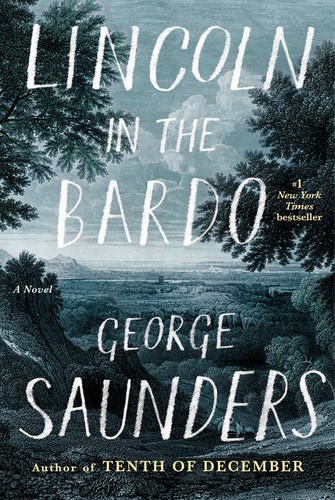
Lincoln in the Bardo
In February 1862, as the American Civil War enters a worsening phase, eleven-year-old Willie Lincoln dies of illness and is placed in a Georgetown cemetery. George Saunders builds his novel around the grief of Willie’s father, President Abraham Lincoln, and the voices of spirits who linger among the graves, unable or unwilling to accept their deaths. During one night, the child’s confusion, the president’s mourning, and the ghosts’ unfinished attachments converge. The story moves between supernatural testimony and documentary-looking fragments about the Lincolns, the war, and the night of Willie’s burial. Its unusual chorus turns private bereavement into a larger meditation on attachment, denial, compassion, and collective loss. Both historical and deliberately invented, the novel asks how people release what they love—and how sorrow might deepen a person’s sense of responsibility toward strangers.
Where to buy or borrow
Are you selling this book? Bookstores, publishers, authors and libraries can be listed here for free. Request a listing
About this book
Deep Overview
These spirits do not generally call themselves dead. They redescribe coffins, corpses, and graves in evasive language and treat the cemetery as a temporary interruption before returning to their former lives. Their comic distortions gradually reveal a serious principle: attachment can become imprisonment when it depends on refusing reality. Three ghosts emerge as Willie’s principal companions—Hans Vollman, Roger Bevins III, and the Reverend Everly Thomas. Each remains bound to a life interrupted, regretted, or morally unresolved. Their attempts to help Willie force them toward truths they have avoided about themselves.
Willie’s situation is especially urgent because he is a child. His father’s return seems to confirm his hope that their separation is reversible, yet that hope keeps him within a realm where lingering becomes increasingly dangerous. The ghosts therefore confront a paradox: Lincoln’s love comforts Willie while also making departure harder. Their rescue effort becomes an education in compassion, requiring them to act beyond their own obsessive personal narratives.
The president’s sorrow also connects the intimate plot to the nation’s crisis. Lincoln is not simply a celebrated statesman here; he is a bereaved parent who must leave one child’s tomb and resume responsibility for a war producing innumerable bereaved families. Saunders does not reduce that transition to a simple lesson or claim a single historical cause. Instead, the novel imaginatively places personal grief beside public mortality. Lincoln’s encounter with helpless loss becomes a means of thinking about what leadership demands when every decision affects unseen lives.
The fragmented form is central to that purpose. Contradictory accounts of ordinary details show that history reaches readers through partial witnesses, retrospective interpretations, and unstable records. The spirits add another layer of competing testimony: each voice is vivid but limited by vanity, trauma, prejudice, longing, or fear. Meaning emerges collectively rather than from an all-knowing authority.
By the end, release depends less on solving the mystery of death than on relinquishing false stories of permanence. The novel’s movement is therefore outward: from solitary grief toward shared suffering, from self-protection toward recognition, and from possession toward a more generous form of love.
Key Themes
**Denial and self-deception:** The cemetery’s spirits construct elaborate explanations that spare them from acknowledging death. Their evasions expose a broader human talent for turning desire into apparent fact.
**Compassion through shared suffering:** Characters become capable of helping others when they recognize that pain is not exclusively theirs. Private anguish can narrow attention, but it can also enlarge moral imagination.
**Historical truth and conflicting testimony:** Disagreement among attributed accounts makes historical certainty feel provisional. The book emphasizes that records are made by people with limited access, motives, and memories.
**Private loss and public responsibility:** Lincoln’s bereavement is set against mass death in the Civil War. The juxtaposition raises difficult questions about how a leader holds individual lives in mind while making national decisions.
**Unfinished lives:** The ghosts remain defined by interrupted hopes, shame, resentment, and unfulfilled desire. Their predicament makes mortality inseparable from the question of how fully one inhabits life.
Historical Context
Saunders sets the supernatural action in Oak Hill Cemetery in Georgetown, where Willie was temporarily entombed before his remains eventually accompanied his father’s to Springfield, Illinois. The novel also invokes a Washington divided between wartime festivity and mourning: a White House social event coincided with Willie’s final illness, an uncomfortable contrast that becomes part of the book’s documentary mosaic.
Readers should distinguish this historical framework from the invented consciousnesses, encounters, and afterlife system. The book uses history as material for imaginative inquiry rather than as a comprehensive account of the Lincoln family, the cemetery, or Civil War policy.
Intended Audience
It is less likely to satisfy someone seeking a straightforward biographical novel, a realistic reconstruction of presidential history, or a plot delivered by one stable narrator. Readers sensitive to child death, bereavement, suicide, racism, sexual material, or grotesque bodily imagery should also approach with care.
Reading Difficulty
The book becomes easier once read as a chorus rather than as a conventional sequence of scenes. Tracking the three principal spirits—Hans Vollman, Roger Bevins III, and the Reverend Everly Thomas—provides a useful anchor. Readers may also find that the many voices make the audiobook format a natural alternative, although listening can make it harder to inspect the printed attributions and documentary construction.
Helpful Background Knowledge
Readers may also benefit from knowing that “bardo” is associated with transitional states in Tibetan Buddhist traditions. The novel should not, however, be treated as an instructional representation of Tibetan Buddhism. Saunders has described his fictional realm as a blend shaped by Tibetan, Catholic, and ghost-story influences.
No detailed knowledge of Lincoln biography or Buddhist texts is required. A brief review of Willie Lincoln’s death and Oak Hill Cemetery can provide orientation without resolving the novel’s deliberate ambiguities.
Why Read This Book?
The novel is also valuable for readers interested in what fiction can do with archival material. It neither simply reproduces history nor abandons it for fantasy. Instead, it stages a conversation among evidence, invention, memory, and emotional truth. Its ghosts are memorable not because they explain the afterlife, but because their evasions reveal recognizable ways of resisting change.
Reader Takeaways
It also complicates the idea of historical authority. Multiple witnesses can describe the same event incompatibly, while a confident attribution can still belong to an invented voice. Readers may become more alert to the construction of historical narrative and to the emotional assumptions hidden inside supposedly neutral accounts.
Finally, the book suggests that grief can produce more than withdrawal. Recognition of one person’s vulnerability may deepen recognition of many others, making sorrow a possible source of ethical attention rather than merely an individual wound.
Strengths
The interleaving of ghostly testimony with documentary-looking material creates productive uncertainty about who controls a story and how readers assign credibility. The narrow setting and timespan provide structural discipline despite the crowded cast. Most importantly, the formal experiment is not decorative: fragmentation embodies the novel’s claims about grief, memory, history, and the incomplete knowledge people have of one another.
Limitations and Considerations
The title and afterlife imagery draw from the idea of the bardo, but the fictional cosmology combines several traditions and should not be read as a reliable account of Tibetan Buddhist belief. Likewise, the novel offers an imaginative Lincoln rather than a full historical portrait.
Its broad ghostly chorus includes racist language, stereotypes, unequal social perspectives, grotesque physical comedy, and accounts of traumatic death. These elements contribute to its portrayal of nineteenth-century society and damaged consciousness, but they may remain disturbing or feel unevenly developed. Many secondary lives appear only in compressed glimpses, so the chorus achieves breadth at the expense of sustained depth for every voice.
Important Concepts, People, and Places
**William “Willie” Wallace Lincoln:** Lincoln’s eleven-year-old son is the emotional center of the novel. His inability to understand his condition gives the ghosts a reason to move beyond their habitual self-absorption.
**Mary Todd Lincoln:** Willie’s mother remains mostly outside the cemetery action, but her grief and her position within the presidential family deepen the historical tragedy surrounding his death.
**Hans Vollman:** A principal spirit whose hopes for married life were abruptly interrupted. His comic appearance and persistent longing illustrate how desire can hold a person inside an obsolete self-story.
**Roger Bevins III:** A young spirit whose heightened perception of the world is entwined with regret. His many sensory observations express both the beauty of embodied life and the pain of losing it.
**The Reverend Everly Thomas:** A clergyman who understands more about the spirits’ condition than most of them do. Fear and moral uncertainty complicate his religious authority.
**Oak Hill Cemetery:** The Georgetown cemetery where Willie was temporarily entombed. It functions as a compressed social world in which class, race, belief, memory, and bodily history remain active after death.
**The American Civil War:** The public catastrophe surrounding the private drama. Its casualties enlarge the moral significance of Lincoln’s bereavement and his return to presidential duty.
**Bardo:** A term associated with transitional states in Tibetan Buddhism. Saunders uses it as inspiration for an invented liminal realm shaped by several spiritual and literary traditions.
**Polyphony:** A structure built from many independent voices. Here it distributes narrative authority across witnesses whose testimony is intimate, partial, contradictory, and sometimes unreliable.
Questions the Book Explores
Can personal grief enlarge compassion for people beyond one’s immediate circle?
How can a leader acknowledge each individual life while making decisions at the scale of a nation and a war?
What makes a source feel authoritative, and how should readers respond when testimony conflicts?
Are people defined most strongly by what they did, what they intended, or the stories they tell about themselves?
What must be surrendered before a person can move from one state of being into another?
Can a community of damaged and self-deceiving individuals nevertheless perform an act of genuine care?
Reading Group Guide
Compare the language the ghosts use for death with the physical evidence surrounding them. Their euphemisms provide a useful way into the book’s treatment of denial. Groups may also track moments when a character stops rehearsing a private grievance and notices someone else’s suffering.
Pay attention to clusters of historical testimony that disagree about apparently simple facts. Consider what this does to confidence, pacing, and the image of Lincoln. Another productive angle is tonal: identify scenes where comedy makes grief more bearable, more disturbing, or more intimate.
Finally, examine the novel’s movement between possession and release. Which characters understand letting go as betrayal, which understand it as mercy, and how does the book complicate both positions?
Discussion Questions
2. How does the spirits’ refusal to name death shape your judgment of them?
3. What does Willie understand about his father’s visit, and where does that understanding fail?
4. How do Hans Vollman, Roger Bevins III, and the Reverend Everly Thomas differ in the stories they tell about themselves?
5. What is gained by mixing documented history with fabricated source-like passages? What ethical or interpretive problems does the method create?
6. Does the novel suggest that Lincoln’s private grief changes his public sense of the war? How cautiously should that suggestion be read?
7. Where does humor deepen the novel’s treatment of death, and where does it risk undermining it?
8. How do race and social hierarchy persist within the cemetery community?
9. Is remaining in the bardo presented chiefly as fear, selfishness, love, confusion, or some combination?
10. Which character undergoes the most meaningful change, and what enables that change?
11. How does the setting of a cemetery alter the book’s portrayal of American society?
12. What distinction does the ending draw between abandoning someone and releasing them?
Sources and Verification
Comments
No published comments yet.
Available editions
Hardcover
hardcover
- Publisher
- Random House
- ISBN-13
- 9780812995343
- Publication date