
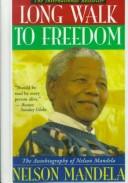
Long Walk to Freedom
Long Walk to Freedom is Nelson Mandela's account of how a young man raised in the Thembu royal circle of the Eastern Cape became a lawyer, an underground organiser, a prisoner on Robben Island and, in 1994, South Africa's first democratically elected president. It traces his political education in the African National Congress, the tightening grip of apartheid, the Rivonia Trial, long imprisonment and the negotiations that ended minority rule. Part personal memoir and part testimony to a collective struggle, it stands among the most widely read autobiography books of the twentieth century, notable for its frankness about discipline, doubt, family cost and the ethics of resistance, and for its unusual origins in a manuscript begun secretly in prison.
Where to buy or borrow
Are you selling this book? Bookstores, publishers, authors and libraries can be listed here for free. Request a listing
About this book
The book has an unusual composition history. Mandela began a manuscript in secret on Robben Island in the mid-1970s, with comrades reading and correcting it. After his release he worked with the American journalist Richard Stengel, and the finished book appeared in 1994 as an expansion of the prison text built on interviews and later drafting. That layered origin explains its two registers: a disciplined, almost courtroom-like narration of events, and a more reflective voice shaped by hindsight.
The book is organised in numbered parts that move from rural childhood through Johannesburg, the resistance campaigns, underground life, trial and imprisonment, and finally the negotiated settlement and the 1994 election. A large share of the text is devoted to the prison years. The edition profiled here is the 1995 Little, Brown Paperbacks printing, which reproduces the 1994 text of the book and not a later revised or illustrated version.
Deep Overview
The Johannesburg years show his change from an ambitious young clerk and law student into an activist. Friendships with Walter Sisulu and Oliver Tambo lead to the founding of the ANC Youth League, a pressure group that challenged the cautious, petition-based style of the Congress's older leaders. The account of the 1950s is full of organising: the Defiance Campaign, the law practice Mandela shared with Tambo, the drafting and adoption of the Freedom Charter, repeated banning orders, and the Treason Trial that dragged on for years before ending in acquittal. After the Sharpeville massacre and the outlawing of the ANC in 1960, the story turns toward clandestine work. Mandela sets out the reasoning behind forming Umkhonto we Sizwe and moving to sabotage. This section is his own argument for the decision and should be read as one, because historians have debated how and when the turn to armed struggle was made.
Next comes an intense stretch of underground life. Mandela uses disguises, moves between safe houses and makes a journey across Africa and to London to seek support and military training. He was arrested in August 1962 soon after coming home, and was convicted of incitement and of leaving the country without a passport. He was already serving that sentence when police raided Liliesleaf Farm in Rivonia in July 1963 and detained other movement leaders. The documents found in that raid formed the basis of a new prosecution. Mandela was taken from prison to stand trial with the others, and the Rivonia Trial ended in 1964 with life imprisonment, not the death sentences many had expected. His statement from the dock, in which he said he was prepared to die for his ideals, is one of the book's pivotal moments.
The long middle section is set mostly on Robben Island and covers decades. Mandela describes hard labour, rationed letters and visits, and the deliberate humiliations of the prison system. He also describes how the prisoners organised themselves: they protested through formal complaints, held study sessions and debated with prisoners from rival movements. He presents learning Afrikaans and studying Afrikaner history as practical preparation for the day he might have to deal with his captors as equals. Later transfers to Pollsmoor and Victor Verster prisons bring the first tentative, secret contacts with government ministers, which Mandela began without first getting full approval from his own movement. He admits this choice was risky.
The last part shows freedom as a new and more complicated set of pressures. He leaves prison in 1990, and then come difficult negotiations, deadly political violence, the assassination of Chris Hani, and the end of his marriage to Winnie Mandela. Throughout, Mandela tries to show that a settlement depended on two things at once: refusing to give up the principle of one person, one vote, and choosing again and again not to humiliate a defeated opponent.
Key Themes
Leadership as consultation: Mandela links his model of leadership to the tribal councils he watched as a boy, where everyone could speak and the chief summarised. He applies the same habit to ANC committees and to prison politics.
The moral cost of struggle: the book keeps returning to what resistance takes from a person, including time with children, a stable marriage, ordinary friendships and physical health.
Non-violence and its limits: Mandela explains his shift from disciplined protest to sabotage and organised armed action, and he distinguishes between targeting property and targeting people. This is his own justification, and readers should weigh it as such.
Prison as education and as test: confinement is treated as a setting in which character, strategy and solidarity are formed, and in which small daily victories matter.
Reconciliation without surrender: the later chapters argue that an enemy can be negotiated with and even understood, as long as the underlying demand for equal citizenship is not traded away.
The individual and the collective: Mandela insists that a movement, not a hero, achieved the change, and he gives extended credit to comrades such as Walter Sisulu.
Historical Context
The African National Congress, founded in 1912, began as a body of petitioners and became, from the 1940s, a mass movement. Mandela's generation pushed it toward boycotts, strikes and civil disobedience. The Sharpeville shootings in 1960 and the banning of the ANC and the Pan Africanist Congress marked a turning point, after which clandestine organisation and armed resistance became part of the story.
The prison chapters reflect the Cold War, the rise of the international anti-apartheid movement and the growing economic and diplomatic pressure on Pretoria. The final part reflects the negotiating period between the 1990 unbanning of liberation organisations and the 1994 election, when political violence threatened to derail a settlement. Mandela shared the 1993 Nobel Peace Prize with the then president, F. W. de Klerk, a point that places the book inside an internationally recognised peace process.
Intended Audience
It may be less suitable for readers wanting a short introduction to South African history, a critical biography, or a book that deals with Mandela's presidency in detail. Those who prefer fast narrative momentum may find some of the committee and trial passages slow.
Reading Difficulty
No specialist training is needed, though readers new to South African history may want to keep a short timeline handy. A print paperback works well for flipping back to earlier names; the book is not written as a quick reference and rewards continuous reading.
Helpful Background Knowledge
None of this is essential, since Mandela explains most events as they arise, but a short overview of twentieth-century South Africa and its main political organisations will help readers place unfamiliar names quickly.
Why Read This Book?
The book is also worth choosing for how it was made. Its history, from a secret prison manuscript to a published international bestseller, is itself part of the story of how political prisoners kept thinking, writing and organising under censorship. And because the author later led the country he describes, the text invites readers to compare the ideals he states with the institutions that followed.
Reader Takeaways
Readers may reconsider how they think about forgiveness and negotiation in politics, noticing that Mandela treats them as strategic and moral choices made under pressure, not as natural feelings. Many will also notice how often institutions, such as courts, schools, prisons and committees, shape political lives, and how much work lies behind a peaceful transfer of power.
Strengths
The prison section is a particular strength, offering a detailed picture of daily regimes, political debate among prisoners and the slow shifts in official attitudes. The book also credits many colleagues by name, which helps readers see the wider movement. Its origin in a prison manuscript lends it an immediacy that many later political memoirs lack.
Limitations and Cautions
The narrative ends at the start of his presidency, so it does not cover his term in office, later controversies or the long-term results of the transition. Some episodes in his family life are treated briefly and with restraint. The pace slows in procedural sections, and readers without background in South African politics may need to pause to keep track of organisations and names.
Important Concepts, People, and Places
Apartheid: the system of institutionalised racial separation and white minority rule that Mandela fought and that structures nearly every episode of the book.
African National Congress (ANC): the liberation movement in which Mandela rose to leadership; the book is in many ways a history of its transformation.
Walter Sisulu, Oliver Tambo and Ahmed Kathrada: close comrades whose influence and support appear throughout. Sisulu and Kathrada were also his fellow prisoners and early readers of the prison manuscript.
Umkhonto we Sizwe: the ANC's armed wing, founded in 1961, whose creation Mandela explains as a response to closed legal avenues.
Rivonia Trial: the 1963–64 prosecution that ended with life sentences for Mandela and several co-accused.
Robben Island: the island prison near Cape Town where Mandela spent many of his twenty-seven years in custody, and where he began the manuscript.
Freedom Charter: the 1955 statement of democratic principles adopted at the Congress of the People, which shaped the ANC's vision.
F. W. de Klerk: the last apartheid-era president, Mandela's negotiating counterpart and co-recipient of the 1993 Nobel Peace Prize.
Richard Stengel: the American journalist who worked with Mandela on turning the prison manuscript and interviews into the published book.
Thembu people and the Eastern Cape (Transkei): the rural cultural world of Mandela's childhood, which informs his ideas of leadership and consultation.
Questions the Book Explores
Reading Group Guide
A useful exercise is to keep a running list of decisions Mandela describes and sort them into those made alone and those made collectively. Groups can also compare passages on the Thembu councils with later scenes of ANC meetings or prison debates. Readers who know the 2013 film adaptation might discuss what a screen version simplifies. A short timeline of apartheid legislation and ANC campaigns, brought to the first meeting, will help members who are new to the period. Consider pairing a chapter with a critical historical essay so the group can test the memoir against other views.
Discussion Questions
2. Which moments in the book show a gap between public duty and private life, and how does he evaluate those costs?
3. How convincing do you find his explanation of the shift to armed struggle, and what other perspectives would you want to consult?
4. In what ways does the book portray prison as a place of education rather than only punishment?
5. How does Mandela depict his opponents, including prison warders and government negotiators, and what does this suggest about his idea of leadership?
6. What does the author choose to emphasise or leave out, given that the book was published as South Africa entered a new political era?
7. How should readers weigh a memoir written by a participant against the work of independent historians?
8. What does the ending suggest about the difference between political liberation and freedom in everyday life?
Sources and Verification
Comments
No published comments yet.
Available editions
Paperback
Trade paperback
- Publisher
- Little, Brown Paperbacks
- ISBN-13
- 9780316548182
- Publication date
- Pages
- 656