Category

Autobiography

Lives told in the first person. The Autobiography of Malcolm X, written with Alex Haley, follows its author from street hustler to one of the most influential voices of his time. Katharine Graham's Personal History tells how she took over The Washington Post and led it through the Pentagon Papers and Watergate. Annie Ernaux's The Years takes a different route: a collective autobiography of a woman and a generation in post-war France, told without the word "I". Three very different ways of writing a life, each worth reading for how it is told as much as for what happened.

4 published books 0 published articles

Books in this category

Primary category

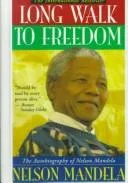
Long Walk to Freedom

By Nelson Mandela

Long Walk to Freedom is Nelson Mandela's account of how a young man raised in the Thembu royal circle of the Eastern Cape became a lawyer, an underground organiser, a prisoner on Robben Island and, in 1994, South Africa's first democratically elected president. It traces his political education in the African National Congress, the tightening grip of apartheid, the Rivonia Trial, long imprisonment and the negotiations that ended minority rule. Part personal memoir and part testimony to a collective struggle, it stands among the most widely read autobiography books of the twentieth century, notable for its frankness about discipline, doubt, family cost and the ethics of resistance, and for its unusual origins in a manuscript begun secretly in prison.
View book

Primary category

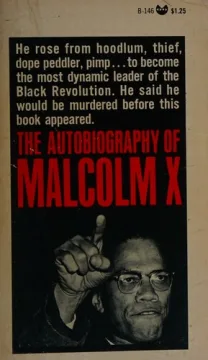
The Autobiography of Malcolm X

By Malcolm X, as told to Alex Haley

The Autobiography of Malcolm X recounts the successive transformations of Malcolm Little into a street hustler, prisoner, Nation of Islam minister, Black nationalist leader, Sunni Muslim, and international advocate for human rights. Told to journalist Alex Haley during the final years of Malcolm X’s life, the book joins personal testimony to a forceful examination of racism, religious conversion, education, crime, incarceration, political awakening, and Black self-determination. Its narrative moves from Malcolm’s childhood in the Midwest through Boston and Harlem, his years in prison, his rise under Elijah Muhammad, and his eventual break with the Nation of Islam. His pilgrimage to Mecca and travels through Africa and the Middle East initiate another major revision of his thinking without ending his commitment to Black dignity and self-defense. Published after his assassination in 1965, the book preserves both the power of his public voice and the unfinished character of his political…

View book

Primary category

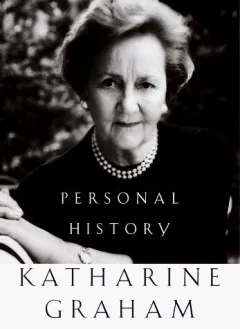
Personal History

By Katharine Graham

Katharine Graham’s Personal History joins family memoir, corporate history, and an eyewitness account of twentieth-century American journalism. Graham traces her emotionally isolated childhood in a wealthy, politically connected household; her marriage to the charismatic and troubled Philip Graham; his mental illness and death by suicide; and her unexpected succession to leadership of the Washington Post Company. The professional story follows her movement from self-doubt toward authority as the Post confronted the Pentagon Papers, investigated Watergate, and endured a destructive labor conflict. Graham does not present this development as an inevitable triumph. Instead, she records hesitation, dependence, mistakes, and the slow acquisition of judgment. The result is both an autobiography of personal transformation and an insider’s examination of how ownership, editorial independence, business risk, government pressure, and workplace power converge inside a major news institution.

View book

Primary category

The Years

By Annie Ernaux , Alison L. Strayer

Spanning 1941 to 2006, The Years joins one woman’s life to the transformation of postwar France. Annie Ernaux recalls childhood, education, marriage, motherhood, work, sexuality, illness, aging, and the desire to write, but she resists presenting these experiences as a conventional first-person memoir. Instead, photographs, family meals, slogans, songs, advertisements, political events, consumer goods, and changing habits accumulate into the memory of a generation. The intimate and historical repeatedly alter one another: class mobility changes family language; reproductive freedom changes women’s futures; television and digital technology reshape attention; public events survive as fragments of ordinary conversation. By moving between “she,” “we,” and broader collective voices, Ernaux asks how much of a supposedly private identity is composed from shared social time. The result is both autobiography and social record—a sustained attempt to preserve lives, objects, expressions, and ex…

View book

Articles in this category

No published articles are currently connected to this category in this language.