
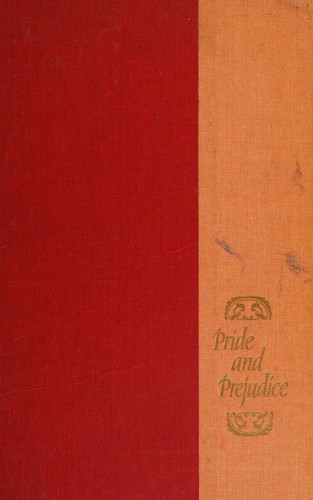
Pride and Prejudice
In rural England, the Bennet family’s uncertain future makes the marriages of its five daughters an urgent economic concern. Elizabeth Bennet, intelligent and quick to judge, resists treating marriage as a purely financial arrangement. Her encounters with the wealthy, reserved Fitzwilliam Darcy produce mutual attraction, wounded pride, and serious misunderstanding. Around them, other courtships reveal sharply different combinations of affection, convenience, vanity, status, and desire. The novel is both a romantic comedy and a precise examination of judgment. Elizabeth must recognize how readily wit and confidence can harden into prejudice, while Darcy must confront the arrogance encouraged by wealth and rank. Through lively dialogue, social embarrassment, letters, reversals, and carefully placed irony, Jane Austen explores how people learn—or fail to learn—to distinguish reputation from character. The result joins emotional satisfaction to a searching critique of class, inheritance,…
Where to buy or borrow
We don’t list any stores or libraries for this book yet.
Are you selling this book? Bookstores, publishers, authors and libraries can be listed here for free. Request a listing
About this book
Austen organizes the novel around parallel relationships rather than a single isolated romance. The marriages and courtships involving Elizabeth Bennet, Jane Bennet, Charlotte Lucas, Lydia Bennet, and others test competing ideas about security, attraction, respect, and responsibility. The narration often stays close to Elizabeth’s perceptions without guaranteeing that those perceptions are correct, making the reader an active judge of incomplete evidence. This union of comedy, psychological observation, and social criticism distinguishes the novel from a simple courtship tale.
Deep Overview
Bingley’s friend Fitzwilliam Darcy initially appears proud, distant, and contemptuous of local society. Elizabeth Bennet responds to his behavior with injured amusement. Her dislike deepens when George Wickham presents himself as the victim of Darcy’s injustice. Wickham’s charm and Darcy’s reserve fit the story Elizabeth is ready to believe, demonstrating how prejudice can grow from genuine offense, selective evidence, and pleasure in one’s own discernment.
Austen surrounds the central pair with alternative models of courtship. Charlotte Lucas accepts Mr. Collins because marriage offers her stability and a household of her own; the match is emotionally limited but socially intelligible. Jane and Bingley possess affection but lack decisiveness, leaving their future vulnerable to interference. Lydia Bennet pursues excitement without understanding the consequences that scandal may impose on herself and her sisters. These relationships prevent the book from proposing one simple formula for happiness. Instead, they expose the different risks created by unequal wealth, uncertain inheritance, poor education, weak parental guidance, and restrictive expectations.
Darcy’s first proposal brings the central conflict into the open. He declares love while emphasizing the inferiority of Elizabeth’s connections, and she refuses him while accusing him of arrogance and wrongdoing. His subsequent letter changes the novel’s intellectual direction. It supplies information about Wickham and explains Darcy’s part in separating Bingley from Jane, forcing Elizabeth to reexamine both evidence and motive. Her development is not submission to Darcy’s account; it is an increasingly disciplined willingness to recognize her own errors.
Darcy’s growth is expressed less through declarations than through conduct. His altered manner at Pemberley, his civility toward Elizabeth’s relatives, and his quiet intervention after Lydia’s flight with Wickham reveal a capacity for responsibility that his earlier behavior obscured. Elizabeth, meanwhile, learns that independence requires self-correction as well as resistance to social pressure. Their eventual union becomes credible because each has been challenged by the other and has acted on unwelcome knowledge.
The ending fulfills the expectations of romantic comedy, but it does not erase the social world that produced the conflict. Money, property, family reputation, and rank remain powerful. Austen’s achievement lies in making moral growth possible within those constraints while refusing to pretend that affection alone makes them disappear.
Key Themes
**Pride, prejudice, and reciprocity:** The title’s qualities are not assigned permanently to one character each. Elizabeth and Darcy both display pride and prejudice, though in different forms, and both must learn from criticism.
**Marriage as affection and institution:** Courtship carries emotional, economic, familial, and reputational consequences. The novel compares marriages based on respect, convenience, desire, imprudence, and habit.
**Class and social behavior:** Austen distinguishes rank from merit. Wealth can enable generosity or arrogance, while inferior manners are found among both the privileged and the socially ambitious.
**Reputation and evidence:** Characters are judged through gossip, first impressions, family associations, letters, and observed actions. Attractive stories often prove less reliable than sustained conduct.
**Family responsibility:** The Bennet parents’ limitations shape their daughters’ prospects. Mr. Bennet’s wit does not excuse his withdrawal from difficult duties, and Mrs. Bennet’s concern does not excuse her indiscretion.
Historical Context
Longbourn’s entail supplies the Bennet family’s central material problem: the estate will not descend to the five daughters. This does not mean every English property followed the same rule; it is the particular legal settlement governing this fictional estate. Its consequences nevertheless illuminate why Mrs. Bennet treats marriage as a form of protection and why Charlotte Lucas finds Mr. Collins acceptable.
The militia stationed near Meryton also reflects the period’s wartime background. Britain was engaged in conflict with Napoleonic France, and militia officers became visible participants in provincial social life. Austen does not turn the war into her plot’s main subject, but the military presence creates the setting in which Lydia meets Wickham and combines social glamour with moral risk.
Intended Audience
Readers seeking rapid external action, explicit intimacy, or a romance detached from money and social convention may find its priorities unfamiliar. Those approaching it only as a comforting love story may miss much of its severity toward negligent parents, careless desire, inherited privilege, and false confidence.
Reading Difficulty
The pacing is conversational rather than action-heavy. Important changes often occur through letters, reported dialogue, altered manners, or a character’s reassessment of earlier events. Readers who pause to ask whose viewpoint shapes a passage will understand the novel more fully.
Helpful Background Knowledge
Readers should remember that the story predates modern dating culture and broad economic independence for women. Formal calls, dances, introductions, correspondence, and family approval carry meanings that contemporary readers might otherwise underestimate.
Why Read It?
The book is also remarkably economical. A dance, a visit, an awkward speech, or a letter can reveal class assumptions, family tensions, and private motives at once. Readers return to it because the comedy remains sharp while the ethical questions—how to respond to correction, how to judge character, and how social power shapes intimacy—remain unsettled and recognizable.
Reader Takeaways
The book also encourages a more complicated view of choice. Elizabeth’s refusals matter because she is under material pressure, yet Charlotte’s contrasting decision cannot be understood without acknowledging that pressure. Personal agency exists, but it is exercised within unequal conditions.
Finally, the novel proposes that lasting intimacy requires more than attraction. Elizabeth and Darcy become capable of partnership only after criticism leads to reflection, behavioral change, and renewed observation.
Strengths
Austen’s dialogue gives individual characters sharply recognizable rhythms, from Mr. Collins’s inflated deference to Lady Catherine’s commanding questions. The supporting cast does not merely decorate the central romance: each relationship tests a different arrangement of money, desire, status, and judgment.
The close alignment between Elizabeth’s perspective and the narration is another major strength. Readers are invited to enjoy her wit while gradually discovering that wit can simplify people as readily as it exposes them.
Limitations and Scope
Its ending rewards the heroines with marriages to wealthy men, so readers differ over how far the conclusion challenges the social order and how far it reconciles Elizabeth to a favorable place within it. The book exposes women’s economic vulnerability but does not imagine a comprehensive structural remedy.
Modern readers may also find some outcomes ethically uneasy. Lydia’s future remains tied to Wickham, and the family’s immediate priority is containing scandal rather than examining her situation in modern terms.
Important Concepts, People, and Places
**Fitzwilliam Darcy:** A wealthy landowner whose reserve and class pride provoke Elizabeth. His response to her rejection tests whether privilege can accept moral correction.
**Jane Bennet and Charles Bingley:** Their affectionate but easily disrupted courtship contrasts with Elizabeth and Darcy’s confrontational development.
**Charlotte Lucas and William Collins:** Their marriage demonstrates the practical logic of economic security without romantic compatibility. Collins is also the expected inheritor of Longbourn.
**George Wickham:** A militia officer whose charm helps him control how others interpret his history. He is crucial to the novel’s study of appearance, credibility, and irresponsible desire.
**Lydia Bennet:** The youngest Bennet sister. Her elopement exposes the consequences of poor judgment, inadequate supervision, and a culture in which one woman’s reputation affects her family.
**Mr. and Mrs. Bennet:** Parents whose contrasting failures—withdrawal and indiscretion—leave their daughters poorly protected.
**Lady Catherine de Bourgh:** Darcy’s aristocratic aunt and an emphatic defender of rank, family control, and social hierarchy.
**Longbourn:** The Bennet estate. Its restricted inheritance gives the marriage plot its underlying economic urgency.
**Pemberley:** Darcy’s estate. Elizabeth’s visit there permits her to evaluate him through his home, responsibilities, servants’ testimony, and conduct rather than through rumor alone.
**Meryton and the militia:** The local town and military presence broaden the Bennet sisters’ social circle and bring Wickham into the plot.
**Free indirect discourse:** A narrative method that blends third-person narration with a character’s vocabulary or assumptions. Austen uses it to bring readers close to Elizabeth while preserving room for irony.
**Entail:** The settlement restricting the inheritance of Longbourn. It explains why the Bennet daughters’ futures cannot be secured simply by receiving their father’s estate.
Questions the Book Explores
What combination of affection, respect, economic security, and social compatibility can support a good marriage?
When does pride protect dignity, and when does it prevent honest self-examination?
How do wealth and rank influence whose manners are excused and whose mistakes become socially dangerous?
Can a person’s response to criticism provide better evidence of character than a first impression?
What responsibilities do parents bear when their children’s choices have consequences for an entire family?
Does the conclusion reform social hierarchy, or does it resolve conflict by placing worthy individuals advantageously within it?
Reading Group Guide
Track the evidence available to Elizabeth before and after Darcy’s letter. Discuss which conclusions were reasonable, which were emotionally convenient, and where the narration encouraged readers to share her mistakes.
Consider houses as expressions of relationships and authority. Longbourn, Rosings, Hunsford Parsonage, Netherfield, and Pemberley each organize social encounters differently.
Notice how comedy affects judgment. Ask whether laughter makes characters easier to dismiss and whether Mr. Bennet’s cleverness disguises failures that would look harsher in a less amusing character.
A productive final comparison is between words and actions. Proposals, explanations, gossip, and professions of affection matter, but Austen repeatedly tests them against sustained behavior.
Discussion Questions
2. Does Darcy’s first proposal reveal more pride, more vulnerability, or both?
3. Is Charlotte Lucas’s decision best understood as compromise, realism, surrender, or strategy?
4. How does Austen make readers enjoy Mr. Bennet while also exposing his failures as a parent?
5. Why is Darcy’s letter so effective in changing Elizabeth’s understanding?
6. What does Pemberley reveal that Darcy’s conversation cannot?
7. How do Jane Bennet’s generosity and Elizabeth’s skepticism create different kinds of blindness?
8. To what extent are Lydia and Wickham responsible for the crisis, and to what extent have family and society prepared it?
9. Which marriage in the novel seems most instructive besides Elizabeth and Darcy’s?
10. Does Lady Catherine’s opposition strengthen Elizabeth’s independence or help produce the outcome Lady Catherine fears?
11. How does money alter the meaning of apparently private romantic choices?
12. Does the ending represent equality between Elizabeth and Darcy, or a more limited accommodation?
Sources and Verification
Comments
No published comments yet.
Available editions
Hardcover
First edition
- Publisher
- Thomas Egerton
- Publication date