
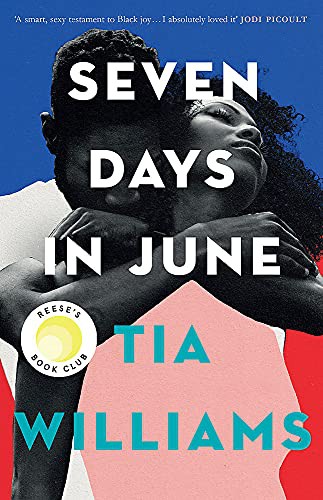
Seven Days in June
A Novel
Eva Mercy has built a demanding life in Brooklyn as a successful writer of supernatural erotica and the single mother of a perceptive teenager. Her carefully managed world is disrupted when Shane Hall, an acclaimed and famously private literary novelist, appears at a publishing event. To everyone else, their meeting looks like an introduction. In reality, Eva and Shane shared an intense, formative week as troubled adolescents—and have carried its emotional consequences into adulthood. Their reunion unfolds over seven summer days, while flashbacks reveal the pain, attraction, and desperate coping strategies that first drew them together. As Eva and Shane reconsider what happened between them, the novel asks whether enduring love is enough without honesty, accountability, and recovery. Tia Williams combines a second-chance romance with an exploration of chronic pain, addiction, self-harm, Black literary culture, motherhood, inherited trauma, and the ways writers transform private experi…
Where to buy or borrow
Are you selling this book? Bookstores, publishers, authors and libraries can be listed here for free. Request a listing
About this book
The novel alternates between Eva and Shane’s present-day reunion and scenes from their adolescence. This structure gradually revises the reader’s understanding of their bond rather than presenting their shared history all at once. The romance is central, but it is inseparable from Eva’s chronic migraines, Shane’s history of substance misuse, Eva’s responsibilities as a mother, and both characters’ need to confront survival habits formed when they were young. Humor, sensuality, painful memories, and publishing-world observation coexist throughout the book.
Deep Overview
Shane Hall represents a different version of literary success. Celebrated for emotionally severe novels and known for his absence from publicity, he carries an aura of mystery that the publishing world finds irresistible. When he unexpectedly joins Eva at a Brooklyn literary event, their immediate hostility and attraction reveal an intimacy no one else understands. Their books have functioned as an indirect correspondence: each has repeatedly transformed elements of the other into fiction.
The present-day story gives Eva and Shane a compressed period in which to determine whether their connection belongs only to memory. Their adolescent relationship was powerful because each recognized distress that other people had failed to see. Yet recognition did not make them safe for one another. Their younger selves were contending with abandonment, instability, self-harm, substance use, and an absence of dependable adult protection. The novel resists treating that suffering as proof of romantic destiny. Instead, it distinguishes between being understood by someone and being able to build a sustainable life with that person.
Eva’s role as Audre’s mother further complicates the reunion. She cannot make choices solely as a former lover revisiting an unfinished relationship; she must consider the home and emotional example she creates for her daughter. Audre is intelligent and socially confident, but her apparent maturity does not remove Eva’s responsibility to maintain appropriate boundaries. Motherhood becomes one of the measures by which Eva evaluates love: a relationship must coexist with care, stability, and truth rather than consume them.
The novel also places its characters within a lively Black cultural and professional community. Literary panels, publishing conversations, friendships, parties, and debates about representation provide comedy while exposing hierarchies between commercial and literary writing. Eva and Shane’s careers complicate the familiar opposition between romance and serious fiction. Both writers encode emotional truth in invented stories, and both depend on readers even when the industry values their work differently.
Across the week, the central challenge is not simply whether Eva and Shane still love each other. They must decide whether they can discuss what happened without retreating into fantasy, resentment, disappearance, or artistic substitution. The adult romance consequently depends on accountability and changed behavior. Love may have survived, but the novel asks whether the people carrying it have developed the honesty and stability necessary to give it a future.
Key Themes
• **Trauma and repetition:** Their adult habits retain the imprint of adolescent abandonment and instability. Recovery requires recognizing those patterns rather than romanticizing them.
• **Art as coded communication:** Both protagonists turn private memories into fiction. Writing lets them speak across years of separation, but it can also postpone direct conversation.
• **Visible success and invisible pain:** Eva’s career, style, humor, and parenting competence conceal the severity of her migraines. The book emphasizes the labor involved in functioning with chronic illness.
• **Motherhood and inherited history:** Eva wants to protect Audre without repeating patterns of secrecy and emotional absence. Their relationship highlights the difference between protection and honest preparation.
• **Literary status and genre:** The contrast between Eva’s commercially successful supernatural romances and Shane’s prestigious novels challenges easy divisions between popular storytelling and serious art.
• **Accountability in second chances:** The reunion cannot succeed through chemistry alone. Trust depends on explanation, consistent action, and acceptance of the harm caused in the past.
Literary and Cultural Context
The book participates in the long tradition of second-chance romance, in which former lovers must confront both the reasons for separation and the people they have since become. Williams complicates that pattern by joining it to chronic illness, addiction recovery, self-harm, and intergenerational instability. The result reflects a broader movement in contemporary popular fiction toward depicting mental and physical health as ongoing conditions rather than obstacles cured by romantic fulfillment.
Its publishing-world setting also engages debates over the boundary between genre and literary fiction. Romance has often been treated as less artistically serious despite its large readership and complex conventions. By making both central characters successful writers, Williams turns that hierarchy into part of the romantic and professional tension.
Intended Audience
Readers looking for a light romantic comedy should know that the wit and glamorous publishing scenes are balanced by serious material, including self-harm, substance misuse, parental neglect, and debilitating illness. Those who prefer closed-door romance may also find the sexual content more explicit than desired. Conversely, readers who want a conventional literary novel with romance only at the margins should expect the love story to remain the book’s organizing force.
Reading Difficulty
Humorous scenes can shift quickly into discussions of pain, addiction, abandonment, or self-injury. Some readers may therefore prefer to read at a measured pace despite the novel’s strong forward momentum. Familiarity with publishing terminology is unnecessary; the professional context is conveyed through character interaction. Content considerations include chronic migraines, self-harm, substance misuse and recovery, parental neglect, grief, sexual content, and descriptions of traumatic experiences.
Helpful Background Knowledge
A basic awareness of the publishing distinction between commercial genre fiction and prestige-oriented literary fiction will sharpen the book’s professional satire. Eva’s supernatural-romance career and Shane’s critical reputation occupy different positions in that hierarchy, although both characters use fiction to explore intimate experience.
Why Read Seven Days in June?
The book is also distinctive for placing two Black writers at the center of a socially observant story about authorship, readership, prestige, and commercial success. Eva’s experience of invisible chronic pain adds another important dimension: her physical condition shapes her schedule, intimacy, parenting, and public identity without reducing her to an illness narrative. The combination of romantic urgency, humor, family relationships, and difficult psychological material gives the novel a broader reach than its seven-day frame might suggest.
Reader Takeaways
Readers may also reconsider assumptions about people who remain productive while living with severe pain. Eva’s success does not prove that her illness is minor; it reveals the extent of the work she performs to keep it from overwhelming her life. Through Eva and Shane’s careers, the book further suggests that fiction can preserve emotional truth while still allowing writers to avoid direct confession. Art may open communication, but it cannot replace accountability.
Strengths
Williams also handles tonal contrast effectively. Publishing satire and quick dialogue provide relief without erasing the seriousness of the characters’ histories. Eva and Shane have convincing artistic identities, and the idea that their books have been communicating across their separation gives the relationship a distinctive literary dimension. The portrayal of a Black mother balancing pain, work, sexuality, friendship, and parental responsibility is particularly layered.
Limitations and Reader Considerations
Because the novel treats trauma, addiction, and self-harm within a passionate romance, readers may differ over how successfully it separates emotional intensity from unhealthy dependence. The story does challenge rescue fantasies, but the attraction between the protagonists remains closely connected to the pain they recognized in each other as adolescents. The book should not be treated as medical guidance about migraine, addiction, or mental health.
Important Concepts, People, and Places
• **Shane Hall:** A reclusive literary author with a history of substance misuse. His return forces both protagonists to examine the difference between remorse and meaningful accountability.
• **Audre Mercy-Moore:** Eva’s daughter, whose presence makes the romance a family decision as well as an individual one. She also represents Eva’s hope of interrupting inherited patterns of secrecy and neglect.
• **Brooklyn:** More than a backdrop, the borough situates the novel within a network of writers, cultural professionals, friendships, schools, and family life.
• **Black literary culture:** The novel portrays panels, publishing relationships, professional rivalries, and questions about how Black writers are categorized and valued.
• **Chronic migraine:** Eva’s largely invisible disability affects her physical functioning, emotional reserves, work practices, and intimate relationships.
• **Addiction and recovery:** Shane’s history cannot be resolved through romantic reunion. His recovery raises questions about responsibility, consistency, and rebuilding trust.
• **Self-harm:** Adolescent self-injury appears as a response to overwhelming distress and inadequate support, not as a glamorous expression of love.
• **Genre hierarchy:** The differing reputations of romance and literary fiction expose assumptions about artistic seriousness, commercial readership, gender, and prestige.
• **Intergenerational trauma:** Eva’s family history influences her understanding of motherhood and her determination to give Audre a more stable emotional inheritance.
Questions the Book Explores
• What does a genuine second chance require from the person who caused harm?
• When does protecting a child become another form of secrecy?
• How does chronic pain alter a person’s relationship to ambition, intimacy, and independence?
• Can creative work communicate truths that its author cannot say directly?
• Why are some literary genres granted more cultural prestige than others?
• How can adults honor what their younger selves endured without remaining governed by it?
• What is the difference between feeling responsible for another person and treating that person responsibly?
Reading Group Guide
A second productive angle is authorship. Track how Eva’s and Shane’s published work functions as disguise, confession, message, and career. Discuss whether writing about another person creates intimacy, appropriation, avoidance, or some combination of all three.
The group can also examine the novel’s competing forms of care: romantic devotion, parenting, friendship, medical treatment, recovery work, and professional support. Ask which forms depend on dramatic gestures and which require sustained daily behavior.
Finally, consider tone. Notice how the publishing satire and comic dialogue affect the experience of reading the darker flashbacks. Do they create emotional balance, expose social absurdities, or risk making transitions too abrupt?
Discussion Questions
2. Does the novel convincingly distinguish love from the desire to rescue or be rescued?
3. How does Eva’s chronic pain shape choices that other characters may misinterpret?
4. What responsibilities does Shane have when asking Eva to reconsider their past?
5. How does Audre change the stakes of Eva’s romantic decisions?
6. What do Eva’s and Shane’s fictional characters reveal that the writers themselves avoid saying?
7. How does the novel portray the cultural divide between commercial romance and literary fiction?
8. Which character demonstrates the clearest growth during the seven-day reunion?
9. How do family absence and family secrecy operate across generations?
10. Does the short present-day timeline strengthen the story’s urgency or make its resolution feel too rapid?
11. Which secondary relationships offer healthier models of care, and where do those relationships fall short?
12. What does the ending suggest about the difference between forgiveness, reconciliation, and trust?
Sources and Verification
Comments
No published comments yet.
Available editions
Hardcover
First edition
- Publisher
- Grand Central Publishing
- ISBN-13
- 9781538719107
- Publication date
- Pages
- 336