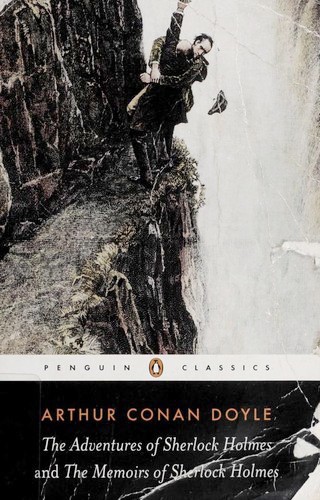
Deep Overview
The twelve stories in the first collection show Holmes working at very different scales. In "A Scandal in Bohemia," a European king hires him to retrieve a compromising photograph, and the detective is outmanoeuvred by Irene Adler, the one opponent he continues to respect. "The Red-Headed League" turns an absurd employment scheme into the cover for a bank robbery. "A Case of Identity" is a quieter story about a young woman manipulated by someone close to her. In "The Speckled Band," a frightened woman fears for her life in an isolated country house after her sister's mysterious death. Few of the stories rely on elaborate violence. Most depend on a gap between what a client believes is happening and what is actually going on, and Holmes's method is to close that gap by treating trivial details as evidence.
The collection also works as a character study through Watson's eyes. Watson is the plain-spoken doctor who admires, is exasperated by and occasionally outpaces his friend. He supplies the reader's point of view, and he also filters Holmes, so Holmes always appears as seen from outside. We rarely learn what he is thinking until he chooses to explain. That narrative distance lets Doyle stage each solution as a small performance, with a pause, a demonstration and then the explanation that makes the impossible look obvious.
The stories are also less rule-bound than the genre they inspired. Holmes sometimes fails. In "The Five Orange Pips," he cannot save his client from a faceless organisation. In "The Blue Carbuncle," he lets a thief go at Christmas rather than hand him to the law. Justice in these stories often means moral judgement as much as legal procedure, and the detective acts as a private arbiter alongside, and sometimes in place of, Scotland Yard.
The Memoirs continue the pattern with later cases, among them "Silver Blaze," about a missing racehorse and a murdered trainer. They end with "The Final Problem," in which Holmes meets Professor Moriarty, whom he calls the Napoleon of crime. Doyle used that story in 1893 to kill off his hero so he could write historical fiction. Placing it at the end of the volume gives the omnibus the shape of a complete early career, from the first Strand stories to the intended farewell. Iain Pears's introduction examines characterisation, recurring themes and Victorian ideas of deduction, and Ed Glinert's notes anchor the cases in the real London and the real social habits of the period.
Key Themes
Observation as a form of knowledge runs through every case: Holmes treats a worn cuff, a stain or a hat as a text to be read. The stories repeatedly contrast appearance with reality, through disguise, false identities and respectable surfaces that hide crime. Another recurring idea is private justice. Holmes weighs motive and circumstance, and he sometimes decides that the law is not the right instrument. Domestic and family danger recurs, especially stepfathers, inheritances and young women who depend on others for money. London itself functions as a theme: it is an anonymous modern city of crowds, clerks and moneylenders, set against country houses whose isolation carries its own menace. The partnership of Holmes and Watson, with its mix of loyalty, irritation and narrative craft, gives the series its emotional centre. A smaller but notable thread concerns the limits of rationality. Several cases end with Holmes admitting error, or with the criminal escaping, and Moriarty in "The Final Problem" is the first opponent presented as Holmes's intellectual equal.
Historical Context
The stories appeared at a moment when magazine publishing was growing quickly. The Strand Magazine, published by George Newnes, ran the first twelve Holmes stories monthly from July 1891 to June 1892. Each issue needed a hook that readers would return for, and a recurring hero with self-contained plots was an ideal fit. Sidney Paget's illustrations for the magazine helped fix Holmes's public appearance. The collection was issued in book form on 14 October 1892, with a first UK print run reported at 10,000 copies and a further 4,500 for the American market.
Intellectually, the stories reflect Victorian confidence in science, observation and professional expertise, alongside anxiety about hidden crime in a fast-growing metropolis. Doyle, who was born in Edinburgh and qualified as a doctor, gave his detective a clinical habit of mind. It is often said that a real Edinburgh medical teacher inspired that approach. The cases also carry the imprint of empire and class. Characters return from colonial service, fortunes come from abroad, and the line between respectability and ruin looks thin. The Penguin notes and chronology are especially useful for understanding these references.
Intended Audience
This edition suits readers who want to meet Holmes at the source rather than through adaptations. It is a good fit for people who enjoy puzzle-driven detective books, for students of Victorian literature or crime fiction, and for readers who like to dip in and out of a book one short story at a time. It also works for book clubs looking for a short, discussable text. Readers who prefer long, psychologically intense crime novels, or who need modern pacing and forensic detail, may find the plotting formulaic and the explanations too neat. People who want only the 1892 Adventures should note that this volume also contains the later Memoirs.
Reading Difficulty
The prose is clear and brisk, and the main challenges are period vocabulary and unfamiliar references such as hansom cabs, telegrams, Victorian money and place names. The notes in this edition cover many of them. The stories are short and self-contained, so the book works as a series of short story collections would: a reader can take one story at a time without losing the thread. Conceptual difficulty is low, though the deductive explanations sometimes depend on Victorian assumptions about observation and character that no longer seem scientific. At 576 pages the volume is long, mostly because it carries two collections plus an introduction, a chronology, further reading and notes. Reading the introduction after the stories avoids spoilers.
Helpful Background Knowledge
No prior reading is needed, since each story introduces its own characters. A little background on late-Victorian London, including its class structure, policing and the role of the British Empire, will make several cases easier to follow. It helps to know that Holmes had appeared earlier in novels, and that the short-story format was a new move for Doyle. Familiarity with film and television versions can be a help and a hindrance: it gives you a mental picture of the characters, but the original Holmes is often more reserved and less action-driven than screen versions suggest. Skimming Ed Glinert's chronology first can help you place the stories in Doyle's career.
Why Read This Book?
Few works have shaped popular crime writing as much as these stories, and reading them shows what later writers inherited and what they changed. This edition is a good way to do that. It covers the original twelve Adventures in their first collected form and continues to the Moriarty confrontation, so you can follow the arc from the series' opening to its first intended ending. The apparatus is practical rather than academic, helping a general reader without burying the stories. The prose is lively and economical, and the cases vary in tone, from comic ("The Red-Headed League") to chilling ("The Speckled Band"). As one of the enduring classic books of English fiction, it also rewards readers who simply want to see where a famous character began.
Reader Takeaways
A careful reader may come away understanding how a detective story sets up its fair-play puzzle, with clues planted in plain sight and an explanation that re-reads the earlier scenes. You may notice how often Holmes relies on social knowledge, such as occupations, clothing and class cues, rather than pure logic. You may reconsider the popular image of Holmes as infallible, since several cases end in partial failure or moral compromise. Watson's role may also look different: he is a narrator who shapes how every deduction lands. Reading the stories alongside the notes also shows how much everyday Victorian life shapes what counts as suspicious.
Strengths
The stories are compact, well paced and varied in setting and mood, and the Holmes–Watson narrative device is used with discipline. Doyle's openings are especially efficient: a client arrives, a detail is noticed, and a mystery is established within a few pages. The edition's critical material is a real asset. Iain Pears's introduction addresses characterisation, themes and Victorian deduction, and Ed Glinert's notes, chronology and further reading orient a first-time reader. The volume's scope also lets a reader judge the early series as a whole rather than through a single famous story.
Limitations and Cautions
The formula can feel repetitive across a long sitting, and some solutions rely on coincidence or on assumptions about observation that modern readers may find unconvincing. Attitudes of the period toward gender, class, empire and race appear in several stories, and readers should expect some dated portrayals. The edition is a combined volume, so those who want only the 1892 collection will be reading more than they need, and the Memoirs half is outside the scope of this profile's detailed story-by-story discussion. This profile has not checked the full contents of the Memoirs section of this particular printing, so readers should consult the book's own table of contents. Publication dates for this Penguin edition vary between publisher listings, so the exact printing may differ from the one a reader holds.
Important Concepts, People, and Places
Sherlock Holmes is the consulting detective at the heart of every story, defined by observation, inference and an unusual private practice. Dr. John Watson is his friend, chronicler and narrator, and the lens through which readers see him. 221B Baker Street is the shared London address from which most cases begin. Irene Adler appears in "A Scandal in Bohemia" and is the one adversary who clearly outwits Holmes. Professor Moriarty is the criminal mastermind of "The Final Problem," created to give Holmes a worthy opponent and an exit. Scotland Yard stands for official police work, which Holmes often supplements or corrects. The Strand Magazine and its publisher George Newnes launched the stories in monthly instalments, and Sidney Paget's illustrations shaped Holmes's image. Iain Pears, who wrote the introduction, and Ed Glinert, who wrote the notes, are the editors who frame this edition for modern readers. The concept of deduction, meaning inference from physical clues, is the series' signature method, and Pears's introduction places it in its Victorian setting.
Questions the Book Explores
What counts as evidence, and who gets to interpret it? How far should a private investigator go in deciding what justice looks like when the law and morality diverge? What does a respectable surface conceal in a city of strangers and a countryside of closed households? How reliable is a narrator who admires his subject, and what does Watson leave out? What happens to a hero of pure reason when he meets an opponent of equal intellect, as in "The Final Problem"? How do money, inheritance and dependence make ordinary people vulnerable to crime?
Reading Group Guide
Because the stories are short, groups can choose a handful of cases rather than the whole volume. A good mix would be "A Scandal in Bohemia" for Holmes's character and Irene Adler, "The Red-Headed League" for plotting and humour, "The Speckled Band" for atmosphere, and "The Blue Carbuncle" for Holmes's moral flexibility. Add "The Final Problem" to discuss how the series approached an ending. Compare reactions to the stories in the order they were published, and ask each member to bring a note from the edition that clarified a detail. A useful exercise is to pause before each solution and have the group predict it, then compare the clues Doyle actually planted. Groups interested in adaptation can compare one story with a screen version, as long as everyone has read the text first.
Discussion Questions
1. Why does Doyle have Watson narrate rather than Holmes, and how would the stories change if Holmes told them himself?
2. Holmes sometimes lets wrongdoers go or fails to prevent harm. What does that suggest about the kind of justice these stories value?
3. Which clients seem most vulnerable, and what social conditions make them so?
4. How do city and country settings create different kinds of tension?
5. In what ways does Irene Adler challenge or complicate the story's view of Holmes?
6. Does the fair-play puzzle structure make the stories more satisfying or more predictable?
7. Which period attitudes in the stories feel most distant today, and how should a modern reader weigh them?
8. How does "The Final Problem" change your understanding of Holmes as a character?
9. What do the editor's notes add to your reading of a particular story?
Sources and Verification
Bibliographic details for this edition come from the publisher's own listings, a higher-education catalogue page from the same publisher group, and retailer and bookseller listings used only to cross-check the ISBN-10, format and page count. Background on the 1892 collection, including the Strand Magazine run, the publisher, the illustrator and the initial print run, comes from a general reference article and a dedicated Doyle encyclopaedia. Publishers disagree on the publication date of this edition, so no date is given here. Contents of the Memoirs half of this printing could not be fully confirmed, so that section is described only in general terms. All analysis and wording are original.