Category

Traditional Mystery

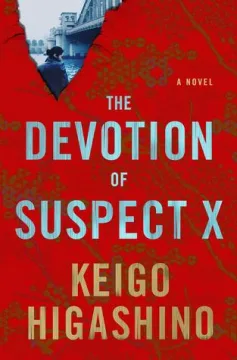
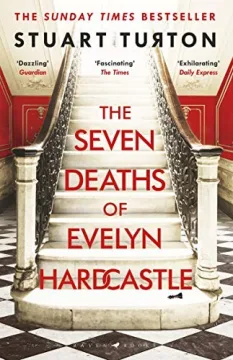
Traditional mysteries are puzzles: a crime, a set of clues and a solution the reader can try to find first. Keigo Higashino's The Devotion of Suspect X turns the form inside out, showing the crime at the start and making the mystery how the cover-up works. Stuart Turton's The Seven Deaths of Evelyn Hardcastle sets a murder at a country house party, where the narrator must relive the same day in the bodies of different guests until he solves it. Ingenious novels for puzzle lovers. See Mystery & Detective Fiction for more.

4 published books 0 published articles

Books in this category

Primary category

The Adventures of Sherlock Holmes

By Arthur Conan Doyle , Iain Pears , Ed Glinert

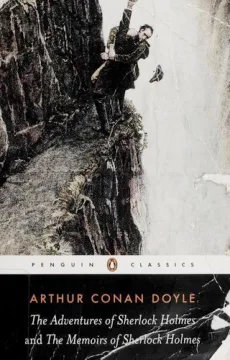
This Penguin Classics volume pairs the first two Sherlock Holmes story collections: the twelve cases of The Adventures of Sherlock Holmes (1892) and the Memoirs that follow, which include "Silver Blaze" and "The Final Problem." Dr. John Watson narrates. He takes readers from the rooms at Baker Street to country houses, City offices and London's seedier corners, where Holmes turns small observations into solutions. Each story stands alone, which is part of why these are among the most influential short story collections in crime writing. They are also some of the most approachable classic books for newcomers to Victorian fiction. For anyone exploring detective books, they show how the genre's habits of clue, deduction and reveal were set. Iain Pears's introduction and Ed Glinert's notes add useful context.
View book

Primary category

The Murder of Roger Ackroyd

By Agatha Christie

Agatha Christie's 1926 murder mystery novel draws Hercule Poirot out of retirement in the English village of King's Abbot, where a wealthy landowner is found dead in his study soon after learning a damaging secret about the woman he meant to marry. The story is told by the local doctor, who becomes Poirot's assistant, and the case works its way through a household of suspects who all have something to conceal. The book matters for two reasons: it is a brisk, carefully built example of the Golden Age puzzle, and its ending set off a lasting argument about what fairness between author and reader should mean. This profile covers the 1983 Bantam hardcover and avoids revealing the solution.

View book

Primary category

The Seven Deaths of Evelyn Hardcastle

By Stuart Turton

At Blackheath, a decaying English country estate, a house party is approaching the moment when Evelyn Hardcastle will die. Aiden Bishop must identify her killer if he hopes to escape—but he is trapped in a repeating day and awakens each time inside a different guest. Every host gives him new access, abilities, weaknesses, and prejudices, turning detection into a struggle over perspective as well as evidence. Meanwhile, rival investigators pursue their own freedom, a murderous footman stalks the estate, and Aiden’s missing memories conceal another mystery. Stuart Turton combines the clue-driven architecture of a country-house whodunit with a speculative time loop and body-swapping narrative. The result is an intricate puzzle about identity, observation, guilt, punishment, and whether people can become more than the worst things they have done.

View book

Primary category

The Devotion of Suspect X

A Detective Galileo Novel

By Keigo Higashino , Alexander O. Smith

Keigo Higashino’s The Devotion of Suspect X begins by revealing both a killing and the person who offers to conceal it. Yasuko Hanaoka and her daughter, Misato, kill Yasuko’s abusive former husband during a violent confrontation. Their neighbor, the solitary mathematics teacher Tetsuya Ishigami, constructs an elaborate plan to protect them. The central mystery is therefore not who committed the original act, but whether the police—and physicist Manabu Yukawa—can discover how Ishigami has reshaped the evidence. As Yukawa recognizes the mind of his former university classmate behind the apparently unbreakable alibi, the investigation becomes a contest between two exceptional reasoners. Yet the novel’s deepest concern is emotional rather than technical: what devotion permits a person to sacrifice, whether protection can become another form of control, and why a logically perfect plan may fail when confronted by conscience, grief, and human unpredictability.

View book

Articles in this category

No published articles are currently connected to this category in this language.