
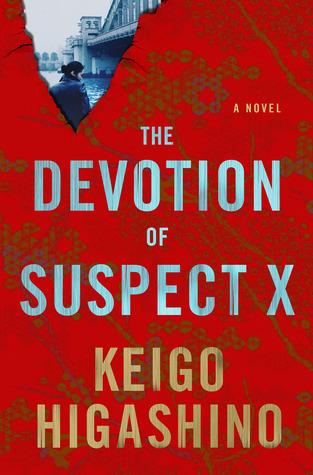
The Devotion of Suspect X
A Detective Galileo Novel
Keigo Higashino’s The Devotion of Suspect X begins by revealing both a killing and the person who offers to conceal it. Yasuko Hanaoka and her daughter, Misato, kill Yasuko’s abusive former husband during a violent confrontation. Their neighbor, the solitary mathematics teacher Tetsuya Ishigami, constructs an elaborate plan to protect them. The central mystery is therefore not who committed the original act, but whether the police—and physicist Manabu Yukawa—can discover how Ishigami has reshaped the evidence. As Yukawa recognizes the mind of his former university classmate behind the apparently unbreakable alibi, the investigation becomes a contest between two exceptional reasoners. Yet the novel’s deepest concern is emotional rather than technical: what devotion permits a person to sacrifice, whether protection can become another form of control, and why a logically perfect plan may fail when confronted by conscience, grief, and human unpredictability.
Where to buy or borrow
Are you selling this book? Bookstores, publishers, authors and libraries can be listed here for free. Request a listing
About this book
Deep Overview
From that point, Higashino divides the narrative into two interlocking problems. The visible problem belongs to Detective Shunpei Kusanagi and the police: identify the dead man, reconstruct his movements, test Yasuko’s alibi, and explain why ordinary evidence refuses to produce a coherent accusation. The concealed problem belongs to Ishigami: anticipate every investigative step and arrange reality so that truthful observations lead to a false conclusion. Readers know that he is directing the cover-up, but they do not initially know the full design of his solution.
Manabu Yukawa changes the investigation’s scale. A physicist who occasionally advises Kusanagi, Yukawa knew Ishigami at university and remembers him as a formidable mathematical mind. Their reunion introduces both intellectual kinship and moral opposition. Yukawa can appreciate the elegance of Ishigami’s reasoning, yet that appreciation makes him more capable of recognizing the extraordinary intervention hidden beneath an apparently mundane case. Their contest is not simply mathematics against physics. It is a struggle over what kind of problem they are confronting. Police attention naturally settles on the evidence surrounding Togashi’s death and Yasuko’s movements. Ishigami’s advantage lies in determining which assumptions investigators will accept before they begin reasoning.
The women at the center of the case complicate that intellectual duel. Yasuko must perform an assigned version of normal life while carrying fear, guilt, and incomplete knowledge of Ishigami’s actions. Misato experiences the aftermath from a more vulnerable position, and her presence continually raises the stakes of Yasuko’s decisions. Meanwhile, Yasuko’s possibility of an independent future strains Ishigami’s carefully controlled arrangement. Human attachments introduce variables that no static proof can contain.
The title’s “devotion” is deliberately unstable. Ishigami’s actions may be read as self-sacrifice, romantic obsession, moral trespass, or some combination of all three. He treats protection as a problem requiring a complete solution, but the people being protected retain consciences and choices of their own. The novel ultimately tests the difference between solving for an unknown and understanding another person. Its mystery mechanism is rigorous, but its force comes from the discovery that perfect logic cannot cancel the emotional and ethical consequences of what has been done.
Key Themes
**Logic versus moral reality:** A plan may be internally consistent without being ethically defensible. Higashino repeatedly separates technical brilliance from wisdom.
**The power of assumptions:** Investigators can reason flawlessly from an incorrect starting point. The mystery turns on the distinction between examining evidence and recognizing how the field of evidence has been constructed.
**Isolation and recognition:** Ishigami and Yukawa understand one another intellectually in ways few others can. That recognition gives their confrontation an undertone of friendship, regret, and responsibility.
**Abuse and constrained choice:** Yasuko’s past with Togashi helps explain the desperation of the original confrontation, while the cover-up creates a new structure in which her freedom is again limited.
**Conscience as an unpredictable variable:** The plan treats behavior as something that can be forecast, but guilt and empathy resist calculation.
Literary and Cultural Context
The book also reflects the institutions and spaces of contemporary metropolitan Japan: neighborhood apartments, commuter routines, a high school, a university laboratory, small businesses, riverfront districts, and methodical police work. These environments make the extraordinary deception feel embedded in ordinary life. Its 2005 Japanese publication and subsequent Naoki Prize placed it at the intersection of popular crime fiction and broadly recognized literary storytelling. The English translation appeared in the United States in 2011, introducing many English-language readers to both Higashino and the Detective Galileo novels.
Intended Audience
Readers seeking a conventional whodunit may need to adjust to learning the circumstances of the first death near the beginning. Those who prefer expansive characterization, comic relief, or an action-heavy thriller may find the restrained style comparatively austere. The story also includes domestic abuse, coercion, killing, and psychologically distressing choices.
Reading Difficulty
The principal challenge is attentiveness. Small choices of timing, identity, routine, and investigative framing matter, and the book sometimes invites readers to concentrate on the wrong question. Japanese personal and family names may require brief adjustment for readers unfamiliar with them. The pacing is deliberate rather than slow, with tension accumulating through repeated interviews, tested alibis, and changes in interpretation.
Helpful Background Knowledge
Readers may wish to note that Manabu Yukawa is a physicist nicknamed “Detective Galileo” because he assists the police, while Shunpei Kusanagi is the professional detective responsible for the case. The novel can be read independently; prior knowledge of other Galileo stories is not required.
Why Read It?
It is also worth reading for its treatment of brilliant reasoning as morally neutral. Ishigami’s intelligence makes protection possible, while Yukawa’s comparable intelligence makes concealment vulnerable. Neither intellect alone supplies an ethical answer. Readers looking for a compact novel that can support discussion about love, autonomy, guilt, justice, and the limits of rational control will find substantial material beneath the procedural surface.
Reader Takeaways
The novel also encourages skepticism toward sacrifice as an automatic moral good. The size of a sacrifice does not settle whether it was requested, justified, or beneficial to its recipient. Finally, the relationship between Ishigami and Yukawa demonstrates that truly understanding another person can impose responsibility. Yukawa’s recognition of his former classmate’s mind makes the case solvable, but it also makes its resolution personally painful.
Strengths
Higashino also controls information effectively. The reader possesses more knowledge than the police but less than the architect of the cover-up, creating two simultaneous forms of suspense. The restrained style keeps attention on behavior, contradiction, and consequence. Most importantly, the closing movement transforms earlier details without making the human outcome feel secondary to the puzzle.
Limitations and Cautions
The narrative’s treatment of Ishigami’s devotion is intentionally ambiguous, but some readers may feel that the elegance of his plan risks aestheticizing destructive conduct. Discussion of the novel should therefore distinguish understanding his motives from endorsing his choices. The story’s methodical interviews and procedural repetition are essential to the design, though readers seeking rapid physical action may experience the middle portion as restrained.
Important Concepts, People, and Places
**Yasuko Hanaoka:** A divorced mother whose struggle to escape Shinji Togashi’s abuse leads to the fatal confrontation. Her fear, dependence on Ishigami, and moral agency shape the consequences of the mystery.
**Misato Hanaoka:** Yasuko’s teenage daughter. She is directly involved in the traumatic incident, and her vulnerability intensifies the moral stakes of every adult decision.
**Manabu Yukawa:** A physicist and former university classmate of Ishigami who assists the investigation. His familiarity with Ishigami’s intellectual habits lets him perceive design where others see disconnected facts.
**Shunpei Kusanagi:** The Tokyo detective investigating Togashi’s death. His procedural work supplies the factual foundation that Yukawa reinterprets.
**Shinji Togashi:** Yasuko’s abusive former husband. His return initiates the killing, while the reconstruction of his final movements becomes the police inquiry’s apparent center.
**The alibi problem:** More than a question of where Yasuko was at a given time, the alibi demonstrates how a planner can manipulate the premises on which an investigation operates.
**Mathematics and physics:** The disciplines characterize Ishigami and Yukawa as related but distinct thinkers. Mathematics suggests internally complete proof, while experimental physics emphasizes testing explanations against observable reality.
**Tokyo and the Sumida River area:** Urban geography, bridges, transit routes, workplaces, and riverbanks are not incidental scenery; movement through these spaces forms part of the novel’s evidentiary logic.
**Honkaku mystery:** The Japanese tradition of rigorous puzzle fiction provides a useful frame for understanding the book’s emphasis on fair reasoning, concealed method, and intellectual confrontation.
Questions the Book Explores
Can an action be called selfless when it removes the protected person’s ability to choose?
How can investigators detect a false premise when every visible clue appears consistent?
Does extraordinary intelligence increase moral responsibility, or merely increase the scale of possible harm?
What obligations arise when one person recognizes another’s hidden capacities and intentions?
Can legal truth, factual truth, and moral truth point toward different judgments?
Why are guilt, affection, and conscience harder to predict than physical evidence?
Reading Group Guide
Compare Ishigami’s understanding of Yasuko with Yukawa’s understanding of Ishigami. Both relationships involve close observation, but one tends toward control while the other creates a painful duty to uncover the truth. Groups may also track moments when ordinary routines—commuting, teaching, shopping, working—become evidence.
A productive debate is whether the book should primarily be described as a mystery, a psychological thriller, or a tragedy. Consider which genre best accounts for the reading experience before and after the final revelations. Because the conclusion is highly spoiler-sensitive, groups should agree beforehand whether discussion will cover the full solution.
Discussion Questions
2. At what point, if any, does Ishigami’s assistance cease to be protection and become control?
3. Why is Yukawa better positioned than Kusanagi to understand the design behind the evidence?
4. How does the past relationship between Yukawa and Ishigami affect the ethical weight of the investigation?
5. What does Yasuko know about Ishigami at different stages, and how does incomplete knowledge shape her responsibility?
6. How does Misato’s presence alter the moral interpretation of the adults’ choices?
7. Which assumptions made by the police are reasonable, and which become dangerous?
8. Does the novel portray Ishigami sympathetically, critically, or in a deliberately unstable combination of both?
9. What is the significance of using mathematics and physics to characterize the opposing thinkers?
10. Is the eventual outcome best understood as justice, tragedy, failure, or something else?
11. How might the story differ if it were narrated entirely from Yasuko’s perspective?
12. After finishing the novel, how did your understanding of the word “devotion” change?
Sources and Verification
Comments
No published comments yet.
Available editions
Hardcover
First U.S. edition; hardcover
- Publisher
- Minotaur Books
- ISBN-13
- 9780312375065
- Publication date
- Pages
- 298