
The Old Ways
A Journey on Foot
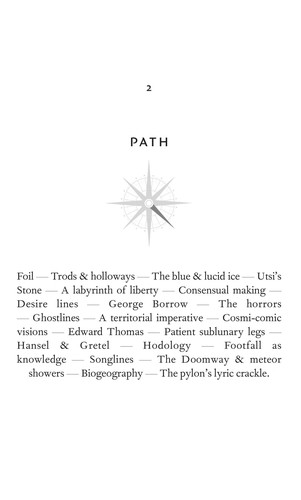
In The Old Ways, Robert Macfarlane travels along ancient routes to investigate how paths connect landscape, history, imagination, and memory. His journeys encompass chalk tracks, holloways, pilgrimage roads, dangerous tidal crossings, mountain routes, and sea paths in Britain and beyond. Rather than treating a path as a line between destinations, Macfarlane reads it as a record made through repeated movement—a place where geology, ecology, language, custom, and personal experience converge. The poet and walker Edward Thomas serves as an important guiding presence, linking physical travel to literary remembrance. Macfarlane also walks with contemporary artists, writers, sailors, and local guides whose knowledge reveals different ways of inhabiting terrain. Blending travel narrative, nature writing, cultural history, biography, and meditation, the book argues that people shape paths while paths, in turn, shape perception, memory, and identity.
Where to buy or borrow
Are you selling this book? Bookstores, publishers, authors and libraries can be listed here for free. Request a listing
About this book
Deep Overview
The book ranges across several kinds of way. In southern England, chalk paths and prehistoric tracks connect contemporary walking with long histories of migration and exchange. Holloways—routes worn below the surrounding ground by centuries of feet, hooves, wheels, and flowing water—make time visible in the land itself. On the Broomway, an Essex route across tidal sands, navigation depends on knowledge of tides, bearings, weather, and deceptive horizons. Its danger demonstrates that a path may be real without being permanently visible.
Macfarlane extends the idea of the path to the sea, particularly in the Scottish islands, where sailors understand water as a patterned field of routes rather than an undifferentiated expanse. Journeys involving Lewis, Harris, and the remote archipelago of St Kilda show how maritime ways are preserved through practical knowledge, oral tradition, place-names, and repeated passage. Other travels take the inquiry beyond Britain, including walking with Raja Shehadeh in the occupied Palestinian territories. There, movement cannot be separated from borders, surveillance, dispossession, and competing claims to land. The path becomes political: access determines who can travel, remember, work, or remain connected to a place.
A second structure runs through these geographical journeys—the life and writing of Edward Thomas. Thomas’s engagement with the Icknield Way and the landscapes of southern England makes him Macfarlane’s principal literary companion. By following Thomas’s routes and language, Macfarlane tests whether walking can become a form of biographical understanding. This culminates in an account shaped by Thomas’s departure for the First World War and his death during the Battle of Arras in 1917.
Living companions are equally important. Artists, sailors, guides, and fellow walkers alter what Macfarlane notices. Figures such as artist Steve Dilworth, writer and walker Raja Shehadeh, and sailor-poet Ian Stephen embody distinct forms of place-based knowledge. Their presence challenges the solitary-explorer model of travel writing. Across the book, paths emerge as collaborative creations: they are maintained by shared use, carried in collective memory, and understood through encounters with others.
Key Themes
**Landscape and memory:** Places stimulate personal recollection while also retaining cultural memories that exceed any individual life. Walking becomes a way of entering this layered past.
**Movement as knowledge:** Macfarlane presents knowledge gained through pace, fatigue, weather, balance, touch, and repeated observation. A route understood on foot differs from the same line viewed on a map.
**Visibility and disappearance:** Some ways are obvious, while others appear only under particular tidal, seasonal, or atmospheric conditions. Their fragility raises questions about what is lost when traditional movement and local knowledge cease.
**Companionship and inheritance:** The book’s routes are shared with living companions and literary predecessors. Knowledge of place passes between generations through stories, poems, maps, names, and practical guidance.
**Access, boundaries, and power:** Rights of way, military restrictions, private ownership, borders, and occupation determine who may move through a landscape. Walking can therefore be an assertion of freedom, continuity, or belonging.
**The relationship between outer and inner worlds:** Physical journeys prompt reflection on grief, identity, imagination, mortality, and the ways remembered landscapes continue to influence the mind.
Historical and Literary Context
Many of its routes predate modern transport networks. Drove roads served livestock movement, pilgrimage routes connected sacred destinations, and paths across chalk or tidal flats depended on inherited geographical knowledge. Such routes have been changed by enclosure, industrialization, road construction, military use, coastal processes, and changing patterns of work.
The book’s engagement with Edward Thomas adds the context of the First World War. Thomas transformed his close observation of rural England into prose and poetry before serving in the British Army and dying at Arras in 1917. Macfarlane’s pursuit of Thomas’s routes links the preservation of landscape memory to the disruption and loss caused by war.
Intended Audience
Readers seeking a practical walking guide, a continuous expedition narrative, or a systematic history of British roads may find it less suitable. The routes are occasions for associative inquiry rather than instructions to be followed, and the prose frequently moves from immediate observation into poetry, biography, folklore, or philosophical reflection.
Reading Difficulty
The episodic chapter structure makes the book easier to read in stages, but its associations demand attention. It is less difficult because of a single complex argument than because of the amount of detail gathered around each route. Readers comfortable with essays and literary nonfiction should find it accessible, while those expecting fast-paced travel adventure may experience its deliberate rhythm as slow.
Helpful Background Knowledge
Readers unfamiliar with Edward Thomas may benefit from knowing that he was an English writer and poet closely associated with walking and rural landscapes who died during the First World War. Awareness of tidal flats, pilgrimage traditions, land enclosure, and the Israeli-Palestinian conflict will provide additional context, but Macfarlane introduces these subjects within the journeys rather than assuming specialist knowledge.
Why Read This Book?
The book is also valuable for its portrayal of knowledge that cannot be separated from practice. Sailors, artists, guides, and habitual walkers perceive features that a visitor might miss, showing how attention develops through long acquaintance. Readers interested in place may come away with a richer vocabulary for recognizing how landscapes are inherited, contested, and imaginatively recreated.
Reader Takeaways
The journeys complicate romantic ideas of unrestricted wandering. Access can depend on class, ownership, political authority, military control, physical ability, local knowledge, and environmental conditions. Finally, the book suggests that remembering earlier travelers is not passive commemoration. Following their words and routes can renew questions about how lives remain legible in places after the people themselves have disappeared.
Strengths
The book also benefits from its many forms of companionship. Local expertise and artistic perception complicate the authority of the traveling narrator, while Edward Thomas provides an emotional and intellectual thread across otherwise separate journeys. Macfarlane’s sensitivity to words—especially old, regional, and occupational terms—shows how language can preserve distinctions in the physical world that broader vocabulary overlooks.
Limitations and Considerations
Macfarlane’s lyrical and associative style can sometimes crowd a scene with references and figurative language. Readers who prefer concise argument or continuous narrative may find the movement between observation, memory, biography, and quotation digressive. The book also recognizes but cannot fully resolve the tension between celebrating old paths and romanticizing their age, continuity, or cultural meaning.
Important Concepts, People, and Places
**Edward Thomas:** English poet and prose writer whose work on walking and the Icknield Way guides much of Macfarlane’s inquiry. Thomas becomes the book’s central example of how a person’s life and writing may remain present in a landscape.
**The Icknield Way:** An ancient route associated with the chalk landscapes of southern and eastern England. It connects Macfarlane’s walking to Thomas’s earlier journey and to debates about the age and continuity of old roads.
**The Broomway:** A hazardous route across tidal sands off the Essex coast. Its temporary visibility and dependence on tide, weather, and navigation make it a powerful example of a path that exists without stable physical boundaries.
**Holloways:** Sunken lanes formed through prolonged use and erosion. They embody the book’s idea that repeated movement can inscribe collective history directly into terrain.
**Raja Shehadeh:** Palestinian writer and walker who accompanies Macfarlane through a landscape where paths are affected by occupation, settlement, barriers, and contested access. His presence makes the politics of movement explicit.
**Ian Stephen:** Scottish writer, poet, and sailor whose maritime knowledge helps reveal the sea as a network of remembered and navigable ways.
**Steve Dilworth:** Artist associated with the island of Harris whose work and knowledge of natural materials illustrate a deeply local, tactile relationship with landscape.
**Lewis, Harris, and St Kilda:** Hebridean locations central to the book’s treatment of islands, maritime routes, weather, remoteness, and inherited navigational knowledge.
**Songlines:** Routes understood through story, song, memory, and cultural knowledge. The concept broadens the book’s examination of how paths can be carried mentally and orally as well as marked on the ground.
**Pilgrimage:** Travel in which movement acquires ritual or spiritual significance. Macfarlane uses pilgrimage to explore how destination, repetition, hardship, and belief transform a route.
**Rights of way and access:** Legal and customary permissions governing movement through land. They expose the connection between apparently personal acts of walking and larger structures of ownership and authority.
**Xenotopia:** Macfarlane’s term for a place that feels strange or other while existing within a familiar landscape. It describes moments when weather, light, tide, or altered perspective makes ordinary geography uncanny.
Questions Explored
Can a landscape preserve memory, or is memory always supplied by the observer?
How does traveling on foot change the scale, pace, and quality of perception?
What forms of knowledge disappear when old routes fall out of use?
Can following a writer’s path produce genuine biographical understanding?
How do ownership, borders, military power, and occupation determine who is permitted to move?
When does reverence for an ancient route become nostalgia or romantic projection?
How do names, poems, maps, songs, and stories keep routes alive after their physical traces fade?
Why are some journeys experienced as pilgrimage while others remain ordinary travel?
Reading Group Guide
Trace Edward Thomas’s presence from the early chapters to the book’s later biographical material. Discuss whether he functions primarily as historical subject, literary influence, absent companion, or emotional center.
Notice moments when Macfarlane’s companions change the meaning of a place. Groups might compare the knowledge offered by a sailor, artist, local guide, fellow writer, and historical text.
Set the Broomway chapter beside the Palestinian journey. Both concern restricted or dangerous movement, but the sources of danger differ. This comparison can open discussion about natural risk, political power, and the ethics of travel writing.
Finally, invite each participant to identify a familiar local route—a footpath, alley, road, shoreline, or transit corridor—and describe what histories or habits might be embedded in it.
Discussion Questions
2. Which journey most effectively demonstrates that movement can be a form of knowledge?
3. Does the book persuade you that landscapes retain traces of former travelers? Why or why not?
4. How does Edward Thomas’s story alter the emotional meaning of the routes Macfarlane follows?
5. What responsibilities does a travel writer have when entering politically contested landscapes?
6. How do Macfarlane’s companions challenge or reinforce his authority as narrator?
7. Where does the book draw the line between careful historical attention and romantic attachment to the past?
8. How does the treatment of sea paths expand the ordinary meaning of a road or route?
9. What role does specialized vocabulary play in preserving environmental knowledge?
10. Which local path would you examine using the book’s methods, and what evidence would you seek?
11. Is walking equally available and meaningful to everyone, or does the book reveal important limits to that idea?
12. How does the episodic structure affect the cumulative force of the book?
Sources and Verification
Comments
No published comments yet.
Available editions
Hardcover
First UK edition; hardcover
- Publisher
- Hamish Hamilton
- ISBN-13
- 9780241143810
- Publication date
- Pages
- 448