
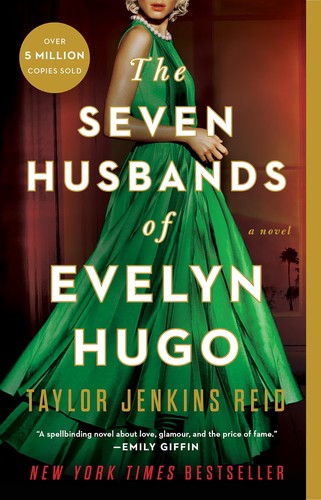
The Seven Husbands of Evelyn Hugo
A Novel
Reclusive screen legend Evelyn Hugo summons little-known journalist Monique Grant to record the truth behind her celebrated career and seven marriages. Moving from 1950s Hollywood to the present, Evelyn describes how ambition, sexuality, reinvention, and carefully managed publicity shaped both her stardom and her private life. Her account gradually reveals that the husbands named in the title were only part of the story: the defining relationship of her life was one she could not safely acknowledge in public. Meanwhile, Monique must determine why Evelyn selected her and what to do with a confession that may transform her own understanding of family, success, and moral responsibility.
Where to buy or borrow
Are you selling this book? Bookstores, publishers, authors and libraries can be listed here for free. Request a listing
About this book
Deep Overview
Evelyn’s testimony supplies the book’s main narrative. Born Evelyn Elena Herrera and raised in poverty in New York, she treats Hollywood not as a dream that will reward innocence but as a system whose rules must be learned and manipulated. She changes her appearance, deemphasizes her Cuban heritage, and enters relationships that can provide mobility, protection, publicity, companionship, or concealment. Her marriages are therefore not variations on a single romantic pattern. Some are calculated arrangements, some involve genuine affection, and others expose her to betrayal or violence. Together, they show how legal marriage can serve public storytelling while revealing very little about private attachment.
The emotional center is Evelyn’s recurring relationship with actress Celia St. James. Their love must survive professional rivalry, incompatible ideas about disclosure, internalized prejudice, and the dangerous attention attached to celebrity. Evelyn identifies as bisexual, while Celia is a lesbian; the distinction matters because the women understand Evelyn’s relationships with men differently. Their conflict is not simply whether they love each other, but whether love can remain whole when fear, ambition, and public performance continually determine its form.
Harry Cameron, Evelyn’s producer, confidant, and eventual husband, provides another model of intimacy. Their bond is built less on romantic expectation than on loyalty, shared secrets, practical cooperation, and the construction of a chosen family. Through Harry, Celia, and other figures, the novel separates emotional commitment from the conventional appearance of marriage.
Monique’s framing narrative asks who owns a life story. As she listens, she becomes more assertive in her work and personal decisions, but Evelyn’s reasons for choosing her remain concealed. The eventual connection forces Monique to judge whether truthful testimony can repair harm or merely transfer its burden. Evelyn’s final act of narration is simultaneously confession, reputation management, restitution, and an effort to decide how posterity will read her. The book ultimately presents celebrity as authored identity: a public self assembled from images and omissions, always vulnerable to the truths excluded from it.
Key Themes
• **Ambition and compromise:** The novel treats ambition as neither inherently admirable nor shameful. It asks what Evelyn is willing to exchange for power and whether later honesty changes the meaning of those choices.
• **Queer love under concealment:** Evelyn, Celia, Harry, and John confront a culture in which openness could jeopardize work, safety, and social standing. Secrecy protects them but also damages their relationships.
• **Bisexual visibility:** Evelyn insists that loving a woman does not erase her attraction to men. That self-definition challenges both heterosexual assumptions and attempts to categorize her as exclusively lesbian.
• **Marriage as institution and performance:** The seven marriages carry different emotional, commercial, defensive, and familial functions, separating public legitimacy from genuine intimacy.
• **Race, beauty, and assimilation:** Evelyn’s transformation from Evelyn Herrera into Evelyn Hugo demonstrates how stardom rewards conformity to narrow racialized ideals.
• **Truth, guilt, and narrative control:** Evelyn wants the facts revealed, but only under conditions she sets. Her confession raises doubts about whether controlling disclosure is accountability or one final exercise of power.
• **Chosen family:** Several of the book’s most sustaining bonds exist outside conventional romantic structures, emphasizing friendship, co-parenting, and mutual protection.
Historical Context
Its queer story also belongs to an era shaped by censorship and discrimination. The Motion Picture Production Code constrained depictions of sexuality in mainstream American film from the 1930s into the 1960s, while queer performers faced professional and social pressure to conceal their identities. Publicly heterosexual relationships—including marriages of convenience commonly described as “lavender marriages”—could provide protective cover. The book fictionalizes these pressures rather than documenting particular historical stars.
Evelyn’s Cuban American background introduces another mid-century industry dynamic: performers with ethnic identities were often renamed, cosmetically remade, or encouraged to appear closer to an Anglo-American ideal. Her reinvention dramatizes assimilation as both access to opportunity and a form of loss.
The narrative extends beyond the classical studio era into later decades, when celebrity media, changing sexual norms, and greater performer independence alter what can be shown or admitted. Even so, Evelyn remains shaped by the punishments she learned to anticipate early in life.
Intended Audience
Its accessible prose and strong narrative momentum make it approachable for general adult readers and many older teens, though the material is mature. Readers seeking a documentary reconstruction of Old Hollywood should regard it as imaginative fiction, not industry history. Those wanting highly detailed filmmaking scenes, subtle period diction, or an evenly balanced dual-protagonist novel may find Evelyn’s confession much more developed than Monique’s present-day storyline.
Reading Difficulty
The greater difficulty is emotional and ethical rather than linguistic. Readers must evaluate Evelyn’s decisions without reducing her to either heroine or villain, and they must track how survival, ambition, love, and manipulation overlap. The book contains domestic abuse, coercive or transactional sexual situations, homophobia, biphobia, racism and colorism, alcohol misuse, bereavement, serious illness, a fatal vehicle crash, suicide-related material, and end-of-life decisions. These subjects may make the novel demanding despite its accessible style.
Helpful Background Knowledge
It is also useful to distinguish bisexuality from indecision or partial homosexuality: Evelyn’s attraction to women and men is central to how she understands herself. Readers should remember that Evelyn Hugo, Celia St. James, Harry Cameron, and their films are fictional composites rather than disguised biographies of single real celebrities. Reid has connected the interview premise to *Ava Gardner: The Secret Conversations*, not identified Evelyn as a one-to-one portrait of Gardner or Elizabeth Taylor.
Why Read This Book?
The book also offers a protagonist whose ambition is allowed to be formidable, effective, and ethically costly. Evelyn does not ask to be admired before she can be understood. That makes the novel useful for discussions about the unequal standards applied to powerful women and about the distance between explanation and excuse.
Finally, its interview framework turns a glamorous life story into a dispute over ownership. Readers are asked not only what happened, but who gets to tell it, when disclosure becomes responsible, and whether a confession offered on the speaker’s terms can truly serve those who were harmed.
Reader Takeaways
It also demonstrates that marriage, romance, sexual attraction, friendship, and family do not always align neatly. Different relationships may answer different needs, while a socially approved arrangement may conceal rather than express commitment.
Evelyn’s history invites reflection on the cost of assimilation and on the limits of judging survival choices without considering the institutions restricting them. At the same time, the novel refuses to make oppression a blanket absolution: suffering does not erase the harm a person causes.
Readers may also reconsider confession as an ethical act. Telling the truth can acknowledge reality and restore suppressed identities, but timing, audience, motive, and control determine whether disclosure serves accountability, self-protection, or both.
Strengths
Evelyn is written as a persuasive contradiction: disciplined and impulsive, loving and manipulative, vulnerable to exploitation yet capable of exploiting others. Her refusal to present herself as conventionally likable supports the book’s inquiry into gendered judgments of ambition.
The novel also distinguishes several forms of love rather than treating romance as the sole meaningful bond. Evelyn’s friendship with Harry and their unconventional family arrangements are especially important counterweights to the title’s emphasis on husbands.
The framing device adds an ethical dimension to the retrospective. Monique is not merely a passive recipient of gossip; her presence raises questions about journalistic leverage, inheritance, consent, and the consequences of publishing another person’s secrets.
Limitations and Cautions
Evelyn’s retrospective voice often sounds polished and contemporary across many decades. This improves accessibility but can weaken the sense of historical distance. Some professional developments and relationship reversals occur with melodramatic efficiency, prioritizing momentum over procedural realism.
Monique’s storyline is comparatively compressed, and some readers may find that it functions mainly to support the final revelation rather than standing as an equally rich narrative. The late connection between the women is deliberately forceful and may feel overly engineered to readers who prefer less plot-driven resolutions.
The representation of a bisexual Cuban American star and other queer characters has attracted both appreciation and criticism. Reid herself has acknowledged broader questions about writing identities beyond one’s experience. Readers seeking firsthand queer Hollywood history or detailed Cuban American cultural representation should supplement the novel with memoirs and scholarship by people from those communities.
Content cautions include intimate-partner violence, coercive sexual dynamics, homophobia, biphobia, racism, grief, terminal illness, substance misuse, a deadly crash, suicide-related material, and assisted end-of-life action.
Important Concepts, People, and Places
• **Monique Grant:** The journalist selected to record Evelyn’s life. Her uncertain career and personal transition make her both Evelyn’s audience and eventual judge.
• **Celia St. James:** An acclaimed actress and Evelyn’s defining romantic partner. Their recurring separations reveal how secrecy, jealousy, ambition, and different sexual identities complicate love.
• **Harry Cameron:** A producer, confidant, and one of Evelyn’s husbands. As a gay man and chosen family member, he helps create a private life that public conventions cannot accurately name.
• **The seven husbands:** Ernie Diaz, Don Adler, Mick Riva, Rex North, Harry Cameron, Max Girard, and Robert Jamison. Collectively, they function as a public chronology of Evelyn’s life, but each marriage has a distinct mixture of strategy, affection, harm, or concealment.
• **Connor Cameron:** Evelyn and Harry’s daughter. She turns their unconventional arrangement into a durable family and influences Evelyn’s later choices.
• **Los Angeles and Hollywood:** The center of Evelyn’s ascent, where the film industry manufactures both movies and personalities.
• **New York City:** Evelyn’s birthplace and later home; it frames both her escape from poverty and the final telling of her story.
• **Studio system:** The industrial structure that gives executives and publicity departments extensive control over stars’ careers and images.
• **Production Code:** The historical censorship regime that restricted screen depictions of sexuality and forms part of the wider culture of enforced respectability surrounding the characters.
• **Lavender marriage:** A heterosexual-presenting marriage used to conceal one or both partners’ queer identity. The concept illuminates several strategic arrangements in the novel.
• **Chosen family:** Kinship created through loyalty and shared life rather than conventional marriage or biological relation; it describes Evelyn’s most sustaining household.
Questions the Book Explores
• Can ambition be judged fairly when access to power depends on unequal and discriminatory systems?
• What separates a protective secret from a damaging lie?
• Does explaining the pressure behind a harmful act change moral responsibility for it?
• Why does society often treat marriage as more legible or legitimate than other forms of commitment?
• Who owns the truth of an event when one person’s confession reopens another person’s loss?
• Can a carefully timed public revelation count as accountability if the speaker avoids many immediate consequences?
• How do racism, sexism, homophobia, and biphobia influence which parts of a person become marketable and which must be hidden?
• What makes a family: legal status, romantic love, parenthood, loyalty, or daily care?
Reading Group Guide
Next, compare three forms of intimacy: Evelyn and Celia’s romance, Evelyn and Harry’s friendship, and Evelyn and Monique’s interviewer-subject relationship. Discuss what each bond permits, conceals, or demands. A group may also track moments when Evelyn gains control over her image and moments when that control injures someone else.
For historical context, briefly review the studio system, the Production Code, and lavender marriages before considering where the novel uses history persuasively and where it simplifies it. Keep fictional characters separate from rumored accounts of real stars.
Because the final revelations can dominate conversation, reserve time to ask whether they alter earlier judgments or merely intensify them. Groups should establish spoiler expectations in advance and approach identity, abuse, suicide, and end-of-life material with care.
Discussion Questions
2. Which of Evelyn’s choices are best understood as survival, and which cross into avoidable exploitation?
3. How does Evelyn’s insistence on the word “bisexual” affect the novel’s treatment of identity and visibility?
4. What do Evelyn and Celia each believe public acknowledgment would prove about their relationship?
5. In what ways is Harry more central to Evelyn’s family than the conventional language of marriage can express?
6. How do Evelyn’s changes to her name, appearance, and ethnic presentation complicate her eventual control over her career?
7. Does the book portray ambition differently in women and men? How do the characters themselves reinforce those standards?
8. What does Monique learn from Evelyn that helps her claim professional or personal authority, and what should she reject?
9. Why does Evelyn choose Monique, and does the opportunity she offers compensate for the burden attached to it?
10. Does Evelyn’s final confession constitute accountability, reputation management, punishment, generosity, or some combination?
11. How would the novel change if Celia or Harry had been able to narrate substantial portions of the shared history?
12. Which relationship most effectively challenges the assumptions created by the book’s title?
Sources and Verification
Comments
No published comments yet.
Available editions
Paperback
Trade paperback
- Publisher
- Atria Books
- ISBN-13
- 9781501161933
- Publication date
- Pages
- 400