Deep Overview
The story is built as a sequence of encounters rather than a continuous narrative. Gabriel John Utterson, a dry and loyal London lawyer, hears from his kinsman Richard Enfield about a night when a strange man trampled a child in the street and then paid compensation with a cheque signed by a respected name. The man was Edward Hyde. Utterson, who holds the will of his friend Dr Henry Jekyll, finds that the will makes Hyde Jekyll's heir. He begins to worry that his friend is being blackmailed, or worse. Most of the book is Utterson's slow, anxious attempt to reconcile what he knows of Jekyll with what he learns of Hyde.
Stevenson makes Hyde frightening by withholding a precise description. Witnesses agree that he gives an impression of deformity, yet none can say where the deformity lies. What they can describe is their own reaction: disgust, dread and a violent wish to be away from him. The book is therefore as much about perception and judgement as about a monster. Later, a brutal murder, the death of the elderly Sir Danvers Carew, turns private worry into a public manhunt. Jekyll's behaviour then grows stranger, and his old colleague Dr Hastie Lanyon falls ill after some experience he will not discuss.
The final chapters change the form. Lanyon's posthumous narrative and Jekyll's own 'Full Statement of the Case' replace the lawyer's guesswork with first-person confession. In them the book explains what has been happening and, more importantly, why. Jekyll presents himself as a man whose respectability was always partly a performance. He was drawn to pleasures he wanted to keep hidden, and he persuaded himself that science could let him enjoy them without paying for them. The experiment gives that wish a body, and the body begins to act on its own account. The central irony is that freedom from conscience proves to be a form of enslavement.
Stevenson's argument is not simply that people have a good side and a bad side. Jekyll's own account suggests that the self is a mixture, and that the attempt to separate its elements produces something worse than the mixture. Hyde is not 'evil' in a cartoon sense but the part of Jekyll that has been released from shame, memory and accountability. The title's phrase 'strange case' also places the story in the language of medicine and law. It presents the events as a file to be examined, which invites the reader to weigh testimony and to notice how many respectable men in the book prefer not to ask questions.
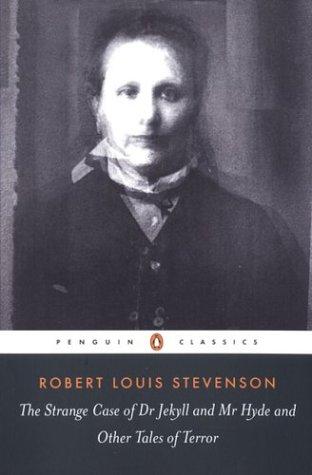
The Penguin edition adds interpretive depth. Mighall's introduction treats the novella as urban Gothic, in which fear comes from familiar streets, professional men and domestic respectability rather than from ruined castles. It also directs attention to the book's anxieties about class and crime and to the late-Victorian science that supplied its vocabulary. Read this way, the story's horror lies in how easily a well-regulated society can hide its own appetites.
Key Themes
Duality and the divided self: the book asks whether human nature is a unity or a negotiated truce between impulses, and whether the truce can safely be broken. Respectability and concealment: Victorian professional men guard reputation so carefully that the book's friends avoid asking each other direct questions. Responsibility: Hyde's actions are bound up with Jekyll's choices, so the story keeps testing where agency begins and ends. Science and its limits: Jekyll's experiment draws on the confident, speculative science of the era, and the narrative shows its consequences more than its mechanics. Fear of the body and of appearance: instinctive revulsion toward Hyde raises uncomfortable questions about how far physical impressions are trusted as moral evidence. Addiction and compulsion: the later chapters show how a chosen indulgence turns into something that can no longer be controlled. Place: London's contrast between polished streets and shabby, shadowed districts mirrors the contrast within Jekyll's own life.
Historical Context
Stevenson wrote the story in autumn 1885 at Bournemouth, where he lived in poor health. Accounts of its origin agree that it began with a dream. His wife, Fanny, woke him from it, and he complained that she had interrupted a good 'bogey tale'. Accounts vary on details such as the length of the first draft, the number of days it took, and whether an earlier version was destroyed on Fanny's criticism, so these should be treated as part of the legend around the book. It was intended for the Christmas market of 1885, missed that season, and was published by Longmans, Green in early January 1886. A favourable notice in The Times is generally credited with its breakthrough. Scholarly sources report sales of more than 40,000 copies within a few months and rapid reprinting, and Punch had parodied it within about a month.
Intellectual background matters too. Stevenson was an Edinburgh-born writer who had grown up amid a city known for respectable surfaces and a darker underlife. Scholars have connected the story to Edinburgh figures such as the double-lived Deacon Brodie and the executed murderer Eugène Chantrelle, a French teacher Stevenson knew. The story also belongs to a late-Victorian climate of concern about evolution, degeneration, criminality and the reliability of the educated mind, which Mighall's edition explores. Stage adaptations followed within a few years, which started the long afterlife that now surrounds the story.
Intended Audience
This edition suits students and teachers who want a reliable, annotated text with critical commentary, and general readers who would like the context behind a story they may already know from adaptations. It is also a good fit for readers of Gothic and psychological fiction who want a short, intense work, and for anyone interested in how Victorian writers represented science, crime and the city. Readers looking for a straightforward horror story with frequent action may find it more restrained and talky than expected. People who dislike scholarly apparatus may prefer a bare-text edition, though the notes and introduction can simply be left until after the story.
Reading Difficulty
The prose is Victorian but not dense. Sentences are controlled and the story is short, so most modern readers will find it manageable in an afternoon or two. The main challenges are period vocabulary, some Scots-inflected and legal or medical terms, and the delayed, indirect narration, which can feel slow at first because the mystery is built from conversations and reports. The ending is delivered through two long documents that change the register from observation to confession, and they reward a second reading. This particular book is longer than the novella alone suggests: the 224 pages include a substantial introduction, notes and other tales. Those apparatus pages are more academic in tone and often discuss the story's ending, so many readers choose to read them afterward.
Helpful Background Knowledge
No specialist preparation is required. A little knowledge of Victorian London, with its sharp division between wealthy and poor districts, and of professional life among lawyers and doctors, will make the social tone clearer. It also helps to know that 'Jekyll and Hyde' has entered everyday speech to mean a personality with two sides, since the original story is subtler than that cliché. Knowing the general outline of Gothic fiction and the Victorian interest in evolution, crime and heredity will deepen the reading but is not essential. Readers who want the full effect of the mystery should avoid summaries and adaptations beforehand, though the story's ending is so widely known that this is hard to do.
Why Read This Book?
Many of the classic books of the nineteenth century are long, but this one packs a complete moral and psychological puzzle into a few chapters. It is worth reading in its original form because popular versions tend to simplify it into a story of a good man who becomes a monster. Stevenson's version is quieter and stranger: it is about the habits of respectable people, the pleasure of not knowing, and the cost of splitting off what we dislike in ourselves. This edition is a good choice for readers who want that fuller picture, because the introduction and essay put the story in its scientific and social setting, and the extra tales show Stevenson working across several kinds of Gothic fear. The book is also compact enough to suit a reading challenge or a first step into Victorian literature.
Reader Takeaways
A careful reader may come away able to distinguish the story's actual structure and argument from its popular reputation. They may notice how Stevenson builds dread through reaction and omission rather than description, and how the narrative frame, with its lawyers, doctors, letters and documents, shapes what the reader is allowed to know and when. They may also reconsider the idea that the story is a simple good-versus-evil allegory, noticing instead how Jekyll's desire for concealment and his reluctance to take responsibility drive the tragedy. Finally, the edition's contextual material can show how fiction responds to science, crime reporting and urban anxiety, and how the same story can be read differently in different periods.
Strengths
The novella is extremely economical: nearly every scene adds a clue, a mood or a complication, and the structure of the mystery still works for readers who know the secret. The setting is concrete and atmospheric, and the minor characters are drawn with enough detail to make Utterson's loyalty and caution believable. The central idea is open enough to support many readings, from the psychological to the social and scientific. As an edition, the Penguin Classics volume offers a scholarly introduction, an essay on scientific context, notes, and other tales that show Stevenson's range, which together make it useful for study as well as for pleasure.
Limitations and Cautions
The story's women characters are few and marginal, and the book's world is largely that of professional men, which limits its range of perspectives. Its treatment of Hyde's appearance relies on Victorian assumptions that physical features signal moral character. Those assumptions were common at the time but are contested and sometimes disturbing today, and readers may want to treat them critically. The narrative is also reticent about exactly what Jekyll's private pleasures were, so interpretations vary and are partly the reader's own. The edition's apparatus reflects one editor's reading and the research of its time, and other critics read the book differently, for example through psychoanalysis, empire, sexuality or addiction. Readers hoping for the full text of every Stevenson tale named in the edition title should check the contents page, since the main appeal here is the novella itself.
Important Concepts, People, and Places
Robert Louis Stevenson (1850-1894) is the Scottish author, also known for Treasure Island and Kidnapped, who wrote the story at Bournemouth. Robert Mighall is the editor whose introduction and notes shape this edition and read the story as urban Gothic. Dr Henry Jekyll is the prosperous, respected physician whose experiment drives the plot, and Edward Hyde is the figure his experiment produces. Gabriel John Utterson is the lawyer through whose investigation the reader meets the mystery. Richard Enfield is Utterson's relative, whose account of a violent incident starts the inquiry. Dr Hastie Lanyon is Jekyll's estranged medical colleague, whose narrative reveals the central truth. Sir Danvers Carew is the elderly victim whose murder turns suspicion into a manhunt. London is the setting, and its contrast between genteel and squalid districts is part of the book's meaning. Burke and Hare, the Edinburgh body-snatching murderers, belong to the neighbouring tale 'The Body Snatcher', which looks at the dark side of medical practice. 'Olalla' is a companion tale about vampirism and tainted family blood. 'Urban Gothic' is the critical term for the way the story moves horror from remote castles into modern city streets and respectable houses.
Questions the Book Explores
Is a person fundamentally one self or several, and can the parts be separated without damage? What does reputation protect, and what does it let people avoid facing? Who is responsible for actions committed by a self that one has deliberately released or disowned? How far can scientific ambition justify itself, and what does the story suggest about its hidden motives? Why do other characters trust their instincts about Hyde, and are those instincts reliable? What do the book's city and its professional men reveal about the social order that produces them? And how does the way a story is told, through fragments, documents and rumour, affect how readers judge its characters?
Reading Group Guide
The story is short, so a group can read it in a single session and spend meeting time on interpretation. A useful approach is to read the novella first and the introduction afterwards, then compare the group's own reading with the editor's. Groups may want to track who tells each part of the story and what each narrator is willing or unwilling to say. Another useful exercise is to compare the original text with a film or stage version that members already know and to discuss what is added or lost. If the group wishes to read further, 'Olalla' and 'The Body Snatcher' in the same volume offer contrasting versions of Stevenson's Gothic interests. Members who know the story only from its reputation may be surprised by how much of it is conversation and how little is transformation. This can be a good starting point for the group's discussion of how popular culture reshapes classic books.
Discussion Questions
1. Why do you think Stevenson delays the explanation until the last chapters, and how did that change your reading of Utterson?
2. Hyde is described mainly by the reactions he causes. Does that make him more or less frightening than a detailed description would?
3. How do the male friendships in the book support or obstruct the truth?
4. Is Jekyll a victim, a perpetrator, or both? What evidence from his own statement shapes your view?
5. What role do London's streets, doors, fog and houses play in the story's meaning?
6. How does the book use scientific language, and does the science matter as much as the moral drama?
7. In what ways does the popular idea of 'Jekyll and Hyde' differ from the story you read?
8. How does the editor's introduction change or confirm your own interpretation?
9. What do 'Olalla' and 'The Body Snatcher' add to your picture of Stevenson's interest in fear and responsibility?
10. Which character, in your view, shows the most self-knowledge, and which the least?
Sources and Verification
This profile draws on publisher and retailer listings for edition details such as ISBN, imprint, format and page count, a university library catalogue record for authorship, series and subject data, and published scholarship and reference material for the book's composition, publication and reception. Accounts of how Stevenson wrote the story differ in details such as the word count of the first draft and the number of days it took, so the profile treats those as approximate or traditional. Sources also differ on the 2003 publication date of this edition, so no exact date is given. The detailed contents of the edition beyond the novella, 'Olalla' and 'The Body Snatcher' were not independently confirmed from the book itself, and the plot and thematic discussion rest on the work's own text and widely documented critical reading.