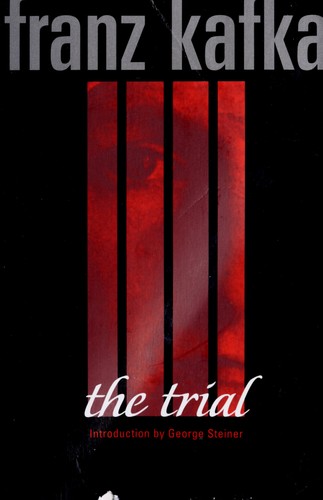
Deep Overview
The novel opens with an arrest on Josef K.'s thirtieth birthday. Two agents of an unnamed authority tell him he is under arrest, but they do not say why, and they do not take him away. He is allowed to go to work. The oddness is that the case has no visible edges. It reaches him through a series of ordinary rooms and ordinary people: his landlady, a neighbouring lodger, a bank colleague, a hearing held in a crowded attic, and an uncle who is alarmed by the scandal.
Kafka builds the book as a sequence of encounters. Each one promises information about the case and then withholds it. K. first treats the proceedings with confident contempt. He tries to argue his innocence in a public hearing and finds that the court has its own logic, which he cannot see. As his anxiety grows, he searches for influence instead of clarity. He turns to a lawyer, Huld, who is bedridden and slow, and to the lawyer's nurse, Leni. He turns to a painter, Titorelli, who claims to know the court's judges. He meets another client, the merchant Block, who has become a servile and degraded petitioner after years of waiting. Each helper shows K. a possible future for himself. Each also draws him further into the machinery he hoped to stand outside.
The pressure is not only legal. K.'s work at the bank, his relationships with women, and his sense of himself all start to bend around the case. He becomes preoccupied and increasingly isolated. Late in the book a priest speaks to him in a cathedral and tells a parable about a man who waits outside a door of the law. The scene is the most famous in the novel, and it supports several readings. Some take it as a warning against waiting for permission. Some take it as a comment on how interpretation itself can trap people. The priest and K. then disagree about what the parable means, and their argument makes the point that readers of the novel face the same problem. The novel ends with K.'s execution, carried out quietly and without any public explanation.
Kafka's method is to take bureaucratic language and procedure seriously, down to the level of corridors, forms and appeals, and then to let them behave irrationally. The result is not simple satire. The court is oppressive, but K. is not a clean victim. He is arrogant, evasive and sometimes callous, especially toward women and subordinates. Readers have long argued whether the novel is about institutional power, personal conscience, or some mixture of the two. The book never settles the question. Part of its lasting force is that it can sustain political, psychological, theological and literary readings without any one of them closing off the others.
Key Themes
Guilt without a charge is the central pattern. K. is never told what he did, and the book keeps asking whether guilt can be a condition, something an accused person is made to feel, instead of a verdict. Closely linked is the opacity of institutions: the court is everywhere in the story yet has no clear location, hierarchy or rules a person can learn. Related themes include the gap between law as a social structure and justice as a moral idea, the power of waiting and delay, and the way procedure can wear down personal agency. Kafka also examines self-deception. K.'s need to appear rational and in control becomes part of what undoes him. Interpretation is a theme too. Characters keep explaining the system to K., and the explanations contradict one another.
Historical Context
Kafka wrote the novel in 1914–15, when the First World War had begun and he was working in an insurance institute in Prague. Prague belonged to the Austro-Hungarian Empire, a multi-ethnic state governed through a large and elaborate administration. Kafka, a German-speaking Jew in a mostly Czech-speaking city, lived on the edge of several communities. His daily work gave him close knowledge of files, regulations and official language. The book was not published in his lifetime. Max Brod, to whom Kafka had reportedly left instructions to destroy his papers, ignored them and issued the novel through Verlag Die Schmiede in Berlin in 1925. Later readers have often linked the book to the twentieth century's totalitarian states and mass bureaucracies. That reading came after the book was written, but it explains much of its reputation. The Muir translation of 1937 introduced English-language readers to the novel. Later scholarship challenged Brod's arrangement of the text, and a new translation by Breon Mitchell based on a restored text appeared in 1999. The Definitive Edition predates that restored text.
Intended Audience
The book suits readers of literary fiction who like ambiguity and are willing to read without a tidy resolution. Students of modernism, European literature, law, political theory and philosophy often meet it in class, and it works well for general readers curious about Kafka's reputation. It is also a good fit for readers who enjoy a short, compact novel that rewards discussion and rereading. Readers who want a steady plot, sympathetic characters or a clear moral may find it frustrating, and some may find its repetitive, circular structure tiring. Anyone looking for the most up-to-date scholarly text should consider that this edition follows the older, Brod-based version.
Reading Difficulty
The sentences are generally clear and the vocabulary is not demanding. The difficulty lies in tone and structure. The narration is deadpan, the events are illogical, and several chapters are fragmentary or end abruptly. The pacing is uneven: some scenes are tense and fast, others are long, repetitive conversations that are meant to feel stifling. Readers may need to tolerate not knowing what is going on. The cathedral parable and the discussion that follows it are the densest passages and are worth reading slowly. No specialist knowledge is needed. The Muir translation has a formal, somewhat old-fashioned English style that some readers find stately and others find stiff. The edition has a scholarly introduction and some of Kafka's drawings, and readers may prefer to read the novel first and the introduction afterwards.
Helpful Background Knowledge
A little context on Kafka's life helps: his job in an insurance institute, his life in Prague, and his friendship with Max Brod. Knowing that the manuscript was unfinished and edited after his death will help you read the chapter order and the fragments with appropriate caution. A basic idea of how courts, arrests and legal representation normally work makes it easier to notice where Kafka departs from them. Readers do not need to know Jewish, philosophical or legal theory, although those frameworks are common in criticism. It is useful to read the short parable usually titled Before the Law as a standalone piece, since it also appears in the novel. Steiner's introduction in this edition offers a critic's guide for readers who want one.
Why Read This Book?
Some novels are valuable because they gave the language a word. Kafkaesque came from books like this one, and reading The Trial shows what the word is actually pointing to, which is more specific and more unsettling than the way it is usually used. The book rewards close attention to tone: the comedy and the dread arrive together. It is also one of the books that make you think about procedure and responsibility. You can see how an institution gains authority over a person simply by being treated as authoritative. Because it is short and widely taught, it is also a practical way into Kafka's wider work and into twentieth-century modernism. This Schocken edition gives a well-known English version in an accessible paperback, framed by a critical introduction.
Reader Takeaways
A careful reader may come away able to describe how Kafka creates menace through calm, administrative detail rather than melodrama. They may notice how often K. contributes to his own entrapment through pride, distraction and misplaced trust. They may reconsider what it means to be guilty, to be judged, and to seek an explanation from an authority that is not obliged to provide one. They may also see how fragmentary texts and posthumous editing shape what we think of as an author's work, and why the same book can look different in different editions.
Strengths
Its greatest strength is the combination of an exact, almost documentary style with an irrational world. The scenes are concrete and memorable, and the court's offices, corridors and petitioners stay in the mind. The book is short and structured as a series of confrontations, which keeps its argument dramatic rather than abstract. It supports many readings without being vague, and it has produced a very large body of criticism. This edition adds a respected critic's introduction and supplementary material in a form that is easy to use.
Limitations and Cautions
The novel is unfinished, and the order of its chapters is the work of editors rather than Kafka. Later scholarship has criticised Brod's arrangement and the Muir translation, so this edition does not represent the most current view of the text. Some readers find the book's female characters thinly drawn and K.'s treatment of them troubling; the story does not endorse his behaviour, but it does not fully examine it either. The repeated pattern of meetings and failed leads can feel monotonous. Interpretations that treat the novel as a prophecy of totalitarianism, or as a religious allegory, are readings by critics and not settled facts about Kafka's intentions.
Important Concepts, People, and Places
Josef K. is the protagonist, a bank officer whose unexplained arrest begins the story and who is also the novel's limited point of view. Franz Kafka, the author, drew on his own career in an insurance office and his experience as a German-speaking Jew in Prague. Max Brod, his friend and literary executor, assembled and published the text in 1925 despite Kafka's reported wish that his papers be destroyed. Willa and Edwin Muir produced the 1937 English translation that this edition revises, with E. M. Butler adding supplementary material, and George Steiner provides the introduction. Among the characters are Frau Grubach, K.'s landlady; Fräulein Bürstner, a lodger whom K. confronts; the lawyer Huld and his nurse Leni; the painter Titorelli; the merchant Block; and the prison chaplain who tells the parable Before the Law. The court itself is the novel's central institution: a shadowy system housed in attics and back offices and never shown in full. The term Kafkaesque, now common in English, refers to the type of bewildering, impersonal authority the novel dramatises. The city is not named and is only loosely a Central European setting.
Questions the Book Explores
Can a person be guilty without knowing the charge, and who decides? What happens to individual responsibility when the authority that judges you cannot be questioned? Is K.'s fate imposed on him, or does he contribute to it? How far can a legal system be trusted when its rules are hidden from those it governs? Does the parable of the doorkeeper offer wisdom, a trap, or both? The novel also asks what an unfinished text can tell us about its author's intentions.
Reading Group Guide
This is one of the book club books that works best when the group agrees in advance not to look for a single correct reading. Start by comparing first reactions: was the novel funny, frightening, frustrating, or all three? Take one chapter, such as the cathedral scene or the visit to the painter, and read it aloud so the group can discuss the tone. Ask each member to decide, before the meeting, whether they find K. guilty, and notice how they justify the answer. It is worth spending a short time on the edition itself, since the order of chapters and the translation affect the reading. A group that wants a wider conversation can pair the novel with the stand-alone parable or with a short account of Kafka's life.
Discussion Questions
1. Why do you think Kafka never tells us what K. is accused of, and how would the book change if he did?
2. In what ways does K. help to bring about his own downfall?
3. How do the lawyer, the painter and the businessman each represent a different way of dealing with the court?
4. What do you make of the fact that the court seems both powerful and strangely disorganised?
5. How do you read the priest's explanation of the parable, and the disagreement that follows it?
6. Does the novel's ending feel inevitable, unjust, or something else?
7. How do K.'s relationships with women shape your view of him?
8. How does knowing that the book is unfinished and edited by Brod change the way you read it?
9. Where in modern life might readers recognise the experience the novel describes?
Sources and Verification
This profile draws on a university library catalogue record and a public library catalogue record for the bibliographic details of the Schocken Definitive Edition. It also draws on an open-access Project Gutenberg listing, Britannica entries on Kafka and the character of Josef K., a publisher page for the later Mitchell translation, and a general reference article on the novel's composition and publication history. Bookseller and book-database listings were used only to cross-check the edition's publication date and format. The sources disagree on the page count, so none is given here. The exact publication date of 28 March 1995 comes from trade listings; the library records give only the year. Interpretive comments are the editor's own synthesis, and statements about critical readings are described as readings rather than established facts.