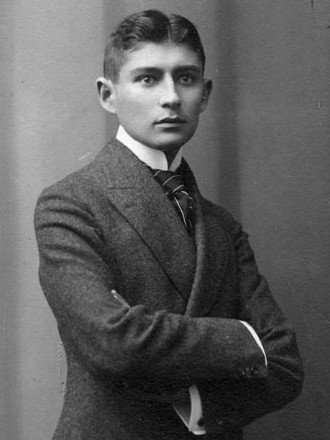
Franz Kafka was born in Prague in 1883, when the city belonged to Austria-Hungary, and wrote in German. He studied law at the German University there and worked in an insurance office, fitting his fiction around the job. He died in 1924 at Kierling, near Vienna, at forty.
His stories drop something inexplicable into a perfectly ordinary setting and then carry on as if paperwork and family dinners still mattered. Anxiety, guilt, alienation and a fraught relationship with his father run through the work, and the humour is dry enough that it is easy to miss on a first read. The prose itself is plain and exact, which makes the strangeness harder to shake off.
Kafka published only a handful of pieces in his lifetime, among them the collection Betrachtung in 1913 and The Metamorphosis in 1915. In 1922 he told his friend Max Brod to burn his papers. Brod did not, and the novels The Trial, The Castle and Amerika all reached readers after Kafka's death, The Trial in 1925. The adjective Kafkaesque, now used for any faceless and senseless system, comes from that body of work.
Start with The Metamorphosis. It is short, and its premise is clear from the first line: Gregor Samsa wakes up transformed into an enormous insect, and the story follows how his family and the world around him grow less and less able to bear him. The edition on WebToTell is Stanley Corngold's translation in the Norton Critical Edition, which adds background material and critical essays for readers who want help with the story's context. If it grips you, The Trial is the natural next step.