
Wuthering Heights
Wuthering Heights is Emily Brontë's only novel and one of the classic novels to read for anyone curious about Victorian fiction at its most extreme. Set on the Yorkshire moors, it follows two neighbouring households, the Earnshaws and the Lintons, and the foundling Heathcliff, who is raised among the Earnshaws, loses the woman he loves, and turns his bitterness into a campaign of revenge. A tenant, Lockwood, hears the story from the housekeeper Nelly Dean, so the reader sees a violent history through partial and sometimes unreliable eyes. The book spans two generations and asks whether cruelty can be broken or only inherited. It matters for its daring structure, its refusal of easy moral judgements, and its lasting influence on how literature portrays obsessive love, class resentment and the pull of place.
Where to buy or borrow
Are you selling this book? Bookstores, publishers, authors and libraries can be listed here for free. Request a listing
About this book
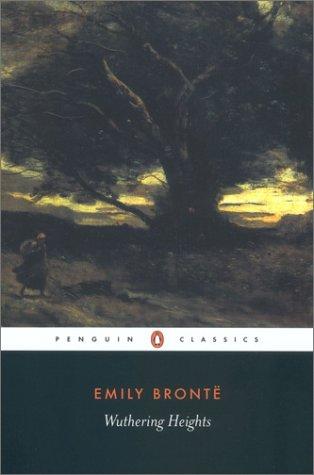
This Penguin Classics paperback is a good choice among book club books and classroom texts. It gives readers a modern text with explanatory notes and two framing essays: Pauline Nestor's introduction on Brontë's background, influences and the novel's changing critical reception, and a preface by Lucasta Miller on how interpretations have shifted since Charlotte Brontë's early commentary. Readers looking for classic novels to read will find a short book that is far stranger and harsher than its reputation as a romance suggests.
Deep Overview
Nelly tells how Mr. Earnshaw brought a dark-skinned orphan home from Liverpool and gave him the name Heathcliff. His son Hindley resented the newcomer, while his daughter Catherine formed an unusually close bond with him. After Mr. Earnshaw's death Hindley turned Heathcliff into a servant. Catherine, drawn to the refinement of the Lintons at Thrushcross Grange, chose to marry Edgar Linton, and Heathcliff vanished. When he returned wealthy and calculating, he began taking apart both families through marriage, debt and control of property. Catherine's death shortly after the birth of her daughter does not end his obsession. It shifts his focus to the next generation: Hindley's son Hareton, Catherine's daughter Cathy, and Heathcliff's own sickly son Linton.
The second half moves more slowly and is easy to underrate. It shows how Heathcliff uses guardianship, inheritance law and coerced marriage as tools of domination. Cathy and Hareton gradually move from antagonism to something like partnership through education, patience and mutual recognition. That development gives the book a very different emotional register from the first half. Brontë does not erase the damage, but she does allow a life shaped by something other than revenge.
What Brontë seems to be demonstrating is not simply that love can be destructive. The novel keeps asking where character comes from: nature, upbringing, class position, or the cycle of harm passed from adult to child. The two houses stand for contrasting worlds, the exposed and rough Heights and the sheltered, polished Grange, but the book blurs the line between them. Characters who seem to belong to one world are repeatedly drawn into the other.
Narration is central to the effect. Lockwood is a poor judge of what he sees, and Nelly, though vivid and sharp, is a participant who takes sides, withholds help at crucial moments and shapes the story to suit her own sense of what happened. Readers therefore have to weigh her reliability instead of treating her as a neutral witness. Because the story reaches us through her, even its most extreme moments carry the possibility of distortion.
The result is a book that is hard to classify. It has Gothic ghosts and storms, but it is also a realistic study of property, marriage and household power. It has an intense love story, but the lovers are cruel, self-deceiving and often unlikeable. That tension is the reason the novel has produced so many competing readings and continues to reward rereading.
Key Themes
Revenge and the transmission of harm form the structural backbone. Heathcliff's grievances were created by mistreatment, and he then passes similar treatment on to children who had no part in the original wrongs. The final chapters ask whether that pattern can be interrupted.
Class, property and belonging are never far from the surface. Marriage decisions are tied to money, inheritance and standing, and Heathcliff's ambiguous origins keep him on the margins of respectable society even after he acquires wealth.
Nature and civilisation are set against each other through the moor, the weather and the contrast between the two houses. The book also treats cultivation, education and gentleness as achievements that are fragile, unevenly distributed and sometimes complicit in cruelty.
Storytelling and reliability matter as much as plot. The layered narration invites readers to ask who is speaking, what they want, and how much of the story they should trust.
Supernatural presence and the afterlife appear as ghostly visitations, but also as the lingering force of memory, desire and unfinished business.
Historical Context
The Brontë sisters published under the male-sounding pseudonyms Currer, Ellis and Acton Bell. The novel appeared in a literary culture shaped by Romanticism, Gothic fiction, and the Victorian three-volume novel, but it fits none of those traditions comfortably. Its harshness shocked many early readers, and its reputation grew substantially in the decades after its publication. The story itself is set earlier, with events reaching back to the 1770s, in a period when inheritance law and the transfer of land through marriage gave men legal control over a family's fortunes. That legal background drives much of Heathcliff's strategy. Haworth and its surrounding moors have since become a heritage destination, with walks to places such as Top Withens traditionally linked to the novel, though connections between real places and fictional ones are matters of tradition and interpretation rather than proven fact.
Intended Audience
Readers who enjoy Gothic atmosphere, psychologically intense relationships and morally complicated characters are most likely to be rewarded. People who already know Jane Eyre or other Brontë works may be interested in how different Emily's approach is.
The novel may be less suitable for readers looking for a conventional romance with admirable lovers or a clearly consoling ending. It contains domestic violence, cruelty to children, coercion and period language and attitudes about race and class that some readers will find difficult.
Reading Difficulty
The prose is nineteenth-century and often formal, but much of the dialogue is direct and emotionally clear. The speech of the servant Joseph is written in a heavy Yorkshire dialect that many readers find slow going; reading those passages aloud can help, and the notes assist where needed. The pace is dense in the early chapters, steadier in the middle, and quicker towards the end. Because this is a paperback of roughly 416 pages, including the introductory material and notes, the text itself is manageable, and the book can be read in a few sittings if you like.
Helpful Background Knowledge
Some awareness of Gothic fiction and Romanticism will help with the book's mood, as will a little about the Brontë family and the use of pen names by women writers of the period. If you plan to read Pauline Nestor's introduction, consider reading it after the novel to avoid learning how the story develops before you encounter it.
Why Read This Book?
The book is also worth reading for its design. Few novels of its era place such weight on how a story is told, and few leave as much room for disagreement about who is at fault. It is a useful counterpoint to the more orderly moral worlds of many other Victorian novels, and a rewarding one to pair with Charlotte Brontë's Jane Eyre or Anne Brontë's The Tenant of Wildfell Hall.
Reader Takeaways
Readers may also notice how the second generation functions as a deliberate answer to the first, and how education, language and small acts of kindness are presented as ways of breaking inherited patterns. The book can also encourage closer attention to setting, since weather, distance and architecture often express emotional states.
Strengths
The prose is vivid and economical in its descriptions of landscape and domestic space, and the dialogue gives the characters distinct voices. This Penguin Classics edition adds a helpful scholarly frame, with an introduction, notes and a preface on interpretation, making it a practical text for study and independent reading alike.
Limitations and Cautions
Heathcliff's racial and social outsider status is described in language that reflects its time, and modern critics read it in different ways; these readings are contested rather than settled. The edition's own introductory material reflects particular critical perspectives and a particular moment in scholarship. In addition, the text has a complicated publication history, with an error-prone first edition and a later revision by Charlotte Brontë, so editions differ in details. Readers needing a specific textual approach should check the editor's notes. Finally, the novel's marketing as a romance, including recent film promotion, can set expectations the book does not meet.
Important Concepts, People, and Places
Catherine Earnshaw: the daughter of the house whose choice between Heathcliff and Edgar Linton sets the main tragedy in motion.
Edgar Linton and Isabella Linton: siblings from Thrushcross Grange who represent a more refined and sheltered world and who become entangled in Heathcliff's plans.
Hindley Earnshaw and Hareton Earnshaw: father and son whose fortunes show how Heathcliff's revenge crosses generations; Hareton's development is key to the ending.
Cathy Linton, Linton Heathcliff: the second generation, whose relationships echo and answer those of the first.
Lockwood and Nelly Dean: the two narrators. Lockwood provides the outer frame and Nelly provides the main account, making their reliability a major question.
Wuthering Heights and Thrushcross Grange: the two houses that frame the novel's contrast between wildness and refinement, as well as its disputes over inheritance.
The Yorkshire moors and Haworth: the landscape the novel evokes, and the real setting of Brontë's life; Top Withens is traditionally associated with the novel.
Ellis Bell: the pseudonym under which Emily Brontë published the novel in 1847.
Thomas Cautley Newby: the first publisher, whose edition included many errors.
Charlotte Brontë: Emily's sister, who prepared the posthumous 1850 edition and shaped early interpretations.
Pauline Nestor and Lucasta Miller: the contributors to this edition. Nestor wrote the introduction and notes; Miller, author of The Brontë Myth, wrote the preface on interpretation.
Questions the Book Explores
Reading Group Guide
It can help to assign different members to defend or challenge individual characters, including Nelly Dean, Catherine, Heathcliff and Hareton. Compare how members would describe the book's genre before and after reading. If some members have seen film or television versions, ask what those adaptations emphasise and what they leave out. A short session on the opening chapters, where the dialect and framing are most demanding, can also set up the rest of the discussion. Use the introduction and preface in this edition as optional material after the group has formed its own views.
Discussion Questions
1. Why do you think Brontë chose Lockwood, an outsider, as the first narrator? What does his perspective add or distort?
2. Is Nelly Dean a reliable narrator? Which moments make you trust or doubt her?
3. How does Brontë present Heathcliff's cruelty in relation to his earlier treatment? Does the explanation change your judgement?
4. What do Catherine's reasons for marrying Edgar reveal about class and choice in her world?
5. In what ways do Wuthering Heights and Thrushcross Grange differ, and where do those differences break down?
6. How do the second-generation characters echo or revise the first generation's story?
7. Does the ending offer redemption, compromise, or something else?
8. What role do landscape and weather play in shaping mood and meaning?
9. Is the novel best understood as a love story, a Gothic tale, a social critique, or something that resists all three?
10. How might your reading change if you saw the book through different critical lenses, such as class, race or gender?
Sources and Verification
Comments
No published comments yet.
Available editions
Paperback
Penguin Classics edition with introduction and notes by Pauline Nestor and preface by Lucasta Miller
- Publisher
- Penguin Classics
- ISBN-13
- 9780141439556
- Pages
- 416