
Related category
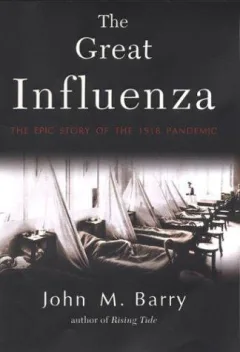
The Great Influenza
The Epic Story of the Deadliest Plague in History
John M. Barry’s The Great Influenza is a history of the 1918–1919 influenza pandemic, with particular attention to the United States. It follows the disease through military camps, cities, hospitals, laboratories, and public institutions while explaining why a modernizing society proved so vulnerable. Barry places the catastrophe within two intertwined stories: the transformation of American medical education and research, and the pressures created by World War I. Scientists struggled to identify an agent they could not yet see, physicians faced overwhelming numbers of patients without antiviral drugs or antibiotics, and officials often subordinated candid public communication to wartime priorities. The result is more than a chronicle of mass illness. It is an examination of scientific uncertainty, institutional capacity, political leadership, and public trust—forces that shape whether societies can recognize and contain a fast-moving emergency.