Puffin began over lunch. In 1939 Noel Carrington, then an editor of Country Life books, pitched Penguin's founder Allen Lane a series of cheap children's picture books, inspired by the brightly lithographed ones made for Soviet children. Lane agreed almost at once, and the first Picture Puffins appeared in 1940. The first storybook followed in 1941: Barbara Euphan Todd's Worzel Gummidge. The imprint is now owned by Penguin Random House and is based in London. Its American list started in 1978, after Penguin acquired Viking Kestrel and Viking's paperback line.
Two editors shaped its character. Eleanor Graham, the first, built a small list of about twelve titles a year that included Noel Streatfeild's Ballet Shoes and Norman Hunter's Professor Branestawm stories. Kaye Webb took over in 1961, when 151 titles were in print. By 1969 there were 1,213. She commissioned originals such as Clive King's Stig of the Dump, and in 1967 she founded the Puffin Club, which was meant to turn children into book readers.
Today the list runs from picture books to middle-grade and teenage fiction. Classics sit beside new writers. Puffin has published Roald Dahl for more than forty years. In 2023, after public argument over edits to the text of his books, it released The Roald Dahl Classic Collection of seventeen titles under the Penguin logo, so the original wording stayed in print alongside the Puffin editions for young readers.
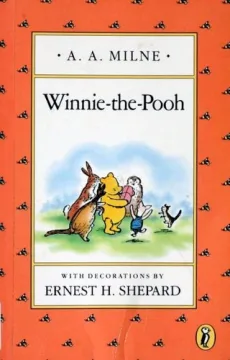
Winnie-the-Pooh is part of that classic strand. Puffin Modern Classics carries the Pooh stories by A. A. Milne with Ernest H. Shepard's drawings in a paperback aimed at young readers.
A reader following a Puffin book can expect a children's list that mixes long-loved titles, such as Pooh, Dahl and Ballet Shoes, with current authors and illustrators. Puffin describes itself as the largest children's publisher in the world. Many of its books are paperbacks aimed at children reading on their own for the first time.