Syracuse University Press was formed in August 1943 after a conversation between Syracuse University president William P. Tolley and Thomas J. Watson, who wanted the university to print IBM's Precision Measurements in the Metal Workings Industry. Matthew Lyle Spencer of the School of Journalism served as the first chair of the board, and Lawrence Siegfried was the first editor. The press sits within Syracuse University Libraries and is a member of the Association of University Presses. It has never owned its own printing press; all titles are produced by offsite manufacturers.
The list spans a wide range of disciplines, with particular depth in Middle East studies, Native American studies, Irish studies, Jewish studies, peace and conflict resolution, and New York State history. It also publishes on television and popular culture, sports and entertainment, music theory, and disability studies. Fiction, memoir, and poetry arrive only through invited series. In 2017 the press received a Humanities Open Book Program award from the National Endowment for the Humanities, and since 2020 it has produced audiobooks in collaboration with Sound Beat at Syracuse University Libraries.
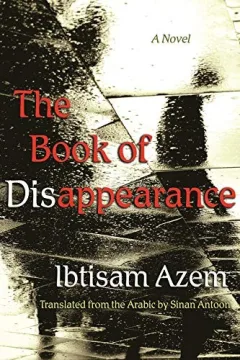
Its catalog runs past 1,200 titles. Among its publications are Pulitzer Prize–winning composer Ernst Bacon's Words on Music, Jay Dolmage's Disability Rhetoric, Siao-Yu's Mao Tse-tung and I Were Beggars, and Barry Chevannes's Rastafari: Roots and Ideology. In 2019 it published The Book of Disappearance, a novel by Palestinian writer Ibtisam Azem translated into English by Sinan Antoon. The book follows Alaa, a young man in Jaffa haunted by his grandmother's memories of displacement, and his neighbor Ariel, who wakes one morning to find that all Palestinians have simply vanished. The novel was longlisted for the 2025 International Booker Prize.
A reader approaching this press will find books that pair academic rigor with narrative clarity, often giving voice to communities and histories that larger publishers overlook. The list leans toward regionally specific scholarship and comparative cultural studies, with a smaller number of literary works that arrive through carefully curated series rather than open solicitation.