Category

Dystopian & Social Science Fiction

Science fiction that holds a mirror to society. Octavia E. Butler's Parable of the Sower follows a young woman through a collapsing America; Kazuo Ishiguro's Never Let Me Go reveals slowly what a quiet English boarding school is for. Frank Herbert's Dune explores power, religion and ecology on a desert planet, Ann Leckie's Ancillary Justice questions identity and empire, and Cixin Liu's The Three-Body Problem begins in China's Cultural Revolution. Stephen King's The Stand imagines the world after a plague. Books that ask hard questions about who we are, and where we are heading.

12 published books 0 published articles

Books in this category

Primary category

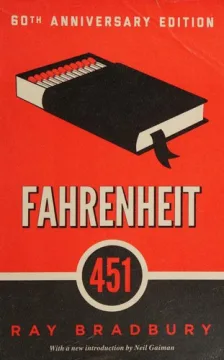
Fahrenheit 451

By Ray Bradbury

Ray Bradbury's Fahrenheit 451 is one of the most widely read dystopian novels of the twentieth century. It follows Guy Montag, a fireman in a future America whose job is to burn books rather than put out fires. Montag's routine starts to crack after he meets a curious teenage neighbor and sees how empty his own marriage has become, and he begins hiding books he is supposed to destroy. The story is short, but it asks large questions about what a society loses when speed, noise and comfort replace reflection. Bradbury shows citizens who help dismantle their own intellectual life, not merely a state that suppresses it. Readers who want science fiction that doubles as a conversation about attention, memory and freedom will find a compact, vivid place to begin.
View book

Primary category

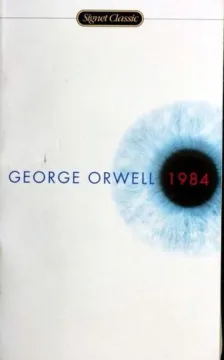
1984

By George Orwell , Dolen Perkins-Valdez , Sandra Newman

Nineteen Eighty-Four, published in 1949 and widely sold simply as 1984, is George Orwell's last completed novel and one of the most influential dystopian novels in English. It follows Winston Smith, a minor Party functionary in a London that has become Airstrip One, part of the superstate Oceania. His job is to alter the written record so that the Party is never wrong. Private doubt, a forbidden love affair and a craving for verifiable truth push him toward rebellion against a regime that polices thought as well as behaviour. Orwell's concern is less prediction than diagnosis: how a state can seek control over language, memory and belief itself. This Signet paperback presents the novel with a new introduction and afterword that mark its seventy-fifth anniversary.

View book

Primary category

Under the Eye of the Big Bird

By Hiromi Kawakami , Asa Yoneda

Hiromi Kawakami's speculative novel looks at humanity after it has nearly disappeared. Survivors live in small communities watched over by figures called the Mothers. Some of the people are made in factories from the cells of other animals, some are clones, and some draw energy from light and water. The story is told in fourteen linked episodes across geological eons, so each one lets a reader see a little more of a world that has changed beyond recognition. Kawakami uses this to ask what stays human when reproduction, bodies, memory and community are rebuilt. The book was shortlisted for the 2025 International Booker Prize. It is a strange, quiet and unsettling piece of translated fiction, and it suits readers who like ideas more than conventional plots.

View book

Primary category

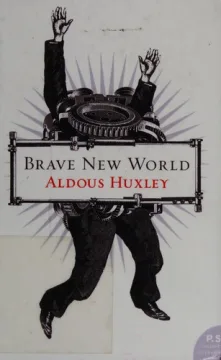
Brave New World

By Aldous Huxley

Brave New World, first published in 1932, imagines a World State that buys stability with engineered births, consumer pleasure, chemical comfort and the removal of family, religion and difficult art. Aldous Huxley follows a few people who begin to feel the strain: Bernard Marx, who is uneasy with his assigned place, and John, a young man raised outside the system and brought into it as a curiosity. Huxley's regime does not rule through open terror. It secures obedience through contentment, which sets the book apart from many better-known dystopian novels. Nearly a century on, it remains a standard reference point in arguments about technology, happiness and freedom. It is short enough to read in a few sittings.

View book

Primary category

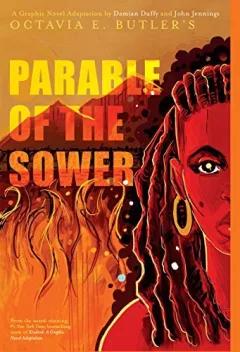
Parable of the Sower

By Octavia E. Butler

In a near-future California destabilized by climate disruption, extreme inequality, privatization, addiction, and failing public institutions, teenager Lauren Olamina recognizes that her walled neighborhood cannot remain safe. She also lives with hyperempathy, a condition that makes her physically experience the suffering she witnesses. When violence destroys her home, Lauren travels north among displaced people, concealing her vulnerability while gathering companions and testing the principles of Earthseed, the belief system she has begun to formulate. Told chiefly through Lauren’s dated journal entries, the novel combines a dangerous migration story with an inquiry into leadership, faith, adaptation, and collective survival. Butler’s future is frightening not because it depends on a single spectacular catastrophe, but because familiar social failures intensify and reinforce one another. The result is both dystopian science fiction and a coming-of-age novel about building purpose wit…

View book

Primary category

Never Let Me Go

By Kazuo Ishiguro

In an alternative late-twentieth-century England, Kathy H. looks back on her childhood at Hailsham, an isolated school where students were encouraged to make art, guard their health, and accept rules they only partly understood. Her memories center on Ruth and Tommy, the two friends with whom she forms a tense, enduring triangle of loyalty, rivalry, love, and regret. As Kathy’s recollections move from school to early adulthood, ordinary incidents acquire a darker meaning: the students have been created to supply organs to others, and their futures are severely limited. Rather than making technological speculation its main attraction, the novel studies how people build meaningful lives while inhabiting systems they cannot—or do not know how to—resist. Its quiet treatment of memory, mortality, social conditioning, and medical exploitation makes it both an intimate tragedy and an unsettling work of dystopian social fiction.

View book

Primary category

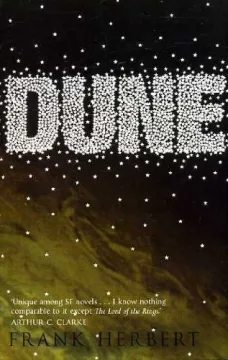
Dune

By Frank Herbert

On Arrakis, the only source of the consciousness-altering spice melange, control of ecology is inseparable from control of empire. When House Atreides receives authority over the desert planet, young Paul Atreides enters a trap shaped by imperial politics, family rivalry, economic dependence, and ancient schemes. Betrayal drives Paul and his mother, Jessica, into the desert, where the Fremen have built a demanding culture around water scarcity and dreams of planetary transformation. Paul’s unusual training and emerging prescience make him valuable to competing powers—and dangerous to himself. Dune combines dynastic conflict, survival adventure, religious mythmaking, and ecological speculation. Its deeper tension lies in Paul’s rise: the abilities that help him resist oppression may also create a leader whose legend unleashes consequences beyond his control. The novel asks readers to distrust simple heroic narratives even while constructing one of science fiction’s most influential exa…

View book

Related category

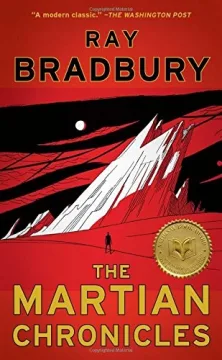
The Martian Chronicles

By Ray Bradbury

Ray Bradbury's The Martian Chronicles follows the human settlement of Mars through a chain of linked stories. Early expeditions meet a gentle, sophisticated Martian civilization and wreck it, sometimes by violence and sometimes by accident. Settlers then arrive in numbers, bringing their towns, prejudices and appetites with them, until a catastrophe on Earth cuts the colonies off. Bradbury treats Mars as a mirror: the book reads as a meditation on colonial conquest, nuclear fear, censorship and the cost of treating a new world as a blank slate. Its lyrical, melancholy tone sets it apart from engineering-minded space adventure. Among science fiction books, it is a standard introduction to the genre's literary and humane side, and it remains short enough to read in a weekend.

View book

Articles in this category

No published articles are currently connected to this category in this language.