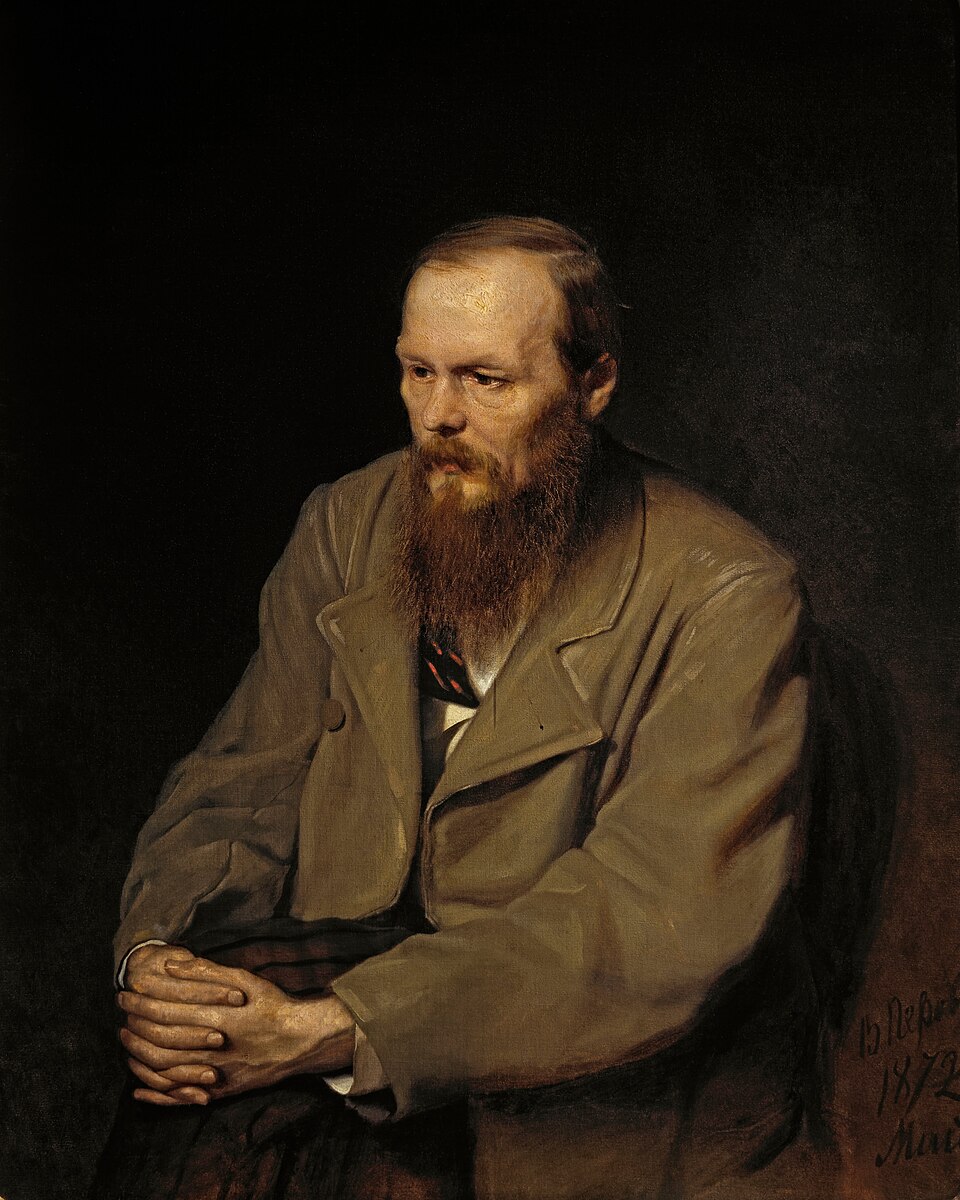
Photo of Fyodor Dostoevsky
Photo: Vasily Perov · Public domain · via source

Author profile

Fyodor Dostoevsky

Russian novelist (1821-1881) whose psychological fiction, including Crime and Punishment and The Brothers Karamazov, probes guilt, freedom and faith through characters driven by ideas.

2 published books 0 published articles

About Fyodor Dostoevsky

Fyodor Dostoevsky was born in Moscow in 1821 and studied at the St Petersburg Engineering Academy before becoming a writer. His first novel, Poor Folk, came out in 1846 to a warm reception. In 1849 he was arrested for taking part in the Petrashevsky Circle, a group of intellectuals who discussed utopian socialism. He was led out for a mock execution, then sent to a Siberian prison camp for four years. He died in St Petersburg in 1881.

Prison changed his fiction. The dreamy tone of the early work disappeared, and The House of the Dead drew on the camp itself. The great novels that followed turn on ideas that people actually live by, and on what happens when those ideas meet guilt, poverty or doubt. Britannica lists the origin of evil, the nature of freedom and the craving for faith among his central concerns. The method is psychological: characters argue, confess and contradict themselves, often in cramped rooms.

His major books are Notes from Underground (1864), Crime and Punishment (1866), The Idiot (1868) and The Brothers Karamazov (1879-80), which Britannica calls probably his greatest novel. Crime and Punishment follows Raskolnikov, a young intellectual in St Petersburg who kills an old pawnbroker after persuading himself that her money could do more good in other hands. Dostoevsky was writing it at the same time as The Gambler.

Start with Crime and Punishment. The murder comes early, and the rest of the book is the aftermath, so it reads closer to a thriller than its reputation suggests. Penguin's edition uses David McDuff's translation, and Penguin also issued an audio version read by Alex Jennings. If it hooks you, go to Notes from Underground for the sharper, stranger side of his thinking, then The Brothers Karamazov.

Published books

Author

Crime and Punishment

Crime and Punishment follows Rodion Raskolnikov, an impoverished former student in 1860s St. Petersburg. He persuades himself that a murder can be justified by the good it might do, then finds that this argument cannot protect him from his own conscience. Dostoevsky turns what could have been a whodunit into a study of motive, guilt and the pressure an idea can put on one mind, set against urban poverty and family obligation. This edition is a shortened audio reading by the actor Alex Jennings, released by Penguin Audio. It runs a little over five hours and offers the core story and atmosphere of a landmark of Russian literature in a single listening project.

View book

Author

The Brothers Karamazov

Dostoevsky's final novel starts as a family quarrel over money and a woman. It grows into one of the most searching inquiries in Russian literature into faith, guilt and freedom. The cruel, buffoonish landowner Fyodor Pavlovich Karamazov has three legitimate sons: passionate Dmitri, intellectual Ivan and gentle, monastery-trained Alyosha. A servant, Smerdyakov, is rumored to be a fourth, illegitimate son. When the father is killed, an investigation and a public trial force each character to face what he believes and what he is capable of. This Farrar, Straus and Giroux paperback uses the Richard Pevear and Larissa Volokhonsky translation. It is a widely used modern English version for readers who want classic novels to read in a current idiom.

View book